TL;DR: Making a brand logo stand out on custom socks is not simply about making it bigger. The best results come from choosing a sock design that people want to wear, placing the logo where it works visually, and selecting a suitable application method. Jacquard knitting is ideal for integrated logos, embroidery adds texture, and printing supports more detailed artwork. Logo size, stitch density, yarn colors, and physical sample approval all affect the final result.
A brand logo that looks great on a computer screen may not look the same when knitted into a sock. Small text can become difficult to read, thin lines may lose definition, and brand colors may look different when reproduced with actual yarn.
For brands developing custom socks, the challenge is to make the logo recognizable without compromising the overall design or wearing comfort.
Whether you are creating retail collections, corporate gifts, or promotional socks, the following considerations will help you turn your brand artwork into a well-designed, production-ready sock.
Start with the Sock Design, Not Just the Logo
A common mistake when developing custom logo socks is treating the sock as a blank surface for displaying a brand name. In reality, the overall sock design should come first.
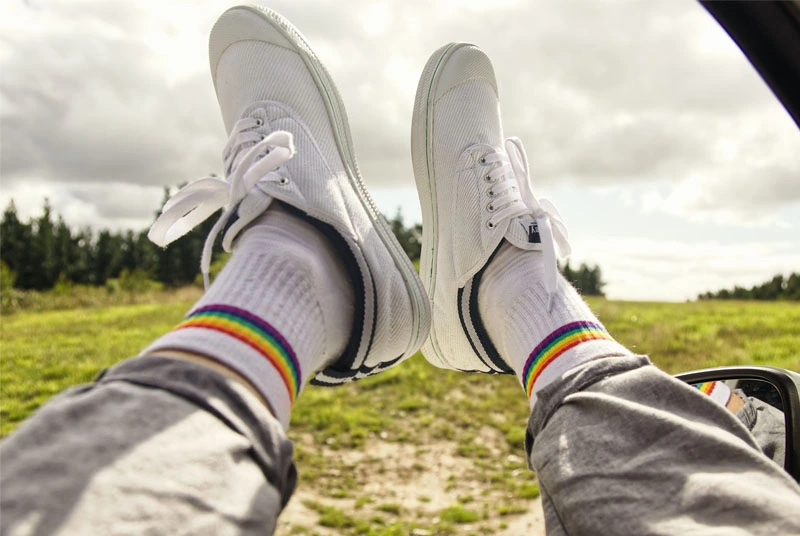
A well-designed pair of branded socks should look like something people would choose to wear, even without knowing the brand behind it.
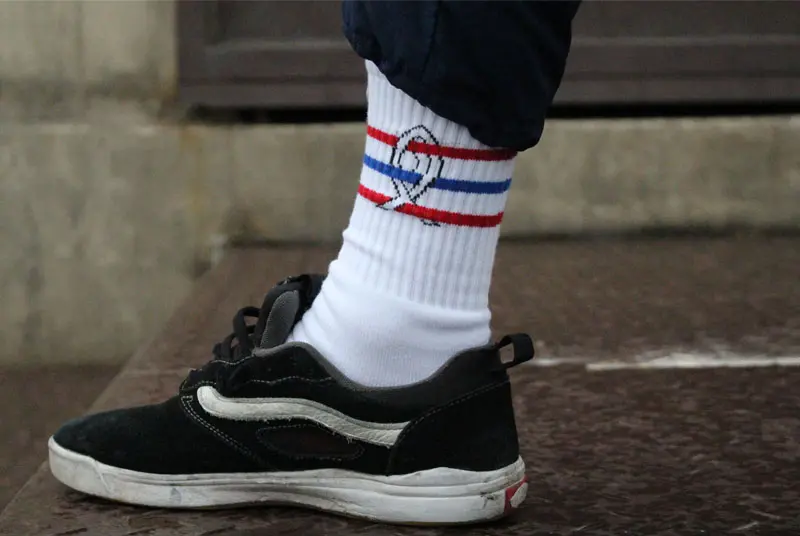
Instead of placing an oversized logo in the center, consider integrating smaller brand elements into the overall pattern. Repeating logos, subtle monograms, stripes, and geometric patterns can create a more natural look while maintaining brand recognition.
The right approach also depends on the intended market:
- Retail brands: Small repeating logos or signature patterns can make branded socks feel more like fashion accessories than promotional products.
- Corporate gifts: A clean design with a discreet logo often works better for professional settings.
- Sports brands: More visible logos and contrasting colors can reinforce team or brand identity.
- Promotional products: A recognizable logo combined with an attractive overall design makes the socks more appealing for everyday use.
The goal is not to hide your logo. It is to make it an intentional part of the product design.
Where Should You Place Your Logo on Custom Socks?
Logo placement affects both visibility and the overall appearance of a pair of socks. The best position depends on the sock style, target audience, and how prominently you want the brand to appear.

Cuff: A Classic and Understated Placement
Place a small logo or brand name near the top of the sock opening. The design should be clean and not interfere with the overall appearance of the garment.
For dress socks and corporate gifts, a logo height of around 2–3 cm can be a useful starting point, although the final dimensions should be adjusted to the sock size and design.
This placement is particularly suitable for brands that prefer subtle branding.
Ankle and Leg: More Visible Brand Expression
The outer ankle and leg provide more space for logos, lettering, and graphic elements.
This placement works well for sports brands, streetwear collections, and team socks that need stronger visual recognition.
Larger knitted logos or embroidered designs can be used here, provided their proportions remain balanced when the sock is stretched during wear.
Sole: A Hidden Branding Detail
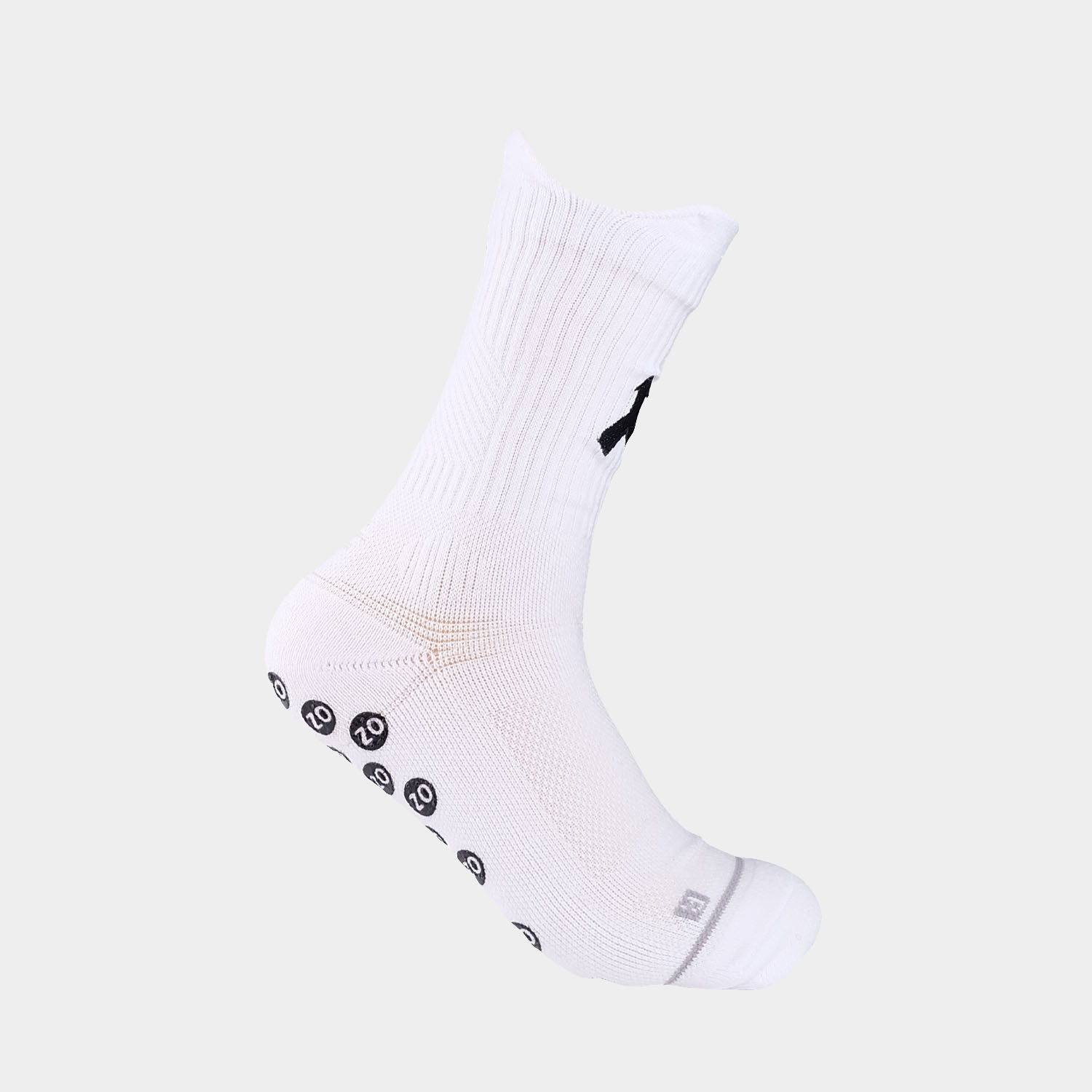
The logo on the sole of the shoes can feature some brand graphics or slogans. Although it may not be visible when wearing the shoes, it can create a unique experience for the wearer.
When using this area, consider friction and abrasion. The decoration should not create uncomfortable raised areas or compromise durability.
All-Over Patterns: Integrating Logos into the Design
A small monogram or brand symbol can be combined with stripes, dots, or geometric elements to create an all-over design. From a distance, the socks look like patterned fashion accessories. Up close, the brand identity becomes more recognizable.
This approach is particularly useful when the goal is to create a recognizable product rather than a conventional promotional item.
Which Logo Application Method Works Best for Your Design?
Not every logo works equally well with every sock decoration technique. The right choice depends on the artwork, desired appearance, sock material, and production requirements.
Jacquard Knitting for Integrated Brand Logos

Jacquard knitting creates logos directly within the sock structure using different colored yarns.
Because the design is knitted into the fabric rather than applied as a separate surface layer, it is a popular choice for custom branded socks that require regular washing and long-term use.
Best suited for:
- Brand names and lettering
- Geometric symbols and simple graphics
- Repeating logos and patterned designs
- Sports and everyday socks
One limitation is the level of detail that can be reproduced. Very small text, thin lines, and complicated graphics may become difficult to distinguish. The number of yarn colors and the sock’s knitting construction also affect the final result.
For complex artwork, simplifying the design or increasing the logo size can improve clarity.
Embroidery for Raised and Textured Details
Embroidery creates a raised logo using stitching, giving the design a more dimensional appearance.
It works particularly well for small brand names, initials, and simple symbols that need a distinctive textured finish.
However, placement matters. Thick embroidery around the ankle bone or other pressure points may cause friction, especially in sports socks.
The embroidery size, stitch density, backing, and position should all be considered to maintain wearing comfort.
Printing for Detailed and Multi-Color Artwork
Printing can reproduce more complex graphics, including multiple colors, fine details, and certain gradient effects that may be difficult to achieve through conventional jacquard knitting.
It can be suitable for specific sock materials and printing applications, particularly designs involving polyester-rich fabrics.
However, printing methods differ in their material requirements and durability. Colorfastness, stretch resistance, and washing performance should be evaluated before selecting this option for bulk production.
How to Keep Your Logo Clear and Accurate in Sock Production
Even a well-designed logo needs to be adapted to the technical characteristics of sock manufacturing.
Three factors deserve particular attention: artwork complexity, knitting precision, and color matching.
Simplify Small Details Without Losing Brand Recognition
Logos designed for websites, packaging, or business cards may contain details that are too small for sock production.
Before manufacturing, review the artwork for:
- Very thin lines that may disappear in the knitted structure.
- Small lettering that becomes difficult to read.
- Complex gradients that cannot be directly reproduced with conventional yarn knitting.
- Too many colors for the selected knitting construction.
If necessary, simplify secondary details while keeping the most recognizable elements of the original logo.
Consider Machine Gauge and Knitting Precision
Machine specifications can influence how much detail can be incorporated into a knitted sock design.
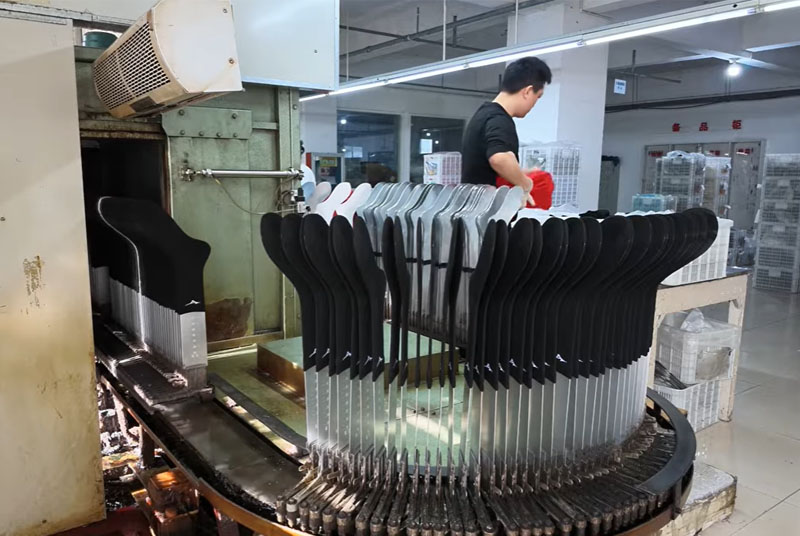
Sockcn uses 200-needle sock knitting machines, providing finer knitting conditions for designs that require more detailed logo reproduction.
Compared with coarser knitting specifications, finer-gauge construction can offer more opportunities to reproduce small design elements. However, the final result also depends on yarn thickness, stitch construction, logo dimensions, and artwork complexity.
Choosing the right machine is therefore part of the design development process, not simply a production decision.
Match Brand Colors with the Right Sock Yarns
A logo’s color on a computer screen does not necessarily match the appearance of the corresponding yarn.
Different materials, yarn dyeing processes, and lighting conditions can affect the perceived color.
For better contrast and readability:
- Use a sock background that provides sufficient visual separation from the logo.
- Avoid placing dark logos on similarly dark backgrounds.
- Consider adjusting the sock’s base color when the original brand color needs to remain unchanged.
- Provide Pantone references whenever specific brand colors are required.
Sockcn offers Pantone color matching to help customers communicate their brand color requirements during development. Since screen colors and physical yarn colors can differ, actual yarn selection and sample approval remain important steps in confirming the final result.
Check Your Logo on a Physical Sock Sample
A digital mockup is useful for reviewing the general design, but it cannot fully represent how a logo will look on a finished knitted sock.
Before bulk production, review a physical sample and pay attention to the following details:
- Logo proportions: Does the logo look balanced against the sock’s overall dimensions?
- Placement: Is it positioned correctly and consistently with the approved design?
- Color: Do the yarn colors match the agreed references as closely as possible?
- Detail clarity: Are the lettering, lines, and graphic elements recognizable?
- Appearance when worn: Does the logo remain visually balanced when the sock stretches around the foot or leg?
- Comfort: Do embroidery or other decorative elements create unwanted pressure or friction?
Once the sample is approved, it should serve as the reference for bulk production. This helps establish clear expectations for logo appearance, placement, and color consistency.
What Should You Prepare Before Sending Your Logo to a Sock Manufacturer?
Providing clear design information makes it easier for a manufacturer to assess production feasibility and recommend the right customization method.
Before contacting a sock manufacturer, prepare:
- Logo artwork: Vector files such as AI, EPS, or PDF are preferred. High-resolution images can also be useful for initial evaluation.
- Brand color references: Include Pantone codes or other approved color references.
- Sock design: Specify the preferred sock style, material, and basic color scheme.
- Logo placement: Indicate where you want the logo to appear, with reference images if available.
- Design preferences: Explain whether you prefer knitted, embroidered, printed, or repeating logo patterns.
If you are unsure which technique will work best, share your original artwork with the manufacturer. An experienced production team can assess the design and suggest adjustments before sampling.
FAQ
What is the best way to put a logo on custom socks?
Jacquard knitting is a popular choice for logos that need to become part of the sock structure. Embroidery works well for raised details, while printing is suitable for certain complex and multi-color designs. The best method depends on the artwork and intended use.
Can small logos be knitted into socks?
Yes, but the level of detail depends on the knitting machine, yarn thickness, construction, and logo dimensions. Very small lettering or fine lines may need to be simplified or enlarged for better visibility.
Can sock manufacturers match Pantone colors?
Manufacturers can use Pantone references to guide yarn color selection. However, screen colors and actual yarn colors may differ, so physical color samples should be reviewed before bulk production.
Is embroidery or jacquard better for custom logo socks?
Jacquard is generally better for integrated logos and repeating patterns, while embroidery is suitable for small, raised brand details. The choice also depends on placement and wearing comfort.
Can a complex brand logo be simplified for sock production?
Yes. Manufacturers can help simplify fine lines, small lettering, and secondary graphic elements while preserving the most recognizable parts of the original logo.
Make Your Brand Logo Work on Every Pair
A successful custom sock design brings together brand identity, visual appeal, and manufacturing feasibility. The right logo placement, knitting technique, and yarn colors can make a significant difference in how the finished product looks and feels.
At Sockcn, we work with brands, wholesalers, and businesses to develop custom socks with carefully considered logo details. With 200-needle knitting capabilities and Pantone color matching support, we help turn brand artwork into sock designs ready for production.
Have a logo you’d like to put on custom socks? Send us your artwork and design ideas. Our team can help evaluate the suitable knitting or decoration method for your project.