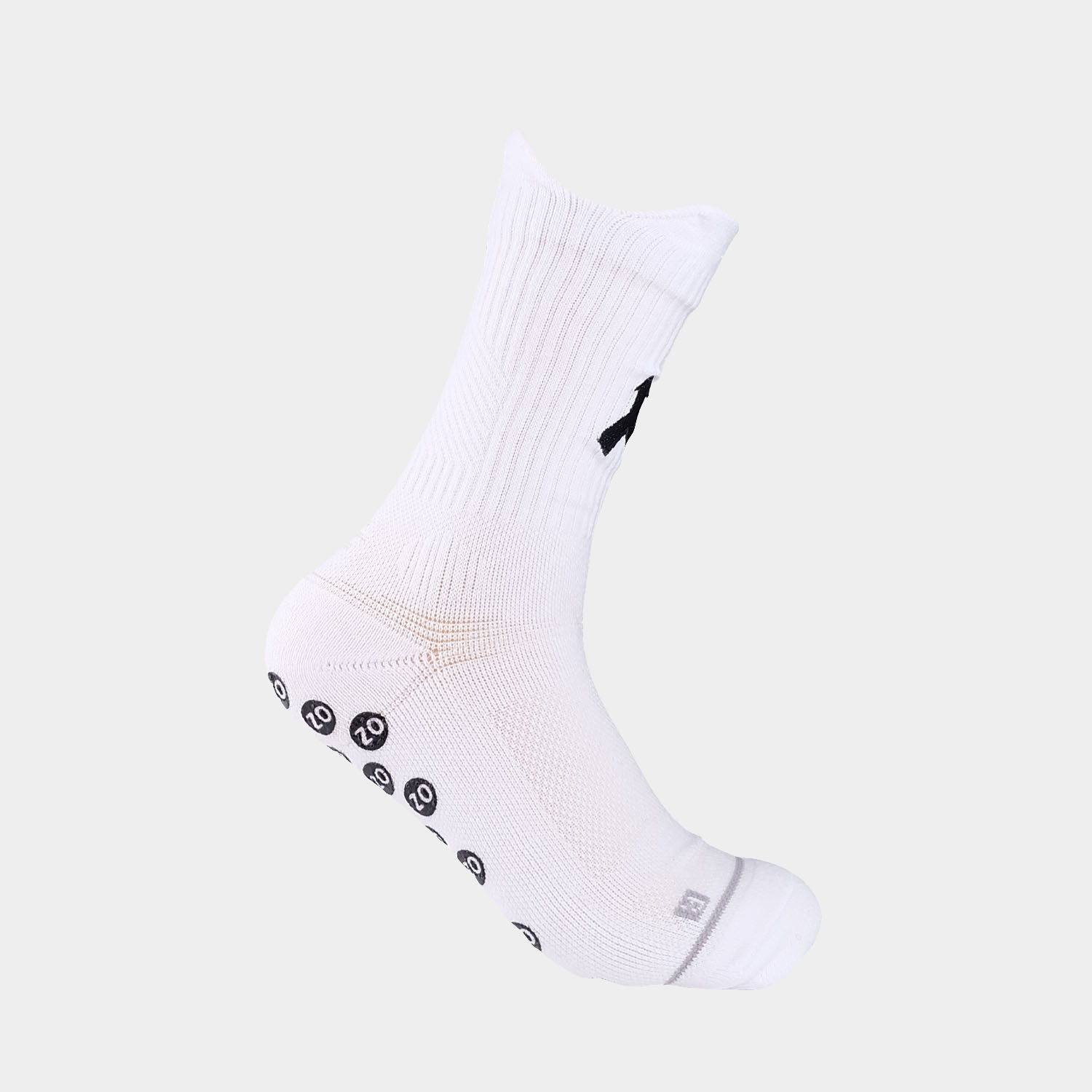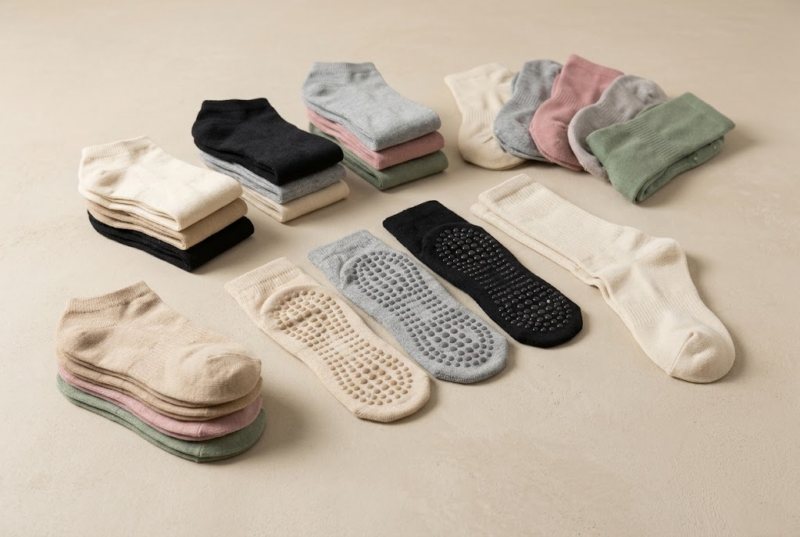

A pair of socks may contain several types of yarn, even when it looks like a single, uniform product. This is because different parts of a sock have different functional requirements. The foot needs cushioning and durability, the upper may need better ventilation, and the cuff must stay in place without feeling too tight.
TL;DR
- Different yarns are combined to balance comfort, durability, stretch, moisture management, and cost.
- A sock may use one yarn blend throughout or different yarns in specific areas, depending on its design and knitting structure.
- Nylon is commonly used to improve abrasion resistance, while elastane helps the sock maintain its fit.
- Merino wool, cotton, polyester, and other fibers can serve as the main material depending on the intended use.
- The right yarn combination should be evaluated together with sock construction, not by fiber percentages alone.
Why Do Socks Use More Than One Type of Yarn?
No single fiber performs equally well in every aspect of sock performance.
For example, merino wool is valued for its soft feel and moisture-management properties, but a sock designed for frequent use may also need additional abrasion resistance. Nylon can help improve durability, while elastane provides stretch and helps the sock retain its shape.
Combining fibers allows manufacturers to balance these different requirements.
The goal is not simply to include more materials. It is to select yarns that work together to achieve the intended performance.
What Roles Do Different Yarns Play in a Sock?
The yarns used in sock manufacturing can serve different functions. Their roles depend on the fiber, yarn structure, and how they are incorporated into the knitted fabric.
Yarn or fiber | Common role in socks |
Cotton | Soft hand feel and everyday comfort |
Merino wool | Softness, moisture management, and temperature comfort |
Polyester | Lightweight performance and moisture management |
Nylon / Polyamide | Abrasion resistance and reinforcement |
Elastane / Spandex | Stretch, fit, and shape retention |
Lyocell | Smooth hand feel and moisture absorption |
Alpaca | Softness and warmth |
These are general characteristics, not guarantees. Actual performance also depends on yarn quality, fiber specifications, knitting structure, finishing, and the final blend.
In many socks, the main yarn provides the primary fabric characteristics, while elastic yarns and reinforcement yarns help meet specific construction requirements.
How Do Different Yarns Work Together in Different Sock Zones?
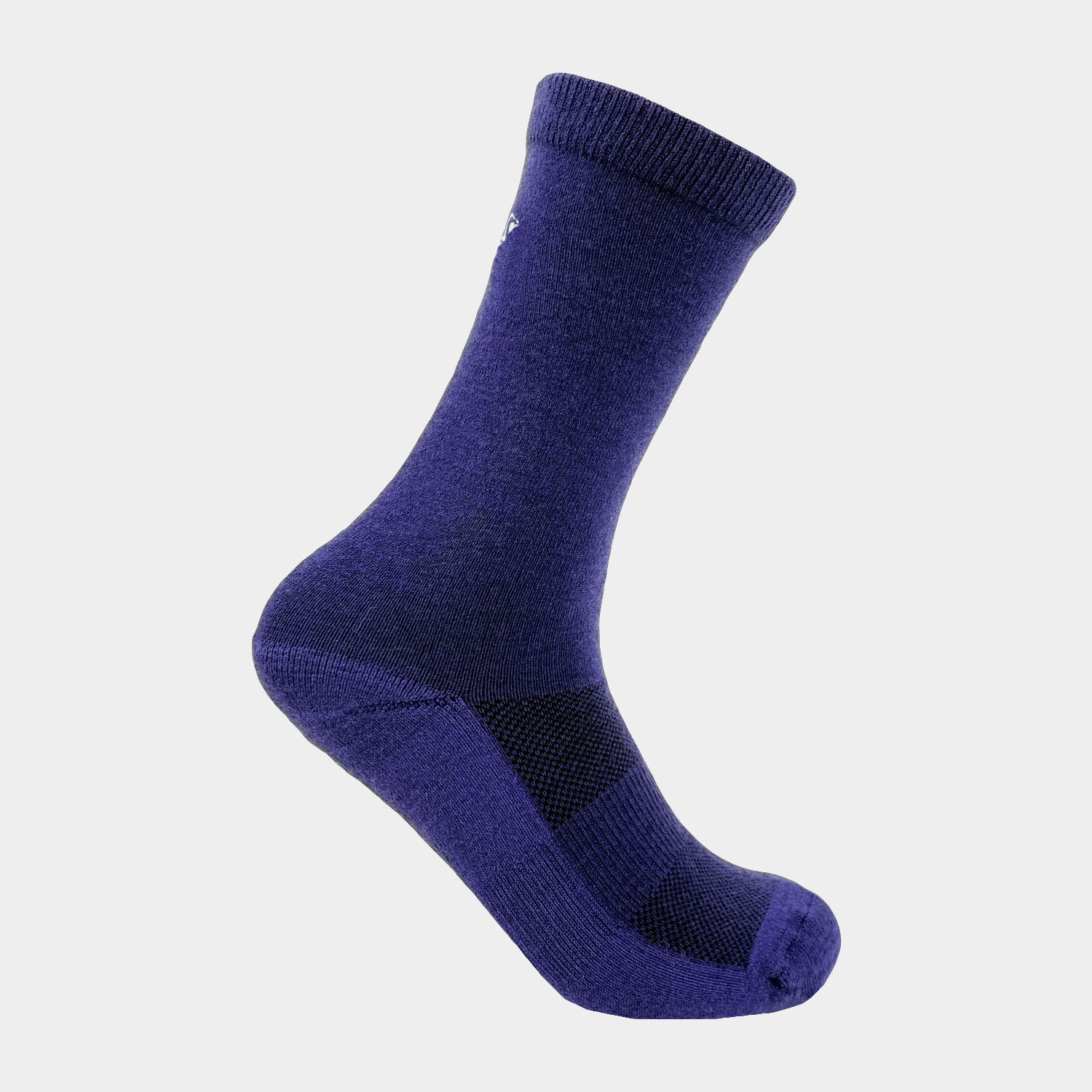
One interesting aspect of sock manufacturing is that a sock does not necessarily use the same yarn combination throughout its entire structure. Different areas have different functional requirements, so manufacturers may adjust yarn selection and knitting structure to meet them.
Sock area | Common yarn considerations | Main purpose |
Cuff | Main yarn + elastic yarn | Stretch and stay-up performance |
Leg | Main yarn + optional elastic yarn | Comfort, appearance, and fit |
Instep | Lightweight yarn and mesh construction | Breathability and reduced bulk |
Arch | Elastic yarn integrated into the knit | Support and a secure fit |
Sole | Main yarn + cushioning yarn | Comfort and impact cushioning |
Heel and toe | Main yarn + reinforcement yarn | Abrasion resistance and durability |
These are general design approaches rather than fixed rules. Actual yarn placement depends on the sock style, knitting machine capabilities, and construction requirements.
For example, a lightweight running sock may prioritize breathable yarns and a relatively thin upper-foot structure, while a heavy-duty work sock may require more substantial cushioning and reinforcement.
The important point is that material selection and knitting structure should be considered together. A yarn combination alone does not determine how a sock performs; its placement, knit density, and overall construction also matter.
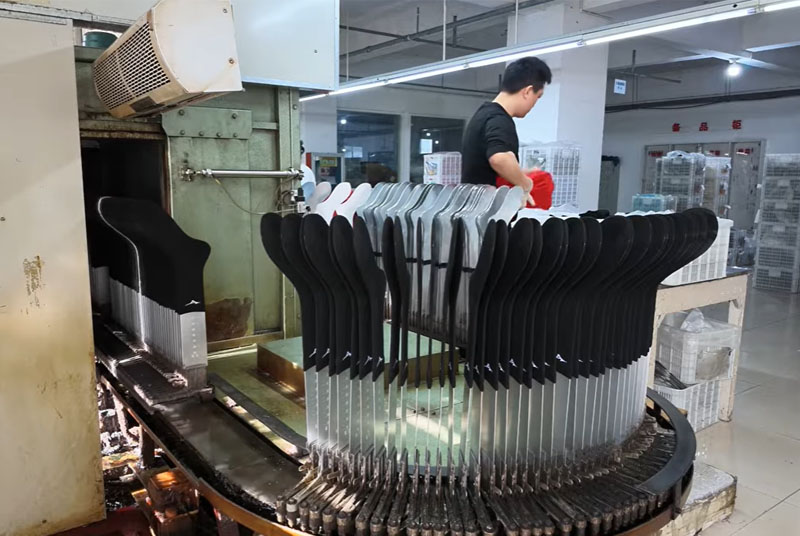
For more details on how these elements come together during production, see our sock manufacturing process.
Examples of Yarn Combinations for Different Sock Applications
The right combination depends on what the sock needs to do. These examples illustrate common product-development approaches rather than fixed formulas.
Merino Wool + Nylon + Elastane for Hiking Socks
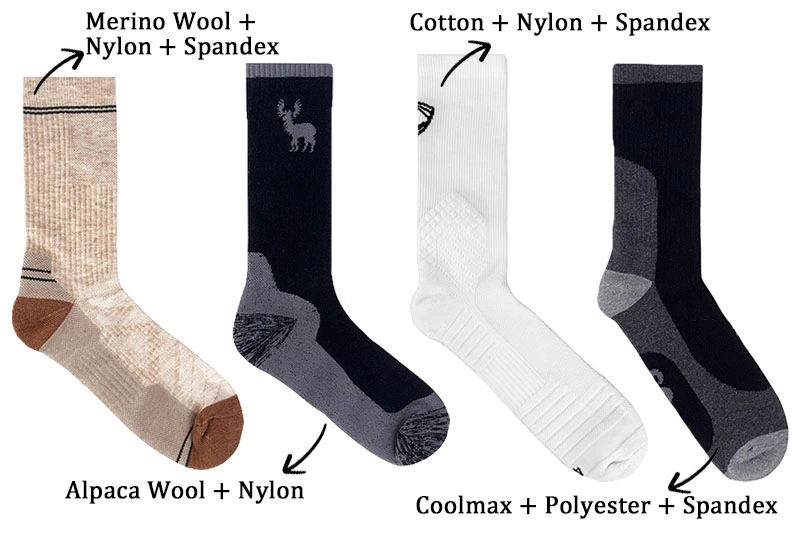
A hiking sock needs to balance comfort during long periods of wear with durability under repeated friction.
A merino wool blend can provide a soft feel and moisture-management properties. Nylon can help reinforce high-wear areas, while elastane supports fit and shape retention.
The exact ratio depends on the desired warmth, thickness, durability, and target price.
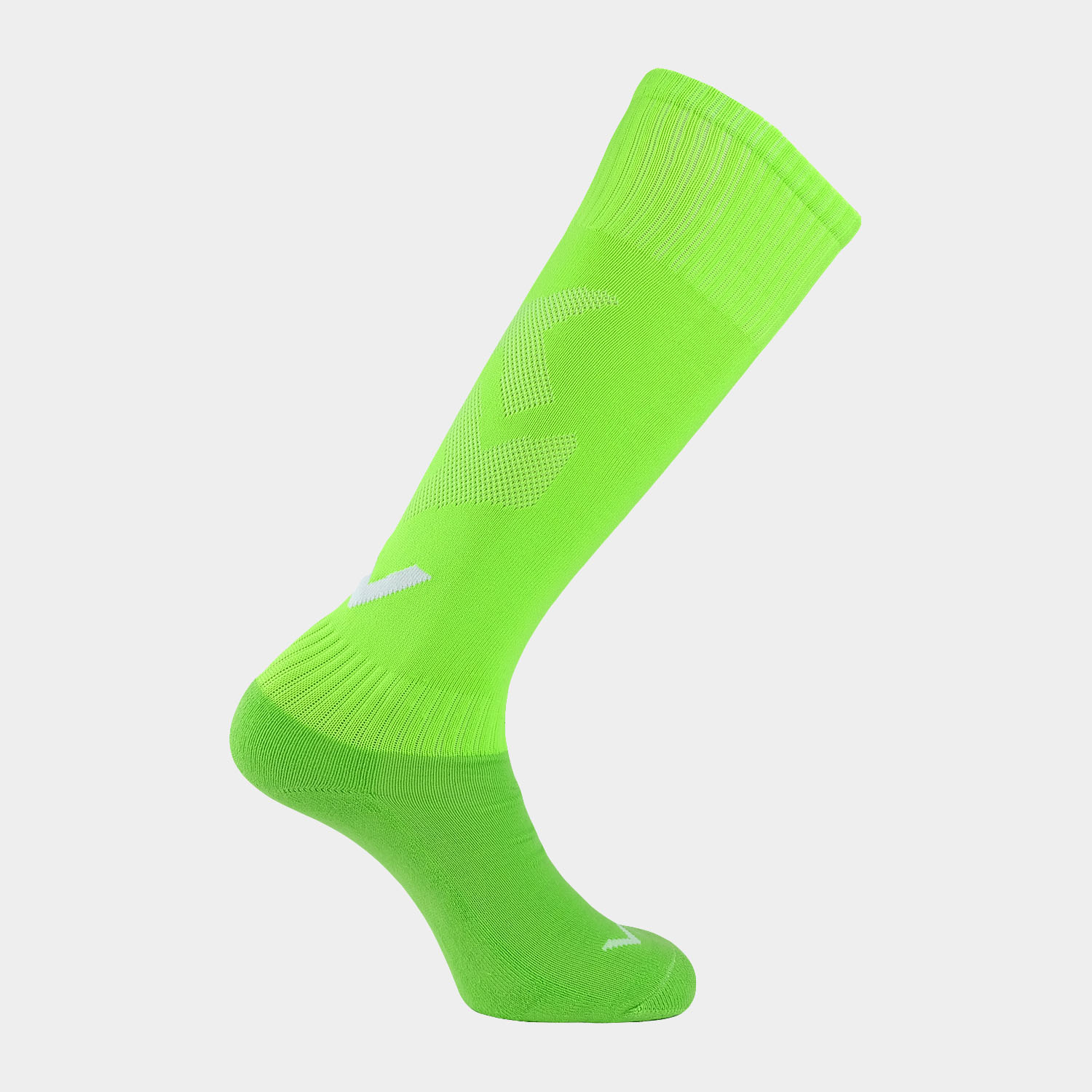
Polyester + Nylon + Elastane for Running Socks
Running socks often prioritize lightweight construction, moisture management, and a secure fit.
Polyester can be used as a primary performance fiber, nylon can contribute abrasion resistance, and elastane helps the sock stay in place during movement.
Ventilation zones, arch support, and targeted cushioning are also important parts of the overall design.
Cotton + Nylon + Elastane for Everyday Socks
Everyday socks often focus on softness, comfort, and practical durability.
Cotton can provide the familiar soft feel many consumers prefer. Nylon can help improve wear resistance, while elastane supports a comfortable fit.
The balance between these materials depends on whether the product is designed as a lightweight dress sock, a casual crew sock, or a thicker everyday style.
Merino Wool + High-Tenacity Nylon for Cycling Socks
Cycling socks may need to withstand repeated friction from footwear and equipment while remaining comfortable during extended activity.
A merino and high-tenacity nylon blend is one possible approach. Merino contributes to the overall wearing comfort, while high-tenacity nylon can improve resistance to abrasion.
The final construction should also consider sock thickness, fit, ventilation, and the areas exposed to the most friction.
What Should Manufacturers Consider When Selecting Yarn Combinations?
Choosing a yarn blend involves more than deciding which fibers to mix. Manufacturers need to consider how the materials will perform together in the finished sock.
Key factors include:
- Intended use: Hiking, running, work, and everyday socks have different performance priorities.
- Fiber compatibility: Different yarns may behave differently during knitting, dyeing, and finishing.
- Knitting structure: Yarn selection must work with the machine, gauge, and planned construction.
- Thickness and weight: The blend and yarn specifications affect the final fabric density, cushioning, and feel.
- Durability requirements: High-friction areas may need reinforcement through yarn selection or construction.
- Cost and production feasibility: A technically possible blend must also be practical to manufacture consistently.
A higher percentage of a particular fiber does not automatically mean a better sock. The overall result depends on how the yarns and construction work together.
Why Should Yarn Combinations Be Tested Through Sampling?
A proposed fiber composition on paper does not always produce the expected result in a finished sock.
Two socks with similar fiber percentages can feel and perform differently because of yarn specifications, knitting density, terry construction, elastic tension, and finishing.
Sampling helps evaluate factors such as:
- Hand feel and overall comfort
- Stretch and recovery
- Fit around the foot, ankle, and calf
- Cushioning and fabric thickness
- Performance of reinforced areas
- Appearance after washing and repeated wear
For custom sock development, it is useful to assess the complete sample rather than approve a yarn composition in isolation. Adjustments to yarn selection and knitting structure may be needed before bulk production.
Final Thoughts
Different yarns are used in a single pair of socks because each material can contribute something different to the finished product. The challenge is choosing a combination that suits the intended application and works with the sock’s construction.
For brands developing custom socks, the most effective approach is to start with the product’s performance requirements, then evaluate suitable yarn combinations through sampling. The right blend is the one that delivers the required comfort, fit, durability, and manufacturing consistency—not simply the one with the most expensive fibers.