Have you ever eagerly peeled back the packaging on a new pair of socks only to discover they are as tight as bound feet or too loose to fit in your shoes? Selecting the correct sock size is much more than just looking at the shoe size. The whole process is a rigorous discipline involving ergonomics, the technology of textile materials and the market standards of each region. Well-fitting socks can not only serve as the foundation for comfort, but also help improve athletic performance and the health of your feet. This guide will lead you into the world of sock sizes, from conceptual foundations to hands-on solutions, so you can precisely pinpoint the pair of ‘chosen socks’.
How Sock Sizes Work
In order to get the right socks, we first need to understand the rationale of sock size. It isn’t an arbitrary number, but a system of measurement based on data of the foot and certain rules.
Foot length matters
The most critical information that you need to know about sock size is how long your feet are, and this is commonly expressed in either centimeters or inches. That’s because the sole and heel of the socks must be tailored to the shape of the user’s foot in order not to move or press.
How to measure the size of your feet by yourself: Stand against a wall with your feet rested on a white paper, make a mark on the heel and the tip of your longest toe with a pen, and then measure the straight distance between the two points. It is advisable to perform the measurement in the afternoon or evening, as your feet will expand slightly after a day’s work. This timing for measuring can accurately reflect your true desire for tightness of the socks.
Shoe size vs. sock size
One common misconception is equating shoe size with sock size. Although the two are highly correlated, they are not identical. Length of foot and width of foot are the main factors in determining shoe size, with some extra room allowed to the activity of foot inside the shoe. And sock size usually corresponds to the net size of the length of the foot, and it is necessary to have certain elasticity to closely wrap the foot. So, you may find that sometimes your shoe size corresponds to a range of sock sizes (such as shoes size US 9-10, which corresponds to sock size M) rather than single sock size. Applying the narrow fit shoe size straight to sock due might make socks too tight.
Especially for children’s sock sizes, because children’s skin is much more delicate and feet comes in different shapes, shoe size is not the only reference point for choosing children’s sock sizes, please choose socks size based on length of your feet and width of your feet.
Why sizing varies by region
There are various size standards used across the world and which are influenced mainly by the historical and cultural differences of their users. The three most common systems are:
- US size: It is approximate divided for age and gender (such as men’s size, women’s size, children’s size), and there is a suitable range for foot length.
- EU sizes: The most consistent and scientific, shoe size based on the length of the shoe last, which is expressed in centimeters as shoe size. For example, when it comes to size EUR 42, the foot length is 26.5 centimeters. That’s the simplest way to choose which socks.
- Asian sizes: Some Asia countries for example Japan, South Korea adopt the cm system as well but the size might be smaller. For example, for shoes of 26.5 cm, a pair of Asian branded footwear will usually have less space inside than a pair of European shoes of that size.
So, it’s just the safest deal if you want to avoid buying the wrong size when getting socks from a different place convert the foot length to inches in cm.
Sock Size Chart Overview
Here is a universal sock size chart for your quick reference. Please be aware that this is for your reference only. Differences may exist between various brands.

Suggestion: In case foot size of user lies between two sizes and foot shape is narrow, it is advised to go for smaller size for better fitting. If you have wide feet or high insteps, select a larger size for comfort.
Different Sock Types, Different Fits
The length and style of socks are key variables that influence size selection.
No show & ankle fit
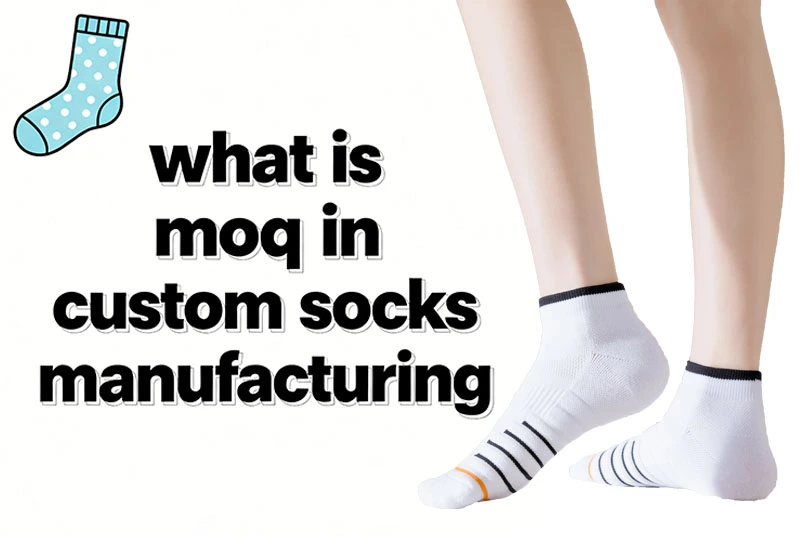
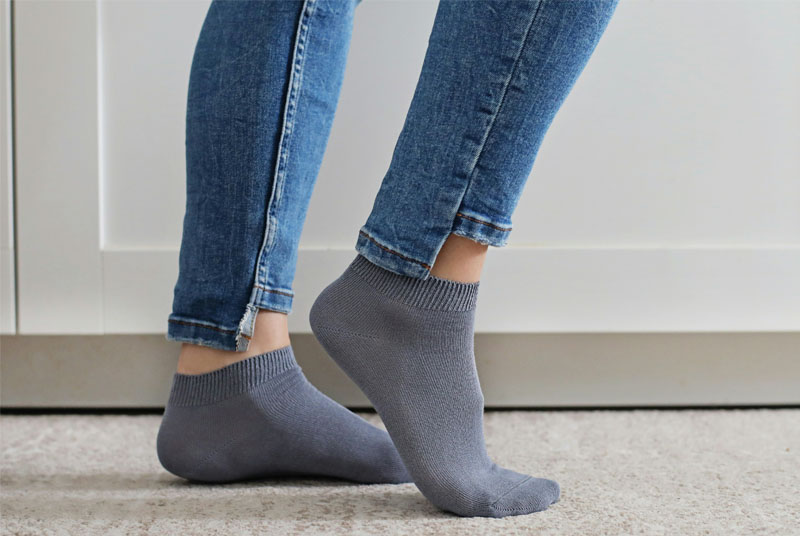
The fit of this low-top socks style comes with the most stringent requirements. As most of them are hidden inside the shoes, the size difference will be felt immediately. The only requirement is that the position of the heel precisely falls on your heel cup. When the socks are too small the heel moves forward and the toes are being blocked. If it is too large, the heel slips down to the sole of the foot and the sensation to wear is unbearable.
So in the case of no show socks and ankle socks, you should match your foot length as closely as possible. You could even opt to buy a size half a size too small from what you normally wear, that way the socks will be as “invisible” as they can be and won’t move.
Crew & mid-calf fit
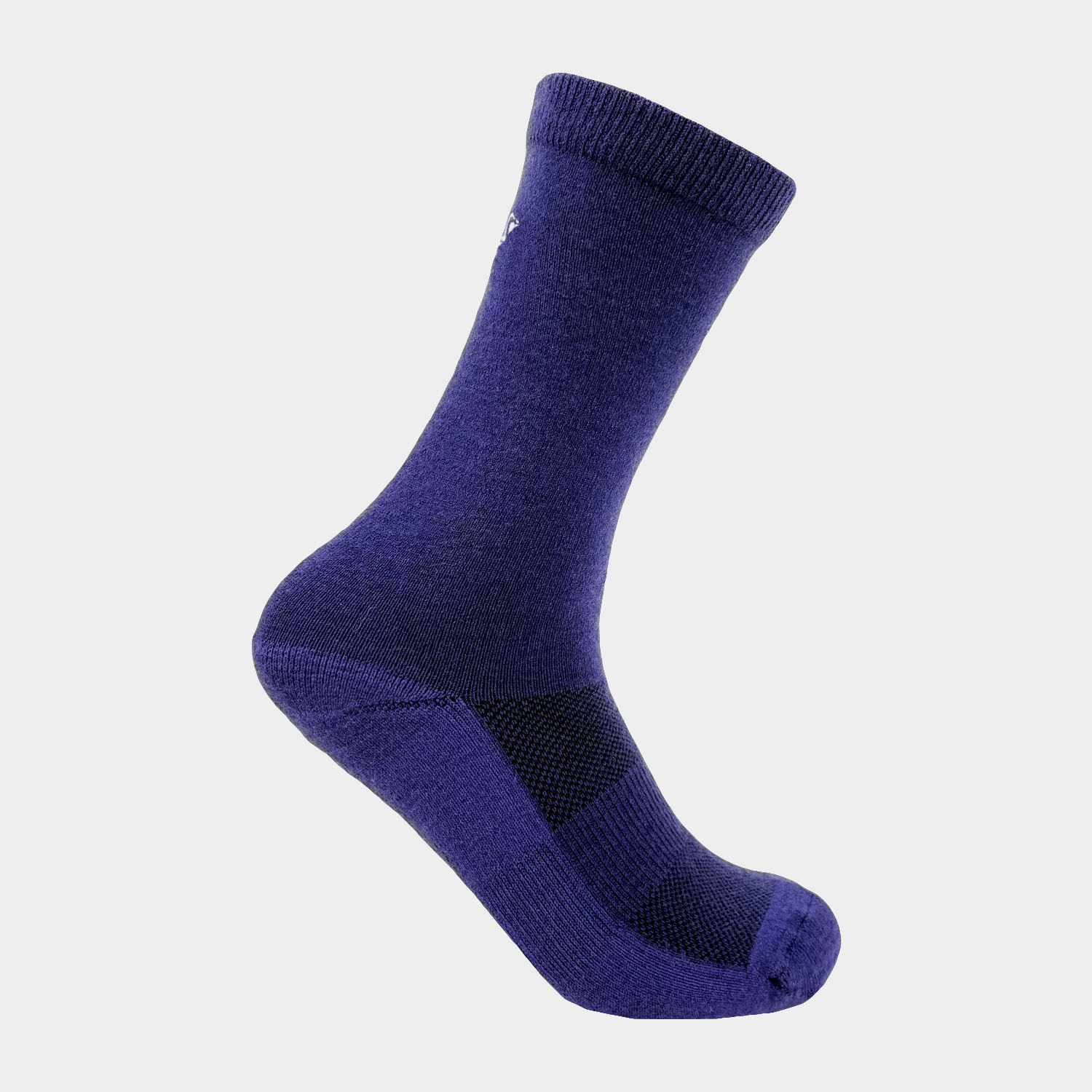
Mid-calf socks (end just below the middle of the calf) and crew socks (the most common height) should be ordered slightly looser. We also need take into account the circumference of the calves, apart from the feet fit. Various brands can be adjusted for different calf thicknesses by increasing the elasticity of the sock body. When you choose, apart from the length of your feet, you also want to check if the product description includes the “wide mouth” or “widened” design, this is very significant for people who have well-developed calf muscles. The size range of this style of socks is usually large, and one size fits several feet length.
Knee-high fit considerations
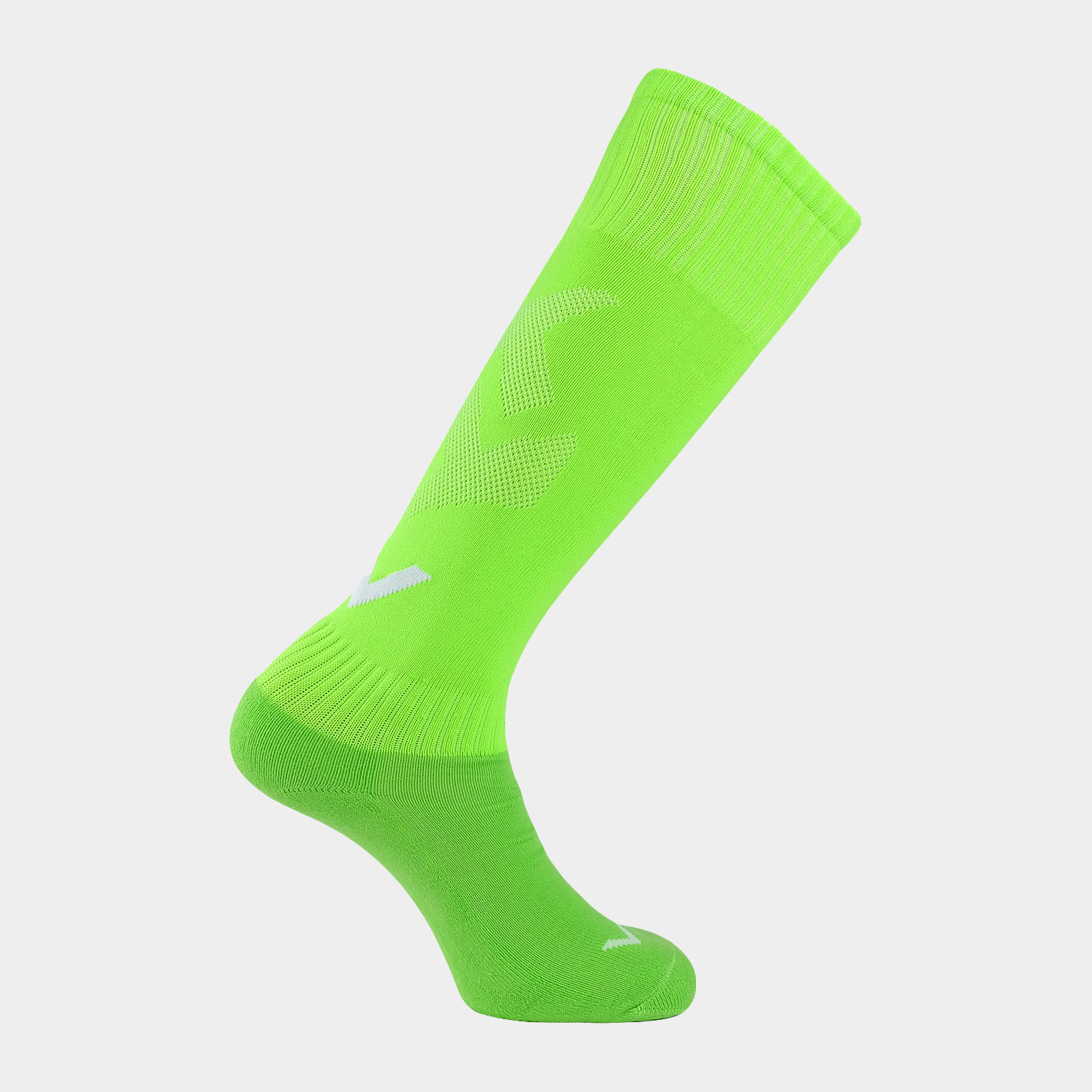
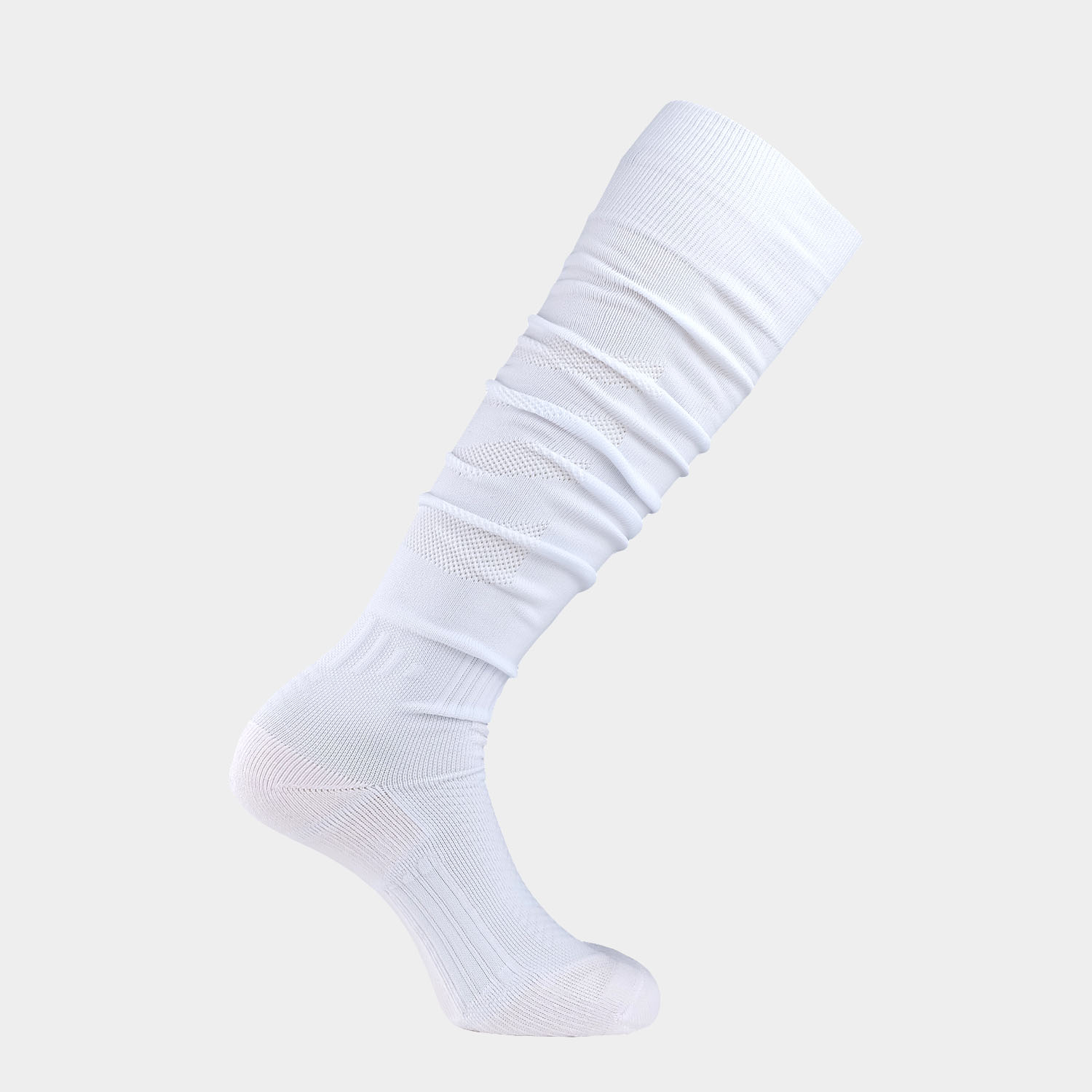
Size requirements are the most comprehensive for knee-length socks. Not only have the feet to fit well, but also the length and circumference of the whole lower leg has the request. They’ll just keep on slipping down if the socks are too short that they don’t reach the knee level. If the opening of the sock is too tight, it will strangulate your thigh muscles deeply, interrupt blood circulation and make you uncomfortable. When buying knee high socks please check whether the item has two measurements [“sock length” and “maximum thigh circumference” ]. Premium products are generally made with graduated compression knitting with a wider and more supportive rib at the sock cuff to prevent rolling and slipping.
Materials That Affect Sock Sizing
The fabric composition of socks directly determines their elasticity, resilience and durability, thereby dynamically influencing the actual size after wearing.
Cotton & shrinkage
Cotton socks are Skin-friendly and breathable, so they are very popular, but the largest size risk is shrinkage. Cotton fibers will shrink permanently in water, (particularly hot water) and heat (for example in a dryer). So when you buy pure cotton or high cotton content socks, an effective method is to make allowance for shrinkage. If the foot length you measure lies exactly between the measurement of size M, go for size L to allow for possible shrinkage after washing. The addition of a small amount of spandex (eg 5%) to cotton socks greatly enhances their stretch-ability and lessens the effect of shrinkage.
Wool stretch & recovery
Merino wool and other materials have been said to have excellent warmth preservation and moisture management properties. Wool fibers have good inherent elasticity and this contributes to wool socks feeling firmer on the foot when worn and also helps in minimizing the formation of pressure points. But its tensile recovery should be paid attention to. Quality wool socks can recover their shape after being stretched wearing, while inferior socks can be loose wiggle by wiggle.
So when you buy wool socks, you don’t have to intentionally choose the size of the cotton socks. Just choose based on your actual foot length. But watch that the should give a small warning about socks potentially becoming loose after long term use.
Performance fibers & compression
The use of high-performance synthetic fibers such as CoolMax, Nylon and Polyester in sports socks and medical application, along with spandex, has led to a whole new idea of size. These fabrics may be woven into compression socks with directional support properties. Very few compression sock sizes can cater for so many.
In general, it is not only the length of the foot, but a few different measurements, such as ankle circumference and calf circumference, are also considered. Its design concept is based on promoting circulation blood by the way of gradient pressure. If the size is too big, it will be invalid; if the size is too small, it may be harmful. In the purchase of such products, it is necessary to strictly follow the measuring instructions of the brand with out any laxity.
Common Sock Sizing Issues
Even if we do our homework well, we will still encounter various problems in actual wearing. The following are several typical symptoms along with their diagnoses and solutions.
Too tight around the cuff
- Symptoms: The cuff tightens to the point of leaving a deep red ring around the ankle or calf, causing a sensation of constriction and distention.
- Cause: the size of the sock is too small or the size of the elastic band on the cuff is too small.
- Solution: Go for brand that offers more size options or for product which are labeled with “wide cuffs” and “no constricting feet”(or something similar) explicitly. For urban daily socks that don’t have a sports application, priority should be given to looseness and comfort of the cuff.
Heel not aligning
- Symptom: The heel cup of the sock turns into a ball on the sole of the foot or it floats on the hind-foot.
- Cause: This is the clearest indication of an ill-fitting size. If the socks are too long or too small, the heels will not match.
- Solution: Take your foot length again correctly and buy socks strictly by that measure, not by shoe size. That’s the most elemental way to fix the problem.
Slipping or bunching
- Symptoms: One may feel the socks are slipping in the shoes, or there is bunching of fabric on the soles of the feet when walking.
- Cause: In most cases the socks are too big or they are not elastic enough, so they can not closely wrap the shape of the foot. Also, an inadequate sock-insole friction may lead to this issue.
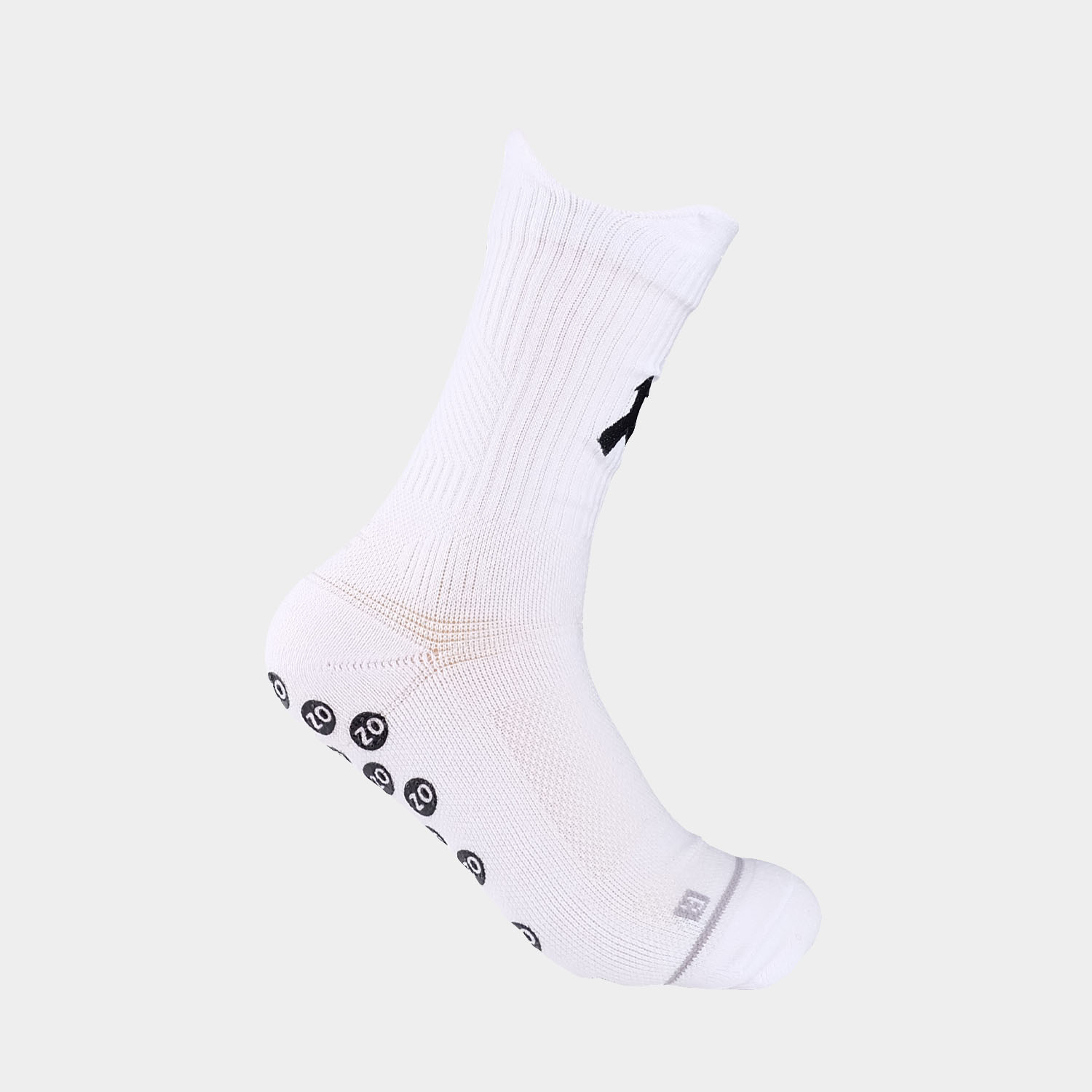
- Solution: Ensure the socks are the right size and opt for styles with non-slip silicone strips on the soles and around the ankles or with a traction knit pattern. These patterns can effectively “lock” the socks to the feet and shoes.
How Retailers and Brands Should Choose Sock Sizes
For retailers, providing accurate sizes is not only the key to enhancing user experience, but also the core for reducing return rates and building brand trust.
Know your target region
An intensive market analysis is required prior to the identification of the product line size system. In order to concentrate on the North American Market, you need to know the system derived from the US code and modified with the foot length range. It you is to be marketed in Europe, the European size in centimeters is the standard set-up. Having clear and accurate multi-region size charts on your website and packaging is an essential skill in attracting (and keeping) international customers.
Offer dual-size ranges
As a very user-geared solution, a dual-size system is used. In other words, one sock size (e.g. M) fits for two shoe sizes (e.g. US 9-10). This brilliantly solves the confusion of users’ choices when their foot length happens to hold the critical value, and reduces the clutter of inventory management at the equal time. For example, by extending sizes S, M, and L to S (6-8), M (9-11), and L (12-14), a wider audience can be covered.
Test fit before bulk orders
Before you decided to make your own custom socks in bulk, it is important to do a small try-on test. Choose to size up or down: Pick the team members with the largest, smallest and widest feet to try them on, and get feedback on sizing, snugness and comfort. This small seemingly insignificant step can save the entire loss of all the orders of the whole batch being canceled due to size deviations. Our factory could give you professional size advice when you send us your requirements, also can send size samples to you for testing.
Conclusion
Choosing the right size sock is an entire process beginning from “Taking measurements”, flowing through “Getting to understand”, “Choosing” and finishing off with “Getting what you want”. It demands we yield to one simple truth — that our feet are three dimensional, moving, living things. Just guess the size of your socks and use the size of the shoes as reference, it will be warm gamble.
If you have more questions about size, please contact sockcn. We will be glad to offer professional response.