
Cycling socks need to do more than cover your feet. Because cycling shoes are close-fitting and riders repeat the same pedaling motion for hours, a good cycling sock needs to manage moisture, minimize bulk, stay securely in place, and reduce friction.
For brands developing custom cycling socks, these requirements affect everything from yarn selection to knit construction, thickness, sock height, and finishing details.
TL;DR
- Moisture management matters: Sweat can accumulate inside cycling shoes and contribute to discomfort and friction.
- Material matters, but no single fiber is best for every product: Performance synthetics, merino wool, nylon, and selected blends each serve different purposes.
- Construction matters as much as fiber: Ventilation zones, toe construction, arch support, and reinforcement all affect performance.
- Thin is often useful, but thinner is not always better: The right thickness depends on the cycling shoe, climate, riding style, and cushioning requirements.
- Sock height is functional as well as aesthetic: Road, MTB, gravel, and indoor cycling may call for different coverage.
- Custom cycling socks should be developed around the target rider: Material, construction, fit, and branding should work as one product specification.
What is Special About Cycling Socks
Cycling socks are designed around the specific conditions created by cycling shoes: limited space, repetitive pedaling, heat, sweat, and prolonged contact between the foot and footwear.
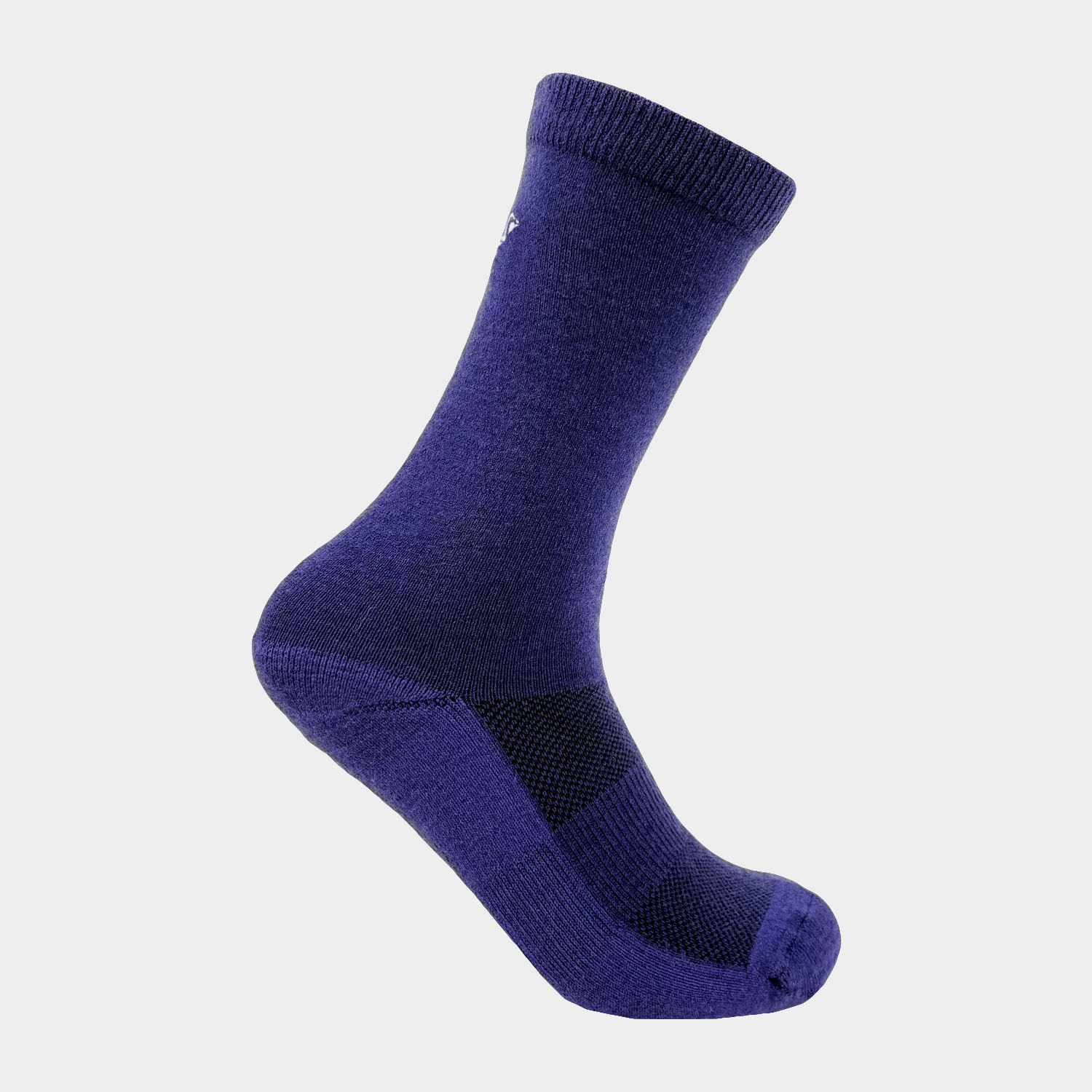
Compared with many general athletic socks, cycling socks tend to use a lower-profile construction and closer fit. Heavy cushioning is often unnecessary because a thick sock can make a close-fitting cycling shoe feel tighter and create additional pressure points.
A well-designed cycling sock typically focuses on:
- Moisture management
- Breathability
- Secure fit
- Low bulk
- Targeted cushioning
- Heel and toe durability
The goal is not to make the sock as thick or cushioned as possible. It is to create a sock that stays comfortable and unobtrusive inside the shoe throughout the ride.

Why Is Moisture-Wicking Important for Cycling Socks
Moisture-wicking helps move sweat away from the skin, which can improve comfort when feet remain inside cycling shoes for extended periods.
Cycling shoes are designed for stability and efficient power transfer, so they generally fit closely around the foot. During a long outdoor ride or intense indoor cycling session, sweat can accumulate inside this relatively enclosed environment.
A moisture-wicking cycling sock helps manage that moisture. However, three terms are often confused:
- Moisture-wicking: moves moisture away from the skin.
- Breathability: allows heat and moisture vapor to escape.
- Quick-drying: describes how rapidly a wet material dries.
They are related, but they are not interchangeable. A high-performance cycling sock may need a combination of all three properties.
For product developers, this is why “moisture-wicking” should be treated as a performance requirement rather than simply a material name. Fiber composition, yarn engineering, knit density, mesh zones, and finishing can all influence the final result.
Cycling Sock Materials: Which Materials Actually Work
The best material for cycling socks depends on the intended riding conditions and product goals. Performance synthetics are useful for fast drying, merino wool provides temperature regulation, nylon contributes durability, and blended yarns can combine several properties.
Material | Main Strength | Typical Application |
Polyester / performance synthetics | Fast drying, lightweight | Road, racing, indoor cycling |
Merino wool | Temperature regulation, moisture management | Long-distance and variable weather |
Nylon | Strength and abrasion resistance | Reinforcement and blended constructions |
Bamboo / cellulosic fibers | Softness and comfort | Lifestyle and commuting |
Blended yarns | Balanced performance | Custom performance products |
Polyester and Performance Synthetics
Polyester is widely used in performance cycling socks because it is lightweight and can dry quickly. Engineered synthetic yarns can also be designed to improve moisture transport and ventilation.
For hot-weather riding, racing, and indoor cycling, lightweight synthetic constructions can be particularly useful when rapid drying is a priority.
Merino Wool
Merino wool can help manage moisture while regulating temperature across changing conditions. This makes it useful for long-distance cycling, touring, and riding in cooler or variable weather.
Its main trade-off is drying speed. Lightweight synthetic fibers generally dry faster, while merino can offer a different balance of temperature regulation and comfort.
Nylon
Nylon is valued primarily for strength and abrasion resistance. It is often incorporated into cycling sock blends or used strategically in areas where additional durability is needed.
Bamboo and Other Cellulosic Fibers
Bamboo-based fibers can provide a soft hand feel and are suitable for lightweight, comfort-focused products. They can be considered for commuting, lifestyle cycling, or products where softness is an important part of the wearer experience.
Why Blended Yarns Matter
A custom cycling sock does not have to depend on one fiber.
A blend can combine synthetic fibers for drying and structure, nylon for durability, and merino wool or other fibers for comfort and temperature management.
For brands, the more useful question is often not “Which material is best?” but “Which material combination fits this product?”
What Sock Construction Matters for Cycling

Material is only one part of cycling sock performance. The way the sock is knitted and constructed determines how those materials perform on the foot.
- Low-profile or seamless toe construction can reduce friction from raised seams inside a close-fitting cycling shoe. This becomes particularly important during long rides, when a small pressure point can become increasingly noticeable.
- Mesh and ventilation zones can improve airflow around areas such as the top of the foot. This is useful when the cycling shoe itself provides limited ventilation.
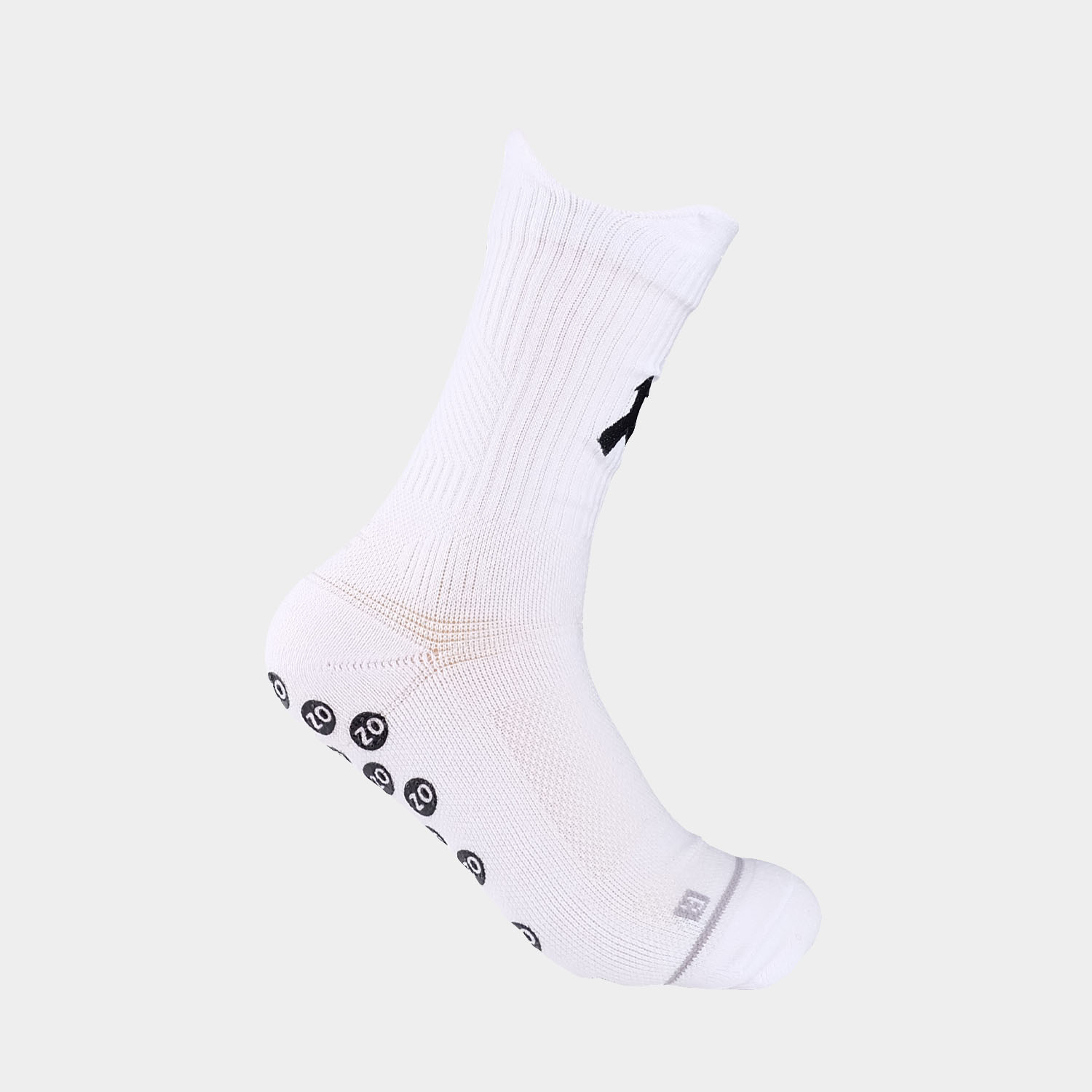
- Arch support helps keep the sock positioned during repetitive pedaling. A supportive band can reduce slipping, bunching, and fabric movement without requiring strong compression.
- Reinforced heel and toe areas improve durability where repeated friction is concentrated. This allows a lightweight sock to remain durable without making the entire sock unnecessarily thick.
- A secure cuff keeps the sock in position throughout the ride. It should provide enough elasticity to prevent slipping without creating excessive pressure.
In other words, the yarn determines part of the performance, while the construction determines how that performance works on the foot.
How Thin Should Cycling Socks Be
Cycling socks are generally kept relatively thin because cycling shoes have a close fit, but thinner is not automatically better.
A low-bulk sock can help maintain the intended fit of a cycling shoe, reduce excess heat, and prevent unnecessary pressure. This is particularly relevant for road cycling shoes, which are often designed around a precise fit.
However, removing too much material can also reduce cushioning, warmth, or durability.
The appropriate thickness depends on:
- Cycling shoe fit
- Weather and temperature
- Road vs. MTB or gravel riding
- Required cushioning
- Intended performance level
For product development, a useful principle is to choose the minimum thickness needed to provide the desired comfort, protection, and warmth rather than simply making the sock as thin as possible.

How High Should Cycling Socks Be
Cycling sock height depends on riding discipline, weather, protection requirements, team aesthetics, and competition rules.
- Ankle-length: useful for casual or some indoor cycling applications.
- Mid-calf: common for road cycling and cycling team kits.
- Higher crew styles: useful for MTB and gravel riding where additional leg coverage is desirable.
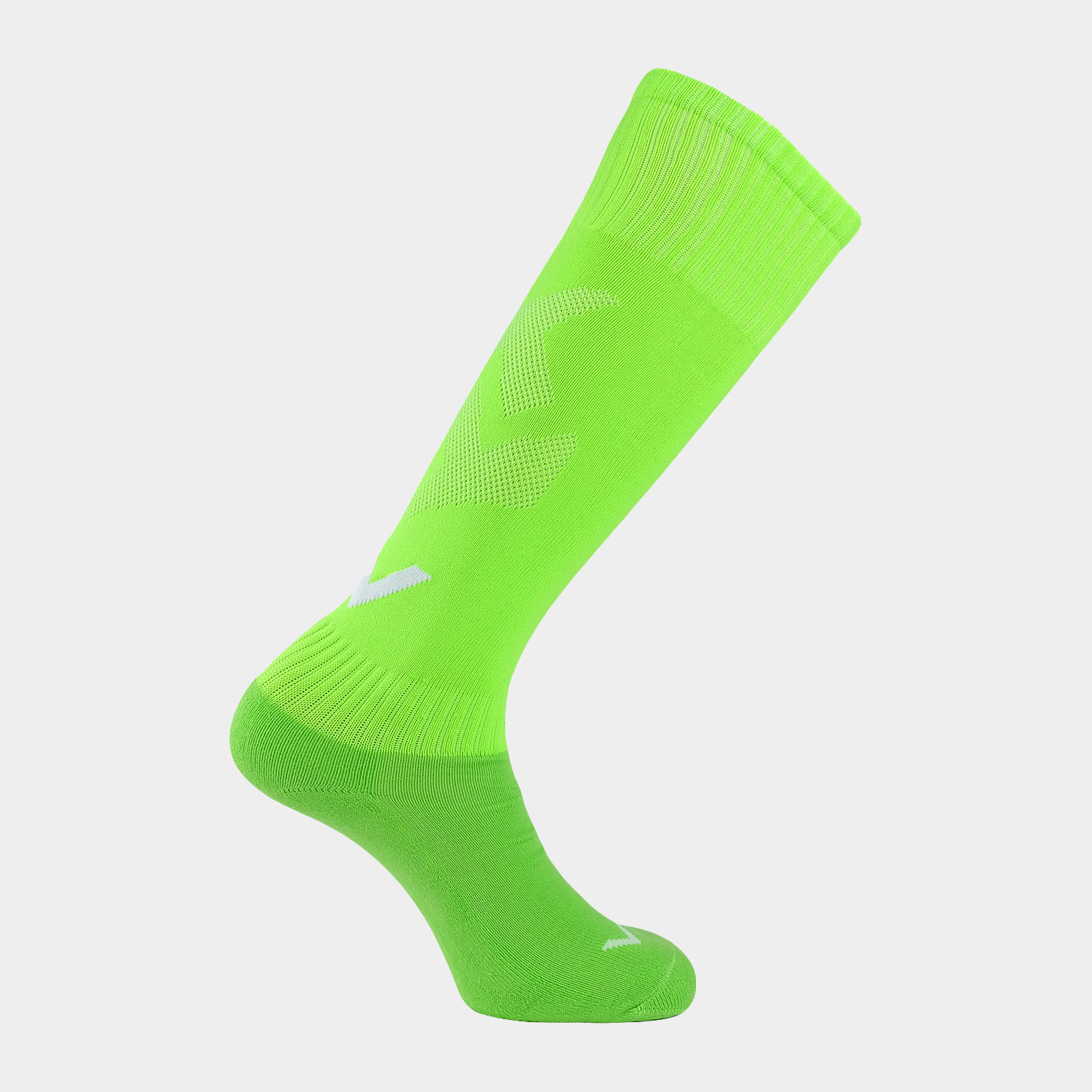
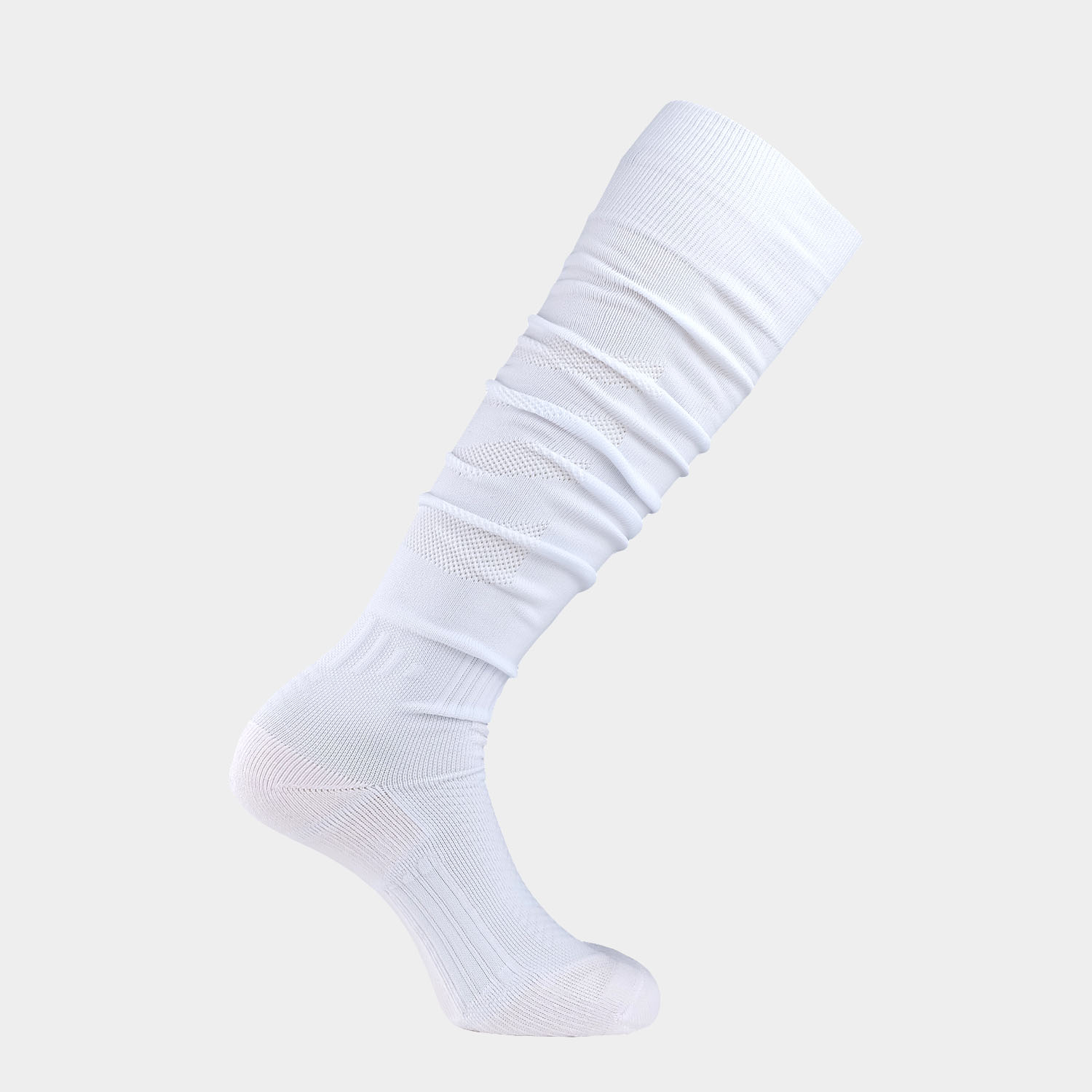
- Knee-high: generally reserved for specialized protection or weather requirements.
For road cycling, mid-calf socks offer a practical balance of coverage, appearance, and sun protection. In MTB and gravel applications, a higher cuff can provide additional protection from vegetation, dirt, and debris.
For competitive products, applicable race regulations should be checked before finalizing sock height.
Common Cycling Sock Mistakes — And How to Avoid Them
- Choosing cotton for high-sweat riding. Cotton can retain moisture and may become uncomfortable when wet. For performance-focused cycling products, moisture-management fibers are generally more appropriate.
- Assuming thinner is always better. Low bulk is useful, but some products need additional cushioning, warmth, or durability. The specification should match the shoe and riding conditions.
- Focusing only on fiber content. Two socks with the same fiber composition can perform differently because of yarn engineering, knit density, ventilation, and construction.
- Ignoring shoe fit. A sock that works well in a roomy MTB shoe may not be appropriate for a tightly fitted road cycling shoe.
- Using the same specification for every riding condition. Road racing, mountain biking, long-distance touring, and indoor cycling have different performance requirements.
The most reliable approach is to develop the sock around the complete use case, rather than optimizing one feature in isolation.
How to Customize Cycling Socks for Your Target Audience
Custom cycling socks should start with the target rider and intended use, not with colors or logos.
Define the Riding Application
Consider whether the product is designed for:
- Road cycling
- Gravel
- Mountain biking
- Indoor cycling
- Cycling teams and clubs
- Commuting or lifestyle cycling
Select the Material or Yarn Blend
Choose materials based on the product’s priorities. A lightweight synthetic blend may suit a summer road-racing sock, while a merino blend may be more appropriate for long-distance or variable-weather cycling.
Set Thickness and Cushioning
Decide whether the product prioritizes minimal bulk, ventilation, cushioning, durability, or warmth. Cushioning can also be targeted to specific areas rather than increasing the thickness of the entire sock.
Choose Construction Features
Depending on the intended product, customization can include:
- Mesh ventilation
- Arch support
- Reinforced heel and toe
- Low-profile toe construction
- Compression zones
- Different knit densities
- Targeted cushioning
Choose Sock Height and Branding
Once the functional specification is established, the visual identity can be developed through:
- Pantone color matching
- Custom patterns
- Logos
- Brand details
- Labels
- Packaging
For OEM cycling socks, performance customization and visual customization should be developed together. The goal is not simply to put a logo on a standard sock, but to create a product that fits the needs of a specific audience.
What Information Do You Need to Develop Custom Cycling Socks
You do not need a fully finished design to start developing custom cycling socks.
Useful starting information includes:
- Intended cycling application
- Target customer
- Preferred material or performance goal
- Sock height
- Thickness or cushioning preference
- Functional features
- Color and design references
- Estimated quantity
- Target price, if available
If some specifications are still undecided, you can start with the product goal instead.
For example:
“We need a lightweight cycling sock for a summer road-cycling brand, with strong moisture management and a mid-calf design.”
That is enough to begin discussing suitable materials, construction, and sampling options.
Develop Custom Cycling Socks for Your Brand
A high-performance cycling sock starts with the right product specification—not simply a cycling-themed design.
Whether you need lightweight road cycling socks, durable MTB socks, moisture-wicking indoor cycling socks, or premium merino wool cycling socks, the material and construction should match your target rider and intended use.
You don’t need a finalized design to get started. Share your target application, material preference, design idea, or performance requirements, and the product specification can be developed from there.