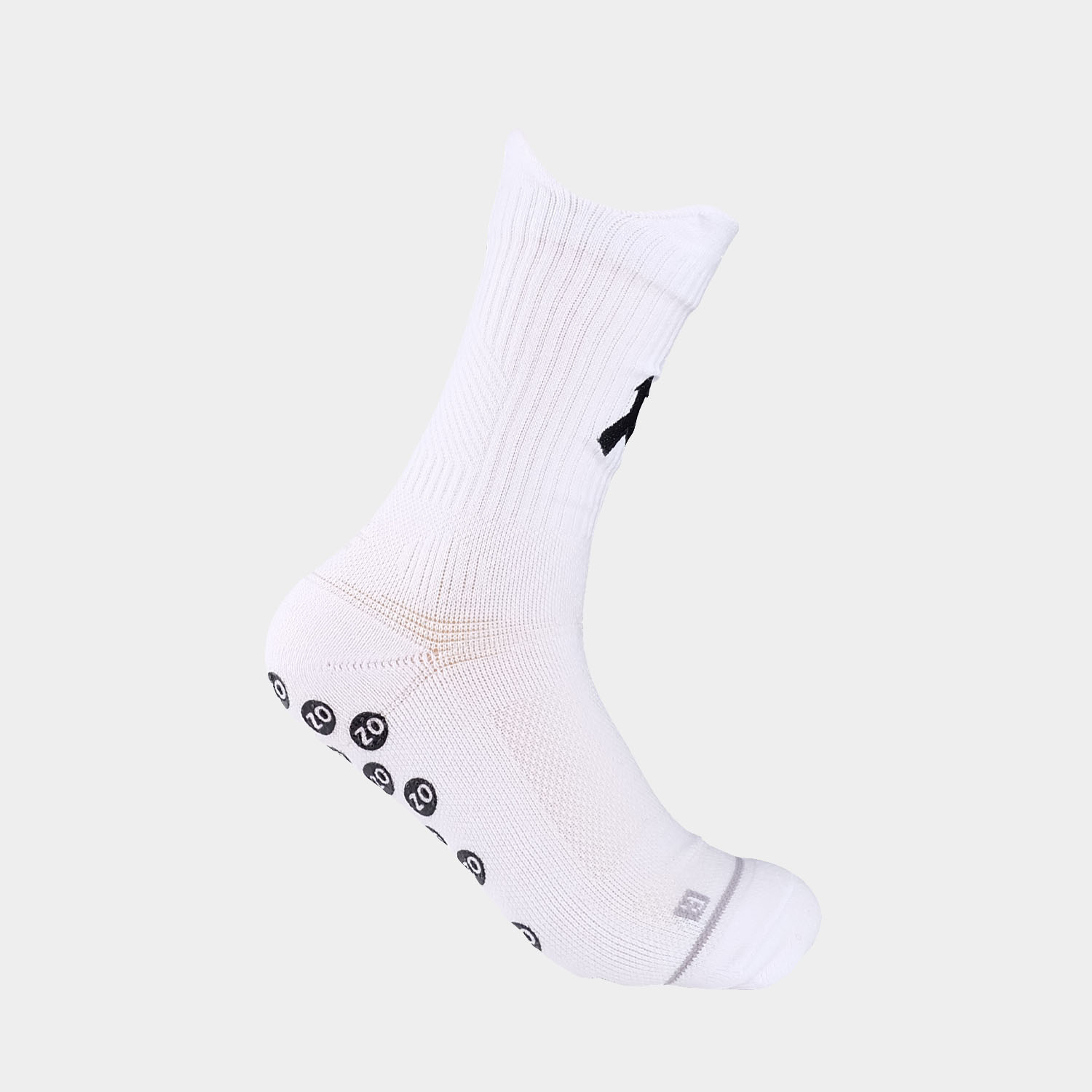
Nylon is a strong, durable, lightweight synthetic fiber that is widely used in socks to improve abrasion resistance, shape retention, fit, and overall durability. However, nylon is not automatically the best choice for every sock. In most products, it works best as part of a fiber blend with materials such as cotton, wool, polyester, or spandex.
TL;DR
- Nylon is valued for: durability, abrasion resistance, lightweight strength, and shape retention.
- Nylon is often blended: with cotton, wool, polyester, or spandex to balance different performance requirements.
- Nylon works well for: hiking, outdoor, athletic, compression, and other socks that need durability and a secure fit.
- Nylon vs. polyester: neither is universally better; the right choice depends on the sock’s intended use and construction.
- For custom socks: fiber selection should consider the application, construction, performance requirements, and target cost—not just the name of the fiber.
- At Sockcn: we are gradually replacing virgin nylon in our products with recycled nylon, including REPREVE® nylon 6, as part of our ongoing material transition.
What Are Nylon Socks
Nylon socks are socks made partly or entirely from nylon, a synthetic polyamide fiber. In commercial sock manufacturing, however, “nylon socks” does not necessarily mean socks made from 100% nylon.
Nylon is often used as one component of a blended yarn because it can add strength, durability, abrasion resistance, and shape retention without adding much weight.
For example, a sock may combine:
- Nylon + cotton for comfort and durability
- Nylon + merino wool for outdoor performance and durability
- Nylon + polyester for performance applications
- Nylon + spandex for stretch and recovery
The role of nylon therefore depends on what the finished sock is designed to do.
What Are the Benefits and Drawbacks of Nylon Socks

Nylon offers several practical advantages for sock manufacturing, especially in durability and abrasion resistance. However, it also has limitations, so its performance depends on how it is used and combined with other fibers.
Benefits of Nylon
High strength and durability. Nylon is a strong fiber that can help socks withstand repeated wear and washing. Nylon is widely used in socks because it provides a combination of strength, abrasion resistance, and lightweight durability. Learn more about why nylon is essential for durable socks.
Excellent abrasion resistance. This is particularly useful in areas exposed to friction, such as the heel and toe.
Good shape retention. Nylon can help a sock maintain its structure and fit over repeated use.
Lightweight construction. Nylon provides strength without requiring a heavy fabric, making it useful for lightweight performance and outdoor socks.
Quick drying. Nylon has relatively low moisture absorption compared with fibers such as cotton, so it can dry relatively quickly when used in an appropriate sock construction.
Drawbacks of Nylon
Nylon is not highly absorbent, so it should not automatically be described as a highly moisture-wicking fiber. Moisture management depends on the yarn, knit structure, fiber blend, and overall sock construction.
Breathability also varies. A lightweight, open-knit nylon construction can feel breathable, while a dense construction may retain more heat.
There are also environmental considerations. Conventional nylon is a petroleum-derived synthetic fiber and is not readily biodegradable.
Why Are Nylon Blends Common in Socks
Nylon is often used alongside other fibers because different materials provide different properties.
Blend | What it can provide | Common applications |
Nylon + Cotton | Comfort + durability | Everyday socks |
Nylon + Merino Wool | Warmth + durability | Hiking and outdoor socks |
Nylon + Polyester | Durability + performance | Athletic socks |
Nylon + Spandex | Strength + stretch and recovery | Performance and compression socks |
There is no single “ideal” nylon percentage for every sock. Manufacturers typically consider the intended use, sock construction, required performance, comfort, and target cost when developing a fiber blend.
How Sockcn Is Transitioning to Recycled Nylon
At Sockcn, nylon is an important material in our products because of its high strength, durability, lightweight construction, and moisture-management properties.
As part of our broader move toward more responsible materials—including our transition toward RWS-certified wool—we are gradually replacing virgin nylon in our inventory with recycled alternatives wherever possible.
We currently use REPREVE® recycled nylon 6, made from pre-consumer industrial waste that would otherwise have been sent to landfill or reused in lower-value applications.
By replacing virgin nylon with recycled nylon, we aim to reduce our reliance on virgin petroleum-based feedstocks and the hydrocarbons involved in producing virgin fibers. Using recycled nylon can also help reduce the energy, water, and greenhouse-gas impacts associated with producing virgin materials.
Our goal is not to switch everything overnight, but to gradually reduce our use of virgin nylon and increase the proportion of recycled nylon in our products year by year.
Our Future Direction
We are also working with our suppliers to identify recycled and renewable alternatives to petroleum-based virgin fibers. We are testing different materials to make sure they can meet the durability and performance requirements of our products while remaining suitable for our broader product range.
This is particularly important for socks because a lower-impact material still needs to perform under repeated wear, washing, and friction.
Nylon vs Polyester Socks: What's the Difference
Nylon and polyester are both widely used synthetic fibers, but they tend to be selected for somewhat different performance priorities.
Feature | Nylon | Polyester |
Durability | Excellent | Very good |
Abrasion resistance | Excellent | Very good |
Shape retention | Excellent | Good |
Moisture management | Depends on construction | Often strong in performance constructions |
Weight | Lightweight | Lightweight |
Common applications | Durable, outdoor, performance socks | Athletic and performance socks |
So which is better?
Neither fiber is universally better. Nylon can be particularly useful when abrasion resistance, durability, and structural stability are priorities. Polyester is widely used in performance socks where moisture management and lightweight construction are important.
In some products, manufacturers use both nylon and polyester to balance different performance requirements.

When Should You Use Nylon in Socks
Nylon makes particular sense when a sock needs to withstand repeated friction and wear while maintaining its structure and fit.
Hiking and Outdoor Socks
Hiking socks are a good example.
They need to handle prolonged wear and repeated friction from footwear. Nylon is therefore often combined with merino wool: merino wool contributes warmth and temperature regulation, while nylon helps reinforce the sock and improve durability.
Running and Athletic Socks
Running and athletic socks also benefit from materials that can withstand repeated friction, stretching, and washing.
Nylon can contribute to durability, shape retention, and fit. However, the presence of nylon alone does not determine whether a sock is moisture-wicking. The yarn, knit structure, thickness, and other fibers all matter.

Compression Socks
Nylon is commonly used in compression sock constructions because it can contribute to durability, close fit, and recovery when combined with elastic fibers.
The compression level itself, however, is determined by the overall sock construction rather than by nylon alone.

Everyday and Dress Socks
For lightweight everyday and dress socks, nylon can help improve durability, shape retention, and resistance to wear while keeping the sock relatively light.
How Should Brands Choose Nylon for Custom Socks
For a custom sock project, the more useful question is not simply:
“Should we use nylon?”
It is:
“What does this sock need to do?”
A manufacturer typically needs to consider:
- End use: hiking, running, work, everyday, compression, etc.
- Durability: how much friction and repeated wear the sock will experience
- Fiber blend: whether nylon should be combined with wool, cotton, polyester, or spandex
- Sock construction: knit structure, thickness, and reinforcement
- Comfort: softness, hand feel, and fit
- Target cost: the material solution needs to match the product’s commercial requirements
This is why a custom sock specification should go beyond simply asking for “nylon socks.” The fiber blend, construction, application, performance requirements, and target cost should be considered together.
10 Common Questions About Nylon Socks
- Are nylon socks waterproof?
No. Nylon itself is not waterproof. It absorbs relatively little moisture and can dry quickly, but the water resistance of a finished sock depends on its construction and any additional treatment.
- Are nylon socks breathable?
They can be. Breathability depends on the knit structure, fabric density, thickness, and fiber blend rather than nylon alone.
- Is nylon a natural or synthetic fiber?
Nylon is a synthetic fiber. It belongs to the polyamide family and is manufactured through chemical processes.
- Is nylon biodegradable?
Conventional nylon is not readily biodegradable. It is a synthetic polymer that can persist in the environment for a long time.
- Can nylon be recycled?
Yes. Certain types of nylon can be mechanically or chemically recycled and used to produce new textile materials.
- Is nylon good for sweaty feet?
It depends on the overall sock construction. Nylon can dry relatively quickly, but effective moisture management also depends on the yarn, knit structure, thickness, and other fibers in the blend.
- Do nylon socks dry quickly?
Generally, yes. Nylon absorbs less moisture than cotton, which can allow it to dry relatively quickly.
- Are nylon socks good for hiking?
Yes. Nylon’s durability and abrasion resistance make it useful for hiking socks, particularly when combined with wool or other performance fibers.
- Are nylon socks good for everyday wear?
Yes. Nylon can improve durability, shape retention, and fit in everyday socks.
- Are nylon socks better than cotton or polyester?
There is no universal winner. Nylon is particularly useful for durability and abrasion resistance, while cotton and polyester offer different performance characteristics. The right choice depends on the intended use and construction of the sock.
Looking for Custom Nylon-Blend Socks
The right sock material depends on more than the fiber name. Application, fiber blend, construction, performance requirements, and target cost all affect the final product.
If you are developing custom socks for a brand, retailer, sports team, outdoor product, or corporate program, Sockcn can work with you to determine a suitable material and construction based on the product’s requirements.
Need help choosing between nylon, polyester, wool, cotton, or a blend? Contact Sockcn with your target application and requirements.