Choosing the right supplier is one of the most important decisions for any sock brand or buyer.
When sourcing socks, most businesses face the same question: should you work directly with a factory, or go through a trading company?This is especially important if you’re planning to work with a custom socks manufacturer.
The answer is not always straightforward. Each model has its own advantages, depending on your order size, experience, and business goals.
This socks factory sourcing guide breaks down the key differences between factory-direct sourcing and trading companies, helping you understand which option fits your needs—and how to avoid common sourcing mistakes.
Factory vs Trading Company: What’s the Real Difference?
Here’s the main difference: a factory makes the socks, while a trading company connects you to factories.
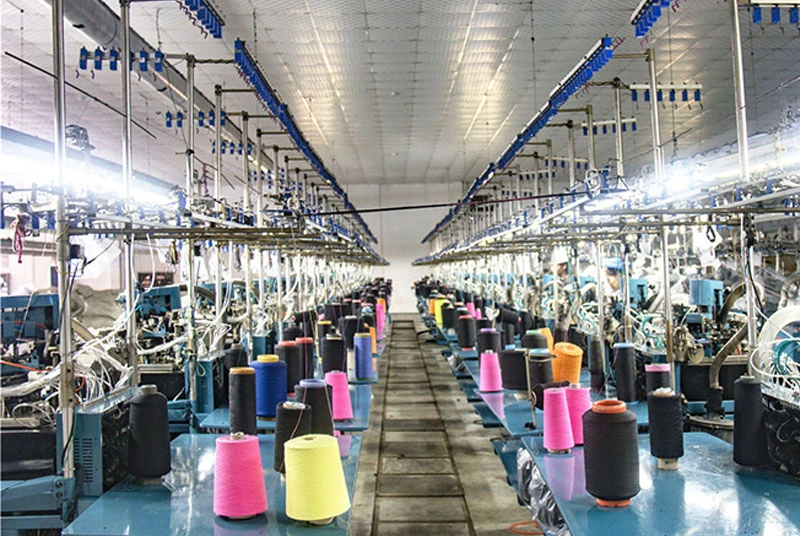
A factory owns the machines, runs production, and controls quality at every stage — from yarn to finished product.
A trading company is the middleman. They don’t make anything themselves. Instead, they source from different factories and handle communication for you.
In simple terms: going direct means you talk to the people actually making your socks. Going through a trading company means you’re working with someone who manages the process for you, but isn’t on the production floor.

How Sock Brands Actually Source Sockss
Understanding the two primary sourcing models is essential to making an informed decision.
Working directly with a factory
This means you partner directly with the team that owns the machines, runs the production lines, and handles quality control. They’re the actual source of your product.
Communication is straightforward. You discuss materials, plans, timelines, and costs with the people who’ll be making your socks. That cuts down a lot on misunderstandings during sampling and production. If you’re not sure how to evaluate factories, you can read more about how to choose a reliable sock manufacturer.
Working with a trading company
A trading company acts as your go-between. They don’t own any production facilities. Instead, they pull products from different factories (often switching depending on price or availability) and sell to you. Think of them as service-oriented middlemen — they manage logistics, communication, and sometimes quality checks. Your relationship is with the trader, not the maker. That means your specifications are passed along a chain, which can sometimes lead to things getting lost in translation.
How Sock Brands Actually Source Sockss
Factor | Factory-Direct | Trading Company |
Price Structure | Transparent pricing based on materials, labor, and production | Higher total cost due to service fees and markups |
MOQ (Minimum Order Quantity) | Usually higher, depending on production setup | More flexible, can combine small orders |
Communication | Direct communication with production team | Indirect communication through an intermediary |
Customization | High flexibility for materials, structure, and design | Limited by factory availability and coordination |
Sampling Speed | Faster iterations with direct feedback from factory | Slower due to communication layers |
Quality Control | Built into the production process (defect prevention) | Mostly post-production inspection |
Consistency | Stable quality across repeat orders | Risk of variation if suppliers change |
Lead Time | More predictable production scheduling | Can vary depending on coordination efficiency |
Supply Chain Control | Full visibility and control over production | Limited visibility into actual manufacturing |
Best For | Growing brands, long-term production, custom products | Small orders, beginners, multi-product sourcing |
When Does a Trading Company Make More Sense?
Going direct isn’t always the right move. Here are a few cases where a trading company is actually more practical and cost-effective.
Small or Mixed Orders
If your order is small (say, only 200 pairs per style), or you need different types of socks — like no-shows, ankle socks, and sports socks — a trading company can be a great fit. Many factories simply won’t take small orders; they’ll tell you it’s “not worth their time.” But a trading company can bundle your order with other small clients to meet factory MOQs. That gets you to a feasible order quantity without having to buy thousands of pairs yourself.
Limited Sourcing Experience
If you’re new to the sock business and don’t know how to vet factories or assess sample quality, a trading company can help you avoid beginner mistakes. They know the industry, understand which factories excel at what (e.g., high-end combed cotton vs. performance athletic socks), and can match you with the right ones. They’ll also keep an eye on production and inspect goods for you — almost like hiring a professional sourcing assistant.
Need for one-stop sourcing service
If you want things simple and hands-off, a trading company can deliver. You deal with one contact. They handle factory selection, sample follow-up, order tracking, and shipping. That saves time and spares you from juggling multiple suppliers. This works well if you need different product types or just don’t want to get into the nitty-gritty of production details.
Why Growing Brands Shift to Factory-Direct Sourcing

As brands scale up, many move away from trading companies and start working directly with factories. When sourcing internationally, working with a reliable China socks export manufacturer can also give brands greater visibility into production, pricing, and supply chain coordination. It’s not just about price — it’s about speed, control, and long-term reliability.
Lower long-term cost
Working directly with a factory removes intermediary markups, making pricing more transparent.
In many cases, brands can reduce procurement costs by 10%–20%. For example, a product that costs $1.25 per pair through a trading company may cost around $1.00–$1.10 when sourced directly.
At scale, this difference significantly improves profit margins and allows better cost control. This matters even more when working with a custom socks bulk production partner.
Faster product development cycle
Direct communication with the factory can make the sock product development process faster and more efficient. From selecting materials and refining the sock structure to adjusting elasticity, colors, or logos, brands can communicate changes directly with the production team instead of waiting for information to pass through multiple layers.
Faster feedback and sample revisions can shorten the overall development cycle and help brands move from product concept to bulk production more efficiently.
Better control over quality & materials
When you go direct, you see exactly what goes into your socks — materials, production steps, quality standards. Instead of just crossing your fingers during final inspection, you can catch issues earlier and fix them during production. That means fewer defects and more consistency from batch to batch.

Stronger supplier relationship
Stick with a factory over multiple orders, and they’ll get to know your product requirements inside out. That leads to more consistent quality and smoother reorders. Plus, you can plan together for peak seasons — securing production capacity when you need it most.
How to Choose Between a Factory and a Trading Company
Choosing the right sourcing model depends on your business priorities. Instead of asking which option is better, the key is to understand which model fits your current stage and operational needs.
If your priority is cost control
Go direct with a factory. You remove middleman markups and get a clear picture of your cost structure — materials and production. That makes it easier to optimize pricing and improve margins over time. The larger your order volume, the bigger the advantage.
If your priority is flexibility
A trading company is probably a better fit. They can bundle small orders, work with different factories, and help you source multiple product types at once. That’s perfect if you’re testing designs or haven’t locked in steady order quantities yet.
If your priority is speed to market
Factory-direct usually wins here. Direct communication with the production team cuts delays and prevents misalignment during sampling and revisions. Changes happen faster, so you can launch sooner. The only exception? Very small, simple orders — a trading company can sometimes move quickly by tapping existing factory stock.
If your priority is quality consistency
Working with a factory is the more reliable choice. Factories control the entire production process, allowing them to manage quality at each stage rather than relying only on final inspection. Over time, consistent processes and stable production teams lead to more predictable results across repeat orders.
Common Mistakes When Choosing a Sock Supplier
Picking the wrong supplier usually means delays, quality headaches, and costs you didn’t see coming. Most of these problems boil down to a few common mistakes — and they’re avoidable if you know what to look for.
Choosing based on price only
Focusing only on the lowest price can lead to hidden costs later.
Lower quotes may mean compromises in materials, production processes, or quality control. In many cases, issues such as defects, delays, or inconsistent products end up costing more than the initial savings.
A better approach is to evaluate overall value—including quality, consistency, and reliability—not just unit price.
Ignoring sample-to-bulk consistency
A good sample does not always guarantee consistent bulk production.
Some suppliers may provide high-quality samples but fail to maintain the same standards during mass production due to material changes, process differences, or capacity limitations.
Always confirm that the factory can replicate the same materials, construction, and quality standards at scale.
Not verifying production capability
Not every supplier has the same level of production know-how. Some outsource the work. Others just don’t have the technical skills to handle specific materials, structures, or performance requirements. That’s a recipe for delays or inconsistent results. So do your homework: make sure the supplier actually runs the production process and has real experience making similar products.
Overlooking communication efficiency
Communication problems are one of the easiest things to underestimate — and they cause some of the biggest headaches. Slow replies, vague instructions, or too many layers of back-and-forth all lead to mistakes, especially during sampling and revisions. When information bounces through too many people, things get lost or twisted. Working with a supplier who talks clearly and directly can save you a ton of trouble. You can also review different options in this list of top custom socks manufacturers to compare capabilities, MOQ, and lead times.
How Sockcn Supports Factory-Direct Projects
For brands thinking about going direct to a factory, working with a manufacturer that actually controls both production and communication can cut down risk by a lot.
Sockcn runs a direct manufacturing model. That means we focus on production control, customization flexibility, and making sure everything is transparent.
Unlike traditional factories that force you to order huge volumes, Sockcn keeps MOQs flexible — you can start from as low as 100 pairs. That means smaller brands can get factory-direct pricing without the usual pressure to buy big.

In-house production & full process control
Sockcn handles everything in-house — from raw material sourcing to knitting, linking, boarding, and final inspection. That means better quality at every stage and fewer risks from outsourced production or multi-layer supply chains.
OEM & private label support
We support both OEM and private label projects as an OEM sock manufacturer. You can customize materials, structures, patterns, and packaging. During sampling, we can provide multiple versions for you to evaluate — so you’re confident the final product is right before we go into bulk production.
Transparent pricing & stable lead times
Pricing is based on actual materials and production — no hidden fees. Lead times are agreed upfront, and you can track production progress along the way. That helps you plan inventory and reduce guesswork.
Conclusion
There is no one-size-fits-all answer when choosing between a factory and a trading company. The right choice depends on your priorities, experience, and stage of growth.
For small or early-stage projects, a trading company can offer flexibility and convenience. For brands focused on scaling, improving margins, and maintaining consistent quality, factory-direct sourcing is often the better long-term solution.
The key is to understand how each model works and choose the one that aligns with your business goals.
If you are exploring factory-direct sourcing, working with a manufacturer that offers both production control and clear communication can help you achieve better results with less risk.
Related Resources
→ Top Private Label Sock Manufacturers for Startups (2026 Guide)
→ How to Choose a Reliable OEM China Factory for Socks
→ Chinese Socks: Why Global Brands Choose China for Manufacturing
→ Everything You Need to Know About Chinese Sock Manufacturer
→ What Is OEM? A Simple Guide for Brands and Buyers in the Sock Industry
Explore more guides on sock materials, performance requirements, and manufacturing considerations.