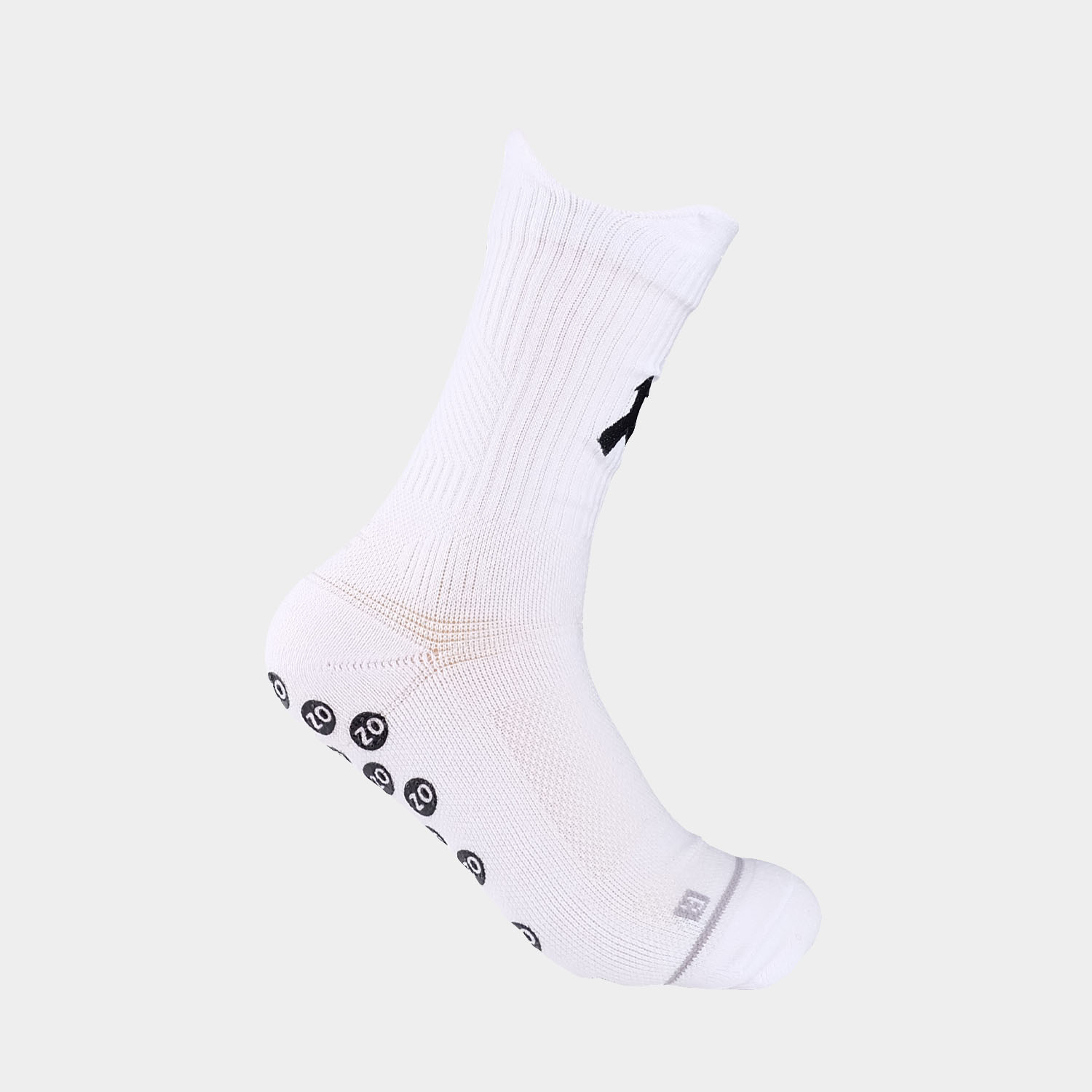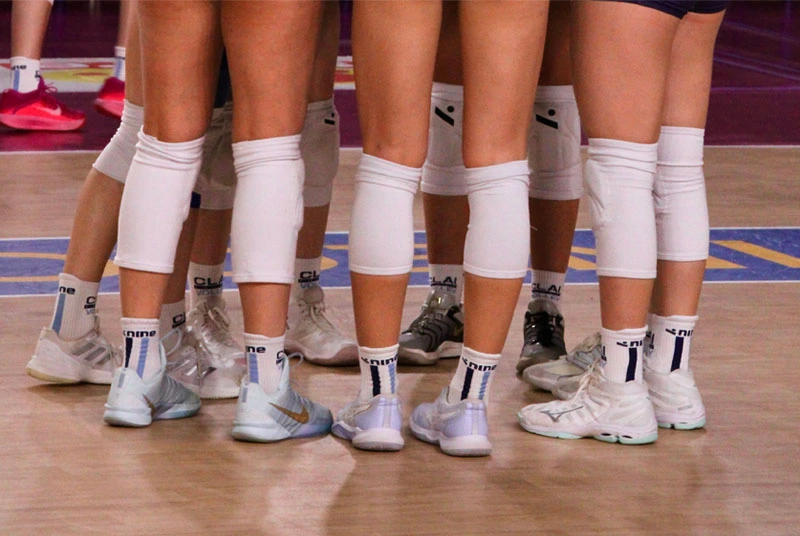
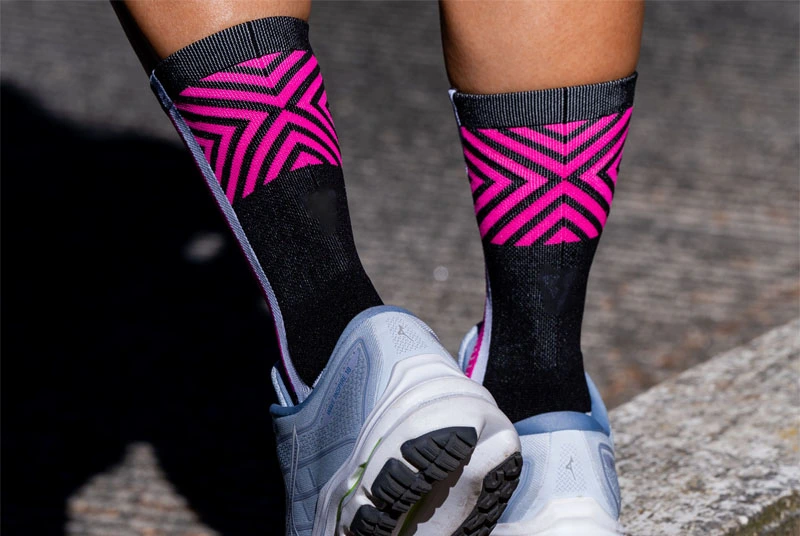
Polyester is one of the most widely used fibers in sports and performance socks. It is commonly found in running socks, cycling socks, team socks, training socks, and custom sports socks.
But “polyester” alone does not determine how a sock will perform. A lightweight running sock, a full-sublimation team sock, and a thick everyday polyester sock can feel and perform very differently depending on the yarn, knit structure, thickness, ventilation, and other materials used.
This guide explains the benefits and drawbacks of polyester socks, how polyester compares with cotton, and when polyester is a good choice for custom performance socks.
TL;DR: Are Polyester Socks Good?
Polyester socks are a strong choice for sports, performance, and custom applications because they can dry quickly, withstand repeated wear, and work particularly well with dye-sublimation printing. However, polyester is not automatically better than cotton or other fibers. The best choice depends on how the sock is constructed and what you need it to do.
Question | Short answer |
Are polyester socks good? | Yes, especially for sports, performance, and custom applications. |
Are polyester socks good for sweaty feet? | They can be, especially when lightweight and well ventilated. |
Do polyester socks make your feet sweat? | Not necessarily. Thickness and ventilation matter. |
Are polyester socks moisture-wicking? | They can be, but wicking depends on yarn and construction. |
Are polyester socks durable? | Yes. Polyester is well suited to repeated wear and washing. |
Are polyester socks good for running? | Yes. Polyester is widely used in performance running socks. |
Are polyester socks good for custom designs? | Yes. Polyester is particularly well suited to conventional dye sublimation. |
Are cotton socks better than polyester? | Not universally. Cotton offers a familiar soft feel, while polyester is often better for active use and quick drying. |
What Are Polyester Socks Made Of
Polyester socks are primarily made from polyester yarn, a synthetic fiber valued for durability, quick drying, and color performance.
When a sock is labeled “100% polyester,” this generally refers to the main body yarn. Stretch components such as elastane or covered elastic may still be used in the cuff or other areas to improve fit and recovery.
This distinction matters when developing custom socks. A sock made entirely without elastane may technically be 100% polyester, but it can have less stretch and a less secure fit.
The right construction depends on the purpose of the sock:
Product requirement | Common approach |
Full sublimation + quick drying | 100% polyester or high polyester content |
Stretch and recovery | Polyester + nylon + elastane |
Lightweight ventilation | Polyester with strategic mesh |
Softer hand feel | Polyester blend |
Odor control | Appropriate yarn + construction + finishing |
So, 100% polyester is not automatically better than a polyester blend. It is simply more suitable for some applications.
What Are the Benefits of Polyester Socks
The main benefits of polyester socks are quick drying, durability, good color performance, and versatility in athletic and custom applications.
Polyester Socks Dry Quickly
Polyester socks can dry quickly, which makes them useful for sports and other activities where socks are exposed to sweat and moisture.
It is important to distinguish between moisture absorption, moisture wicking, drying speed, and breathability. They are related, but they are not the same thing.
A lightweight polyester sock with a breathable knit structure can manage moisture very differently from a thick, dense polyester sock.
This is why performance socks often combine polyester with lightweight construction and mesh in selected areas.
Polyester Is Durable and Resistant to Wear
Polyester is a durable fiber that works well for socks exposed to repeated wear, friction, and washing.
This makes it common in running, cycling, team sports, training, hiking, work, and promotional socks.
The fiber itself is only part of the equation. Yarn quality, knitting density, cushioning, and reinforcement also affect how long a sock lasts.
For example, a performance sock may use more structured construction around the heel and toe while keeping other areas lighter.

Polyester Works Well for Athletic and Performance Socks
Polyester is well suited to performance socks because it can combine quick drying, durability, lightweight construction, and moisture-management properties.
Other fibers can be added for specific performance requirements. Nylon can contribute strength and abrasion resistance, while elastane provides stretch and recovery.
A running sock may use a polyester-rich body with instep mesh and cushioning around the heel and forefoot. A cycling sock may use a lighter construction with more ventilation and a close fit.
Polyester Holds Color and Works Well for Custom Designs
Polyester is particularly useful for custom socks because it works well with conventional dye-sublimation printing.
Dye sublimation uses heat to transfer disperse dyes into polyester fibers, making polyester particularly suitable for detailed, full-color designs.
This is why polyester is commonly used for custom team socks, cycling socks, running socks, promotional socks, and other full-print designs.
A white polyester base can also provide strong color reproduction and fine graphic detail.
What Are the Disadvantages of Polyester Socks
The main potential drawbacks of polyester socks are odor retention, heat in some constructions, and a less natural feel than some cotton or wool socks.
Polyester itself does not create foot odor. Odor is influenced by sweat, skin oils, microorganisms, washing habits, and the construction of the sock.
A thick polyester sock with limited ventilation may feel warm and retain moisture. A lightweight polyester sock with mesh and appropriate finishing can behave very differently.
For people concerned about odor, the overall sock construction matters more than simply choosing or avoiding polyester.
Do Polyester Socks Make Your Feet Sweat
Not necessarily. Polyester socks do not automatically make your feet sweat. Their performance depends on thickness, knit structure, ventilation, activity level, and the surrounding environment.
A thick, dense polyester sock with limited airflow can feel warm during exercise. A lightweight performance sock with mesh on the instep or around the ankle can provide much better ventilation.
However, more mesh is not always better. The sole still needs enough structure for friction, cushioning, and durability.
If you have sweaty feet, look at the whole sock construction, rather than judging the sock only by its fiber content.
Polyester vs Cotton Socks: Which Is Better
Neither polyester nor cotton is universally better. Polyester is generally more suitable for quick drying and active use, while cotton is often chosen for its familiar, soft hand feel.
Feature | Polyester Socks | Cotton Socks |
Drying speed | Fast | Slower |
Moisture absorption | Lower | Higher |
Durability | High | Good |
Hand feel | Depends on yarn and blend | Generally soft and familiar |
Athletic use | Very suitable | Less suitable for prolonged high-sweat activity |
Dye sublimation | Excellent | Not suitable for conventional sublimation |
Custom sports graphics | Excellent | More limited depending on printing method |
Odor behavior | Depends on construction and finishing | Depends on moisture and care |
For everyday casual wear, cotton may be the preferred choice. For running, cycling, team sports, and other high-sweat activities, polyester or a polyester blend is often more practical.
The better question is not “Is polyester better than cotton?” but “Which material is better for this particular sock?” For a more detailed comparison, see our [polyester vs cotton socks] guide.
Why Polyester Is Commonly Used for Custom Performance Socks
Polyester is widely used for custom performance socks because it combines quick drying, durability, color performance, and compatibility with conventional dye sublimation.
Different applications call for different constructions:
Sock type | Common construction | Main priority |
Running socks | Polyester + nylon/elastane + instep mesh + cushioning | Quick drying, fit, durability |
Cycling socks | High-polyester blend + lightweight mesh | Ventilation, lightweight feel, close fit |
Team socks | 100% polyester + full sublimation + terry sole | Color accuracy, graphics, durability |
Promotional socks | Lightweight polyester construction | Cost control, custom graphics |
These are common approaches rather than fixed formulas. The final material and construction should depend on the sport, climate, design, budget, and required performance.
For example, 100% polyester is particularly practical when full-color sublimation, quick drying, and cost control are priorities. For performance socks where fit, stretch, and abrasion resistance are more important, adding nylon and elastane can make more sense.
If you are developing custom sports socks, the material should be selected together with the yarn, knitting structure, ventilation, cushioning, and intended use.
Conclusion
polyester is a versatile sock fiber with clear advantages for quick drying, durability, athletic use, and custom graphics. But fiber content alone does not determine sock quality. The best polyester sock is the one whose yarn, construction, and finishing match the job it needs to do.