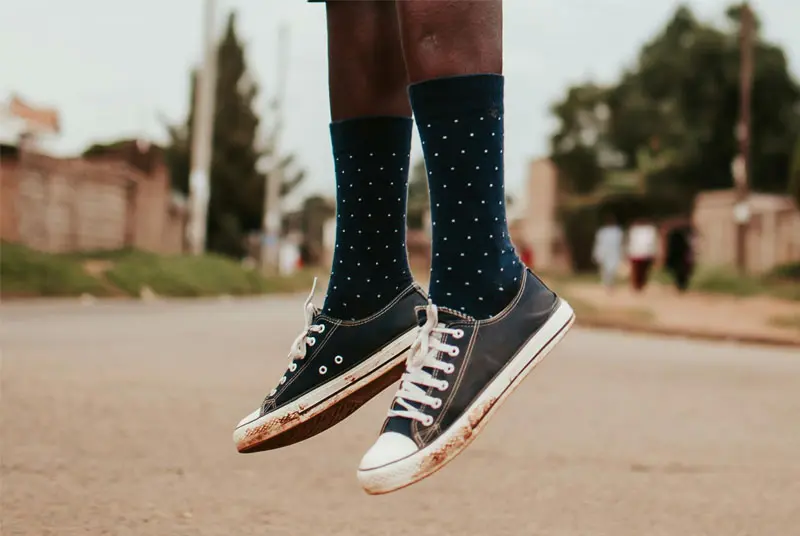
Bamboo fiber socks are a good option for people with sweaty feet, but they aren’t always the best choice.
Compared to cotton, bamboo fiber typically performs better in terms of moisture-wicking, breathability, and odor control. That’s why it’s often recommended for people who struggle with sweaty feet or foot odor. However, bamboo fiber socks also have some drawbacks that brands rarely mention. In some cases, merino wool or high-performance synthetic fibers might work better.
So, are bamboo fiber socks worth buying? Let’s take a look at their strengths and weaknesses, and explore some alternatives you might want to consider.
Are Bamboo Socks Good for Sweaty Feet?
Yes. For most people, bamboo fiber socks are a good choice for sweaty feet.
Compared to traditional cotton socks, bamboo fiber socks are better suited for sweaty feet. Each strand of bamboo viscose fiber has a micro-porous structure that enhances ventilation and moisture-wicking capabilities. They wick away sweat efficiently, dry faster than cotton, and possess natural antibacterial properties. These benefits make bamboo fiber socks particularly comfortable for everyday wear, office settings, commuting, and warm weather conditions.
However, these are only some of the characteristics of bamboo fiber socks; they also have certain limitations that manufacturers and brands don’t often mention. Depending on the intensity of your activities, the type of footwear you wear, and the climate, bamboo fiber socks may not be the best choice.
The Downsides of Bamboo Socks
We often see articles touting bamboo fiber socks as an excellent choice for those with sweaty feet, yet their limitations are often glossed over. Over the past few years, we’ve tested a wide variety of socks made from bamboo fiber, wool, and other functional fibers. The results are clear: bamboo fiber performs exceptionally well, but it also has its physical limits.
Durability Issues
Durability is perhaps bamboo fiber’s biggest weakness. The problem stems precisely from its biggest selling point: softness. While bamboo fiber is comfortable and soft, the fiber itself isn’t particularly abrasion-resistant. During wear, the heel, forefoot, and toe areas are constantly subjected to friction—and these are often the first places where socks show signs of wear.
If you’re just commuting to the office, the problem usually isn’t noticeable. But if you wear work boots, hiking boots, or safety shoes every day, the situation is different. Many users find that even before the sock itself wears out, the heel area has already started to thin; or after dozens of washes, the cuff becomes loose, loses elasticity, and the overall support weakens.
This is why truly high-quality bamboo fiber socks are almost never made of 100% bamboo fiber. Most manufacturers add nylon, polyester, or spandex. This isn’t to cut costs, but to make the socks more durable.

Heavy Sweating and Long Wear
Many consumers test bamboo fiber socks in relatively easy scenarios: the office, daily commutes, shopping, or short activities. Bamboo fiber socks handle this everyday sweat just fine, but what about walking continuously in the summer heat or working 12-hour shifts in warehouses or factories? In these situations, any material will approach its moisture absorption limit—the only difference is which material holds up longer.
Once bamboo fiber reaches saturation, you’ll start to feel noticeable dampness on the soles of your feet. The temperature inside your shoes will rise, and the socks will take longer to dry out. That’s why we find bamboo fiber socks comfortable, but they aren’t designed for extreme conditions.
If your goal is to handle prolonged exposure to high temperatures or high-intensity activities, functional fibers like Coolmax typically wick sweat away more quickly.
When Bamboo Fiber Might Not Be the Best Choice
Bamboo fiber isn’t the best solution in every situation.
In the following scenarios, you may want to consider other materials:
- Wearing heavy work boots for extended periods
- Extended hiking or backpacking trips
- When maximum durability is required
- Running or high-intensity training
In these situations, blends of merino wool and high-performance synthetic fibers typically outperform bamboo fiber in terms of moisture wicking, temperature regulation, or long-term durability. This isn’t a criticism of bamboo fiber socks; it simply highlights that the best sock material depends on the specific scenarios and environments in which you’ll be using them.
How to Get Competitive Prices
The best material for socks depends on how much you sweat, where you wear them, and what level of performance you need.
Bamboo Fiber vs. Cotton
The biggest difference between bamboo fiber and cotton isn’t how well they absorb sweat, but what happens after they’ve absorbed it. Cotton is indeed very good at absorbing moisture, but it also tends to trap it. After wearing them for a few hours, you’ll find your feet getting increasingly damp and the temperature inside your shoes rising. Furthermore, once cotton fabric gets wet, it can exacerbate odor and friction.
Bamboo fiber wicks moisture away more effectively, dries faster, and feels noticeably cooler in warm conditions. If you currently wear regular cotton socks and struggle with sweaty feet, switching to bamboo fiber will leave your feet much drier.
Bamboo Fiber vs. Merino Wool
Both materials offer excellent moisture-wicking and odor-control capabilities, making them popular choices for people with sweaty feet. The difference lies in their intended use.
Bamboo fiber is more than sufficient for everyday use. It is lightweight, soft, and breathable, making it ideal for office wear, commuting, and warm weather. Merino wool outperforms bamboo fiber during prolonged outdoor activities. It offers exceptional temperature regulation and resists odor even with extended wear, maintaining its performance in cold weather or multi-day outdoor adventures.
For most everyday wear, bamboo fiber is typically the more comfortable and cost-effective choice. However, for hiking, travel, winter conditions, and extended outdoor expeditions, merino wool socks usually comes out on top.

Bamboo Fiber vs. High-Performance Synthetic Fiber Socks
Many bamboo fiber brands market themselves as athletic socks, but the reality is that the true running sock market has long provided the answer. Look at what marathon runners, trail runners, and triathletes wear. Most aren’t wearing bamboo fiber.
Instead, they’re wearing various types of functional synthetic fibers.
During high-intensity activities, high-performance synthetic fabrics are hard to beat. Materials like Coolmax, polyester blends, and other technical fibers are specifically designed to wick sweat away from the skin’s surface as quickly as possible. They also dry faster than natural fibers during prolonged exercise.
Bamboo fiber performs well during light exercise and casual activities, but serious runners, athletes, and people who work long hours in physically demanding environments typically benefit from high-performance synthetic fiber socks. If your main goal is to stay dry during intense activity, synthetic fiber socks are the better choice.
What's the Best Sock Material for Sweaty Feet?
There isn’t a universal winner when it comes to sweaty feet. The best material depends on how and where you’ll wear your socks.
Here’s a quick comparison of the most common options:
Material | Moisture Control | Odor Control | Best For |
Merino Wool | Excellent | Excellent | Hiking, travel, winter wear |
Bamboo | Very Good | Very Good | Daily wear, commuting, warm weather |
Coolmax & Synthetic Blends | Excellent | Good | Running, sports, high-intensity activities |
Cotton | Fair | Poor | Casual wear with minimal sweating |
For most people, bamboo provides the best balance of comfort, breathability, and everyday performance. However, if your primary use case is hiking, winter activities, or high-intensity sports, merino wool or synthetic performance fabrics may be the better choice.
What's the Best Sock Material for Sweaty Feet?
Many people constantly try new types of socks. If bamboo fiber doesn’t work, they switch to wool. If wool doesn’t work, they switch to Coolmax.
But no matter how many times they switch, their feet still sweat. The reason is actually quite simple. In most cases, sweaty feet aren’t caused solely by socks; socks are just one part of the whole system.
Start With Your Shoes
Many people underestimate the impact of shoes. If the shoes themselves aren’t breathable, even the best socks will struggle to make a difference. Imagine placing a highly absorbent sponge inside a sealed plastic bag. Even as the sponge continues to soak up moisture, the humidity inside the bag cannot escape. The same principle applies to shoes.
All socks can do is delay the onset of dampness. They cannot change the environment inside the shoe itself. For those with sweaty feet, the improvement brought by a pair of breathable shoes is sometimes even more noticeable than switching to a different type of sock material.
Then Look at Your Habits
Another common misconception is wearing the same pair of socks all day. If you sweat heavily or need to stand, walk, or work for long periods, even the best moisture-wicking socks will eventually reach their absorption limit.
Many outdoor enthusiasts have a habit of bringing an extra pair of socks when they head out. After hiking for several hours straight, switching to a dry pair of socks often provides a more noticeable boost in comfort than upgrading to more expensive materials.
The Goal Isn't Less Sweat—It's Less Moisture
Sweaty feet aren’t the problem in and of themselves; the feet have some of the densest concentrations of sweat glands in the body. Sweating is a normal mechanism for the body to cool down. What’s truly uncomfortable isn’t the sweat itself, but rather when sweat remains on the skin’s surface for an extended period.
Therefore, the core goal of managing sweaty feet isn’t to stop them from sweating, but to ensure moisture leaves the skin as quickly as possible. This is why breathable shoes, the right socks, and good footwear habits must be used in combination. View sweaty feet as a systemic issue, not just a sock problem. When shoes, socks, and daily habits work together, the improvement you achieve is usually far greater than simply switching to a different type of sock material.