
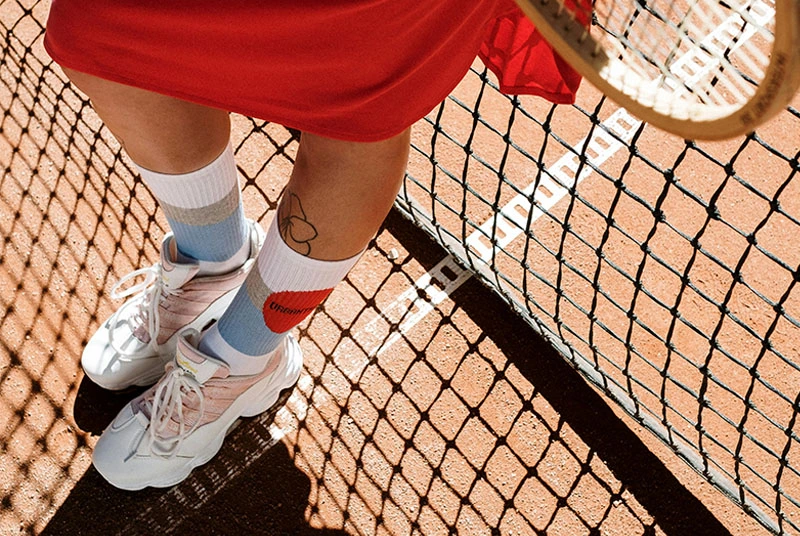
In the constantly changing “fashion vs. Function” landscape, few products have experienced the resurgence in relevance and popularity like the modest crew sock. Previously a straightforward, practical basic that was out of sight in shoes, the crew sock has made an astonishing revival, becoming a style statement, a performance necessity and a commercial dynamo. On the streets and in the gym, in corporate offices and on outdoor trails, you’ll find crew socks all around. But what’s behind this dominant comeback? What Makes Crew Socks So Popular Today The return of crew socks is no accident. It’s because the consumers are demanding versatility, comfort and style. This length, which is generally mid-way between the ankle and calf, has been dubbed the “Goldilocks zone” for socks – not too short, not too long and just right for a variety of requirements. Better Cushioning & Support Unlike the no-show or ankle styles, crew socks have more space to bake in comfort. Extra Fabric = Cushioning The extra material can be used to provide padding in high- impact areas on the foot such as the heel and the ball of the foot. This translates into better shock absorption when exercising, less foot fatigue after a long day and a generally more comfortable and supportive experience. For people who are on their feet all day or athletes who push themselves to the limit, that practical benefit is a big factor in why they buy. More Space for Brand Presentation From a branding standpoint, crew socks are a marketer’s dream. The longer shaft allows for more space to display logos, patterns and graphic artwork. This elevates socks from a utilitarian item into a potent moving billboard. Brands can take advantage of this area to strengthen their brand, develop iconic designs, or simply go out in a loud fashion. In an era when personal expression is everything, crew socks have become a bona fide style staple, not just an afterthought. Suitable for Lifestyle, Sports, Outdoor, and Workplace Use The great brilliance of the crew sock is that it can adapt like a chameleon. They are the only type of socks that can be worn beautifully for all occasions such as: Lifestyle: With sneakers or casual pants, they add the finishing touch to a fashionable, relaxed outfit. Sports: Must-have for basketball, running, or gym workout to support feet and absorb sweat. Outdoors: Perfect for day hiking and trekking: comfortable, protect against boot rub and keep your feet warm. Work: In both casual and uniformed settings, they featurecomfort and a professional look. This multi-market relevance gives them a huge potential customer base and ensures a steady demand. Materials & Technologies Improving Crew Socks The modern crew sock is a feat of textile engineering. Gone are the days of bulky, scratchy cotton that retained moisture. Today's crew socks are crafted with advanced materials and construction techniques that enhance performance, durability, and comfort. Breathable Cotton & Combed Cotton Traditional cotton is breathable, but more refined forms of cotton such as combed cotton have become the norm for quality. The layers of fibers are then combed, to remove shorter fibers and impurities resulting in a spun yarn that is softer, stronger and more lustrous, that pills less and also has outstanding comfort when comes in contact with skin. Performance Yarns: Polyester, Nylon, Spandex The addition of synthetic fibers has greatly enhanced the performance of socks. Polyester and nylon fibers: These fibers significantly improve the durability and strength of socks, making them more resistant to wear and tear. Coolmax: Inspired by the natural hollow structure of animals, this functional synthetic fiber is formed with an regularizedcross-section (such as Y-shaped or cross-shaped) on the fiber surface to createsurface grooves, utilizing capillary action to achieve the functions of moisture absorption and quick drying. It is mainly used to enhance breath ability and comfort, and is the core material of the sweat-wicking technology. Rubber fibers (Lycra®): These elastic fibers provide the necessary stretch and resilience, ensuring a snug and stable wearing sensation at the arch of the foot and the ankle, preventing the socks from slipping or wrinkling. Moisture-Wicking, Compression Zones, Arch Support When advanced knitting technologies are used, specific functional zones can be incorporated within the sock: Moisture-Wicking: Channels and fabrics pullsweat off the skin to the outer part of the sock where it can be evaporated, keeping the feet dry and reducing the risk of blister formation. Compression Areas: Focused compression positively influences blood flow and reduces muscle fatigue, contributing to better athletic performanceand recovery. Arch Support: An elasticated arch band contours around yourfoot to provide stability and ease the pressure for athletes and anybody working on their feet for the whole day like I do! Eco-Friendly Options: Merino Wool, Organic Cotton The growing demand for sustainability is being met with premium natural materials. Merino wool is naturally temperature-regulating, odor-resistant, and moisture-wicking, making it perfect for outdoor and performance socks. Organic cotton, grown without harmful pesticides, offers a clean, hypoallergenic, and environmentally conscious choice for everyday wear. How Brands Use Crew Socks to Stand Out Crew socks have transformed into a tactical space for branding in numerous industries. They are highly visible and practical, which allows them to double as a very powerful marketing and customer engagement tool. Fashion Brands Socks High fashion houses and streetwear labels alike have adopted crew socks as a must-have accessory. They put out limited edition designs, team with artists, and use big logos to make collectable items that stoke brand hype and loyalty. A unique sock, says Santi, can change an outfit, and is an easy way, for men especially, to dip a toe in the waters of a luxury brand. Sports Brands Socks For sports brands, crew socks are a piece of their performancewear. They incorporate their latest technologies — like Nike’s Dri-FIT or Adidas’s Climalite — into sock materials, bolstering their athletic space cred. Team logos and colorways also create a sense of identity and community around fans and athletes. Corporate Gifting & Promotions Crew socks are an incredibly practical corporate gift. They are universally practical, provide ample space for a company logo and are considered a thoughtful, high quality gift over the standard pen or key ring. From employee onboarding to thanking your client to event swag, customized crew
Finding the Best Custom Sports Socks for Your Athletic Team
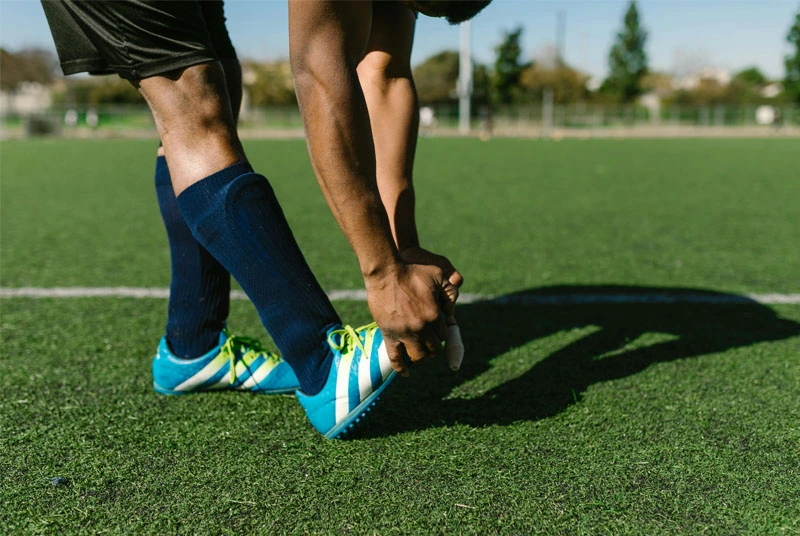
Every successful team needs cohesion and execution on the field. While jerseys receive most of the attention, the right pair of custom sports socks can also make all the difference. They protect players, improve performance and reinforce team branding from the ground up. Why the Right Sports Socks Matter for Performance Athletic socks are essential equipment, Not an afterthought. The right socks can have a big impact on a player’s safety, comfort and confidence on the field or court. Preventing blisters & improving comfort Blisters are a result of friction and moisture in most cases. Sports socks of good quality have seamless toe closures and moisture-wicking material that keep your feet dry, reduce the friction and, ultimately, help you prevent blisters even before they start to form. Enhancing stability, support, and fit A slipping or bunched-up sock is a distraction. Things like elastic arch bands, compression zones, and ergonomic left and right designs keep your foot in place and increase stability in the shoe, so you can focus on your sport rather than your feet. Matching team identity & uniforms Custom socks complete the uniform. Wearing the same team colors and displaying your team logo gives you a professional and polished look that instills team pride and unity, making a visual statement before the game even begins. Key Features to Look for in Custom Sport Socks Not all socks are made the same. Here are the most important performance features to look for. Breathable and moisture-wicking yarns Seek out engineered synthetic blends like Coolmax®, polyester, or nylon. These fabrics work to trap sweat off the skin and send it to the outer layer of the sock where it can evaporate, keeping feet dry and cool. Cushioning levels Cushioning needs to be strategic. Light cushioning provides flexibility for speed, and medium to heavy cushioning in high impact areas (heel, forefoot) cushions the blow for sports like basketball, volleyball. Compression zones & arch support The effect of compression is improved blood flow and muscle stability. The sock features arch support bands to help reduce foot fatigue and keep the sock from sliding down during aggressive lateral movement. Durability: reinforced heel and toe High friction parts need to be strengthened. The double-layered heel and toe add life to the sock, standing up to the abuse of cleats and stops and starts. Choosing the Right Sock Style for Your Team Style affects function and fashion. Select according to your sport and uniform needs. Crew vs quarter vs ankle Crew Socks(6-8"):Maximum coverage and protection, ideal for soccer, baseball, and football. Quarter Socks(4-6"): Versatile mid-height, popular for basketball, lacrosse, and as a modern look. Ankle/No-Show Socks: Minimalist, perfect for sports where low-cut shoes are worn, like running or tennis. Sport-specific choices Soccer/Football:Often paired with tall, padded crew socks for shin guard comfort. Basketball/Volleyball: Typically feature thick cushioning throughout for court impact. Running Socks: Focus on lightweight, breathable materials with moderate compression. Socks Logo placement & color matching Logos may appear on the calf, ankle or foot. Your vendor should be able to color-match your official team colors so the uniform looks consistent. Customized Sports Socks for Your Team To Bring your vision life, It is necessary to understand the customization process. Knitted logos vs heat-transfer designs Knitted/Jacquard Logos: Ourtop-tier Logos are woven into the fabric during the production process. They are very durable and breathable. Great for detailed team logos. Heat-Transfer / Sublimation: A graphic is printedon the sock. Enables photographers, images in full color, photorealistic designs, all over pattern, can crack and fade, not as breathable. Picking yarn types Talk to your manufacturer about yarn blends. A typical high performance mix is 70-80% coolmax/polyester (for wicking) and 20-30% nylon/spandex (for strength and stretch). Creating a design mockup A quality vendor will send you a digital mock-up of your design on the sock template. This is important to confirm logotype size, position and color pre-production. Why Teams Choose Sockcn for Custom Sports Socks When quality, detail and trust are critical, Sockcn is your number one choice for partner teams globally. High-needle machines for detailed team logos We use the latest technology of 168N and 200N knitting machines. This enables you to have a very crisp, clean, and multi-faceted logo directly knit within the sock ensuring that your emblem looks sharp and lasts wash after wash. Durable athletic yarn blends Performance-engineered yarn blends designed for sport. Our socks are made with the performance-engineered yarn blends designed specifically for sport. We favor blends that provide the best in moisture management, breathability and durability. Low MOQ + fast turnaround We know what team needs. The minimum order quantity is small, so even the little clubs can afford to give their players premium custom gear. Our streamlined workflows provide quick lead times to help you get in the game for your next tournament or season. Conclusion When you buy premium custom sports socks, the performance, comfort, and pride of your entire team is on the line. With technical considerations such as moisture-wicking fabrics and strategic cushioning in mind, as well as the selection of the proper style and customization technique, and the collaboration with a professional manufacturer such as Sockcn, you’ll be able to supply your athletes with socks that are with them at every step of their journey. Personalize your team from head to toe — because every little bit helps. For expert guidance, explore our 5 Design Tips for Creating Premium Custom Socks.
Cashmere vs Wool: Which Material Is Better for Socks?
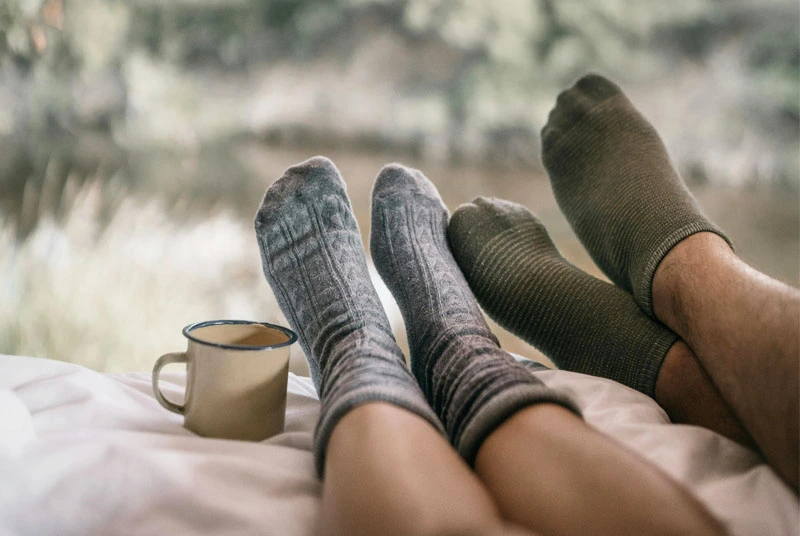
Hey there, dear customers! We’re Sockcn, your go-to pro sock maker. Every day, we mess around with all sorts of yarns, and the question we get asked all the time is: “Cashmere vs. wool—which one’s actually better?” Today, we’re gonna break it down in super simple terms, straight from a maker’s point of view, to help you pick the best option for your brand! What Are Cashmere Socks and Wool Socks? Let's briefly describe the two of them. Wool socks: The main raw material comes from the hair of sheep. The fine merino wool we commonly use is one of the "top grades". The fibers are finer and softer. Cashmere socks: The raw material comes from the thin, fine down at the base of the goat's coarse hair. Note that it's "cashmere" not "hair". To collect this layer of down, the herders need to carefully comb it, and the output is extremely scarce. Therefore, it is called "fiber diamond" or "soft gold". Wool vs Cashmere: Key Differences That Matter What Are the Main Differences? After learning about where they come from, let's take a look at how they compare when used to make socks. Softness & Comfort Cashmere socks: It is the absolute best in this area. Its fiber is smoother and even finer than the finest Merino wool in diameter. That's why, when your feet touch them, they are as light and soft as clouds and there's no irritating feeling even if you touch your skin with it directly. It really is the most skin-friendly fabric. Wool socks: Merino wool, as an example, is already very soft, and it can be worn daily. But in comparison to cashmere, its fibers are still quite rough and it might cause minor irritation for people with very sensitive skin. Warmth & Insulation Cashmere socks: The Cashmere fibre is hollow, which means a natural "insulation layer" is formed. At the same weight, the insulating power of cashmere is 2-3 times that of wool. This means cashmere socks are the best warmth provider without the extra bulk, making them perfect for extremely cold days or for static activities (skiing, camping). Wool socks: It has enough elasticity to provide a good fit and its insulation is good enough for most of the fall/winter season. But the socks have to be knitted thicker to provide the same warmth as cashmere. Durability & Wear Resistance Wool socks: Why are wool socks the best? Wool fibers are made up of layers, and the surface scale structure between the fibers allows them to bond well. Therefore wool socks are high quality in durability, resistant to wear and tear and with long service life. Cashmere socks: Cashmere fibers have poorer wear resistance than wool by nature of being that fine. A pure cashmere sweater is demanding when it comes to care and so are socks. That's why, in our production at Sockcn, we generally advise customers to mix in a certain percentage of silk or nylon to the cashmere to greatly increase its durability. Breathability & Moisture Control Both are experts. Both wool socks and cashmere socks are known for their high moisture absorption and ability to help the feet breathe. They can absorb the sweat of your feet quickly and then they evaporate outwards to keep your feet dry. When it comes to moisture management, cashmere is a little better than wool, it can absorb more moisture, and you can see less moisture. However, both provide an incredible all-around experience. Price Differences: Why Cashmere Socks Costs More When shopping, you might be surprised at how much cashmere socks can cost compared to wool socks. This is not promoting a brand premium; it is the following basic reason: From the perspective of raw material supply, a sheep can produce several kilograms wool in one year. In a year, a goat can yield only a few grams of cashmere. From making socks in cashmere, the amount of cashmere needed is the annual output of several goats. "Rarity makes things valuable", and cashmere is only 1%-2% of wool production globally. The scarcity fuels the raw material price up. For these reasons, cashmere has long been regarded as a luxury fibre. And so cashmere sock designers target high-end consumers who want the ultimate experience, and are not limited by budget. What Should Brands Choose for Their Sock Line? As the brand, what do you do in the situation where you have to choose between these 2 materials? Balancing Cost vs Performance Seeking value for money and long service life: quality merino wool socks are the way to go. They can offer enough warmth breathability and comfort in most situation, also a more competitive price with a high repetition buying number. Developing world-class luxury goods: To set the high-end tone of the brand or to provide top customers with "the ultimate fun," wool socks (or wool blends) are decent product line complements. Choosing the Right Blend for Your Customer Base Selecting the appropriate mixture for Merino wool or cashmere is the critical business decision that balances cost, performance, and customer perception. It's just finding that balance of luxury and practicality for the audience you have. cashmere is not durable, and 100% wool might not be soft enough. That's why blending is where the wisdom of sock-making lies. If you want to learn more about how to select Merino or cashmere blended socks that suit your brand positioning, you can try sending us an email. We will explain it in detail to you and, based on your brand, we will choose a blended yarn that meets your brand requirements and target purchase price for you. When Cashmere Makes Sense for Retail The sale of cashmere socks depends on “the setting” not “the foot traffic.” It is not appropriate for success in the mass market supermarkets where they are essentially a commodity with the high turnover and low unit price, but should be directed to retail environments where they can speak to a precise customer base, are focused on experience and telling the brand and product story. As a star product to upgrade the style of the store, adapt to the growing needs of customers, and bring more profit. When your store can produce the feeling that "I should have this
Chinese Socks: Why Global Brands Choose China
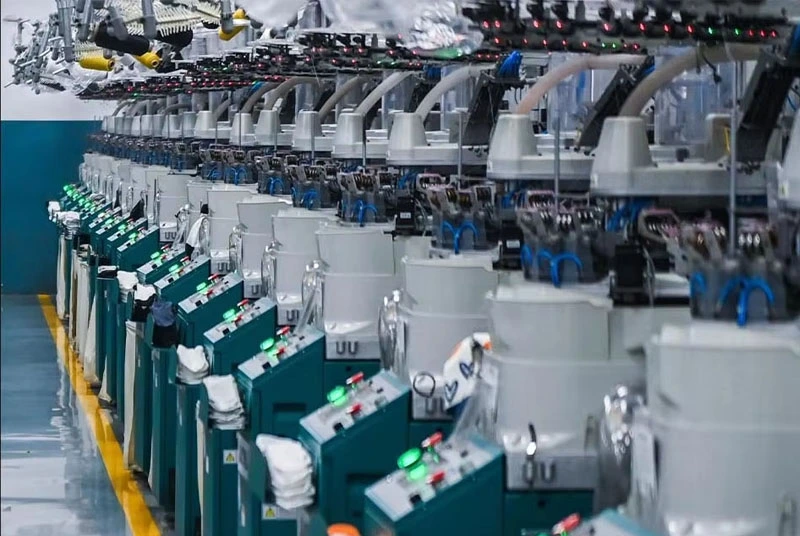
Do you ever slip on a pair of socks and think, “How did these huggers make it to my feet?” Then they started in a socks factory in China. Today Chinese socks are worn globally from sports gyms to mountain trails, offices and racks, patios and showrooms. So what makes China the undisputed heavyweight of the global socks market? A compelling confluence of history, infrastructure and relentless innovation. Let’s unravel the thread together and find out why the world thinks of China when it comes to socks. What Makes Chinese Socks So Competitive? So imagine you’re baking a cake. The better your ingredients, tools and recipe, the tastier (and cheaper) the finished cake will be. The Chinese sock manufacturers have found a good recipe, but they’ve also written the cookbook for efficient, large-scale, high quality sock production. And there’s a competitiveness born from decades of refinement. High-density knitting technology. High-Density Knitting Technology Walk into a modern socks factory in China, and you’ll be greeted by the rhythmic hum of Italian and Japanese computerized knitting machines. These aren’t your grandmother’s knitting needles. They produce high-density fabrics with precise tension control. This means the socks are more durable, retain their shape wash after wash, and provide better support. For brands, this translates to fewer customer complaints about heels thinning out or toes poking through prematurely. It’s the technological backbone that ensures quality in every pair of Chinese socks. Mature Supply Chain & Yarn Ecosystem Think of China’s textile supply chain as the world’s most efficient subway system. From the cotton fields of Xinjiang to the polyester plants in Zhejiang, from specialized elastic yarn producers to eco-friendly dye labs, everything is interconnected. A sock factory in Guangdong can source premium mercerized cotton, vibrant color-fast dyes, and custom-branded tags within a remarkably short time and distance. This mature ecosystem reduces delays, minimizes logistics costs, and gives sock manufacturers incredible flexibility in material selection, whether it’s organic cotton, bamboo viscose, or recycled polyester. Lower Production Cost with High Output This is the most visible advantage. China’s manufacturing model excels in economies of scale. By producing in large volumes, Chinese socks factories can spread fixed costs (like machinery, factory space, and management) over a much larger number of units. This doesn’t mean cutting corners on quality; it means optimizing every step of the process for efficiency. The result is a price point that is very challenging for manufacturers in other regions to match, giving brands a significant edge in competitive retail markets. Skilled Labor + Automated Machinery It’s the perfect synergy. On one side, you have a workforce with generational knowledge in textiles—operators who can spot a knitting flaw from across the room and technicians who can fine-tune a machine for a specific yarn blend. On the other side, automated sewing, linking, and packaging lines ensure speed and consistency. This blend of human expertise and robotic precision means a socks factory can handle complex custom orders without sacrificing the uniformity required for a 10,000-pair shipment. Chinese Socks Categories Popular Worldwide The versatility of Chinese sock manufacturers is on full display in the sheer variety of socks they produce. They’ve moved far beyond the basic white athletic sock to dominate niche markets. Sports & Compression Socks This category is a technical marvel. Chinese socks factories produce performance socks with targeted cushioning zones, moisture-wicking channels, and graduated compression for enhanced blood flow. They work with advanced synthetic blends like Coolmax® and invest in seamless toe technology to prevent blisters. From elite marathon runners to weekend warriors, the gear they rely on often comes from these specialized sock manufactures. Merino Wool & Outdoor Socks For the hiking and alpine community, Chinese socks made from high-grade Merino wool are a game-changer. Factories have mastered the art of blending Merino with durable nylon and elastic to create socks that are warm, odor-resistant, and tough enough for rocky trails. The consistency in quality from batch to batch makes them a trusted partner for outdoor apparel brands worldwide. Everyday Cotton Socks The humble cotton sock is the bread and butter of the industry, and China has perfected it. Whether it’s a pack of black crew socks for the office or colorful ankle socks for kids, the comfort, affordability, and durability are unmatched. The socks factory prowess here lies in producing massive quantities with consistent sizing and softness, making them a supermarket staple across the globe. Fashion, Custom, & Private Label Socks This is where creativity meets industry. Want socks with your company logo, a quirky illustration, or a specific Pantone color? Chinese sock manufacturers are the go-to. Their ODM (Original Design Manufacturing) teams can help conceptualize designs, and their factories are equipped with jacquard knitting machines and high-definition printing techniques to bring them to life. For influencers, startups, and fashion brands, this turnkey solution for private label socks is invaluable. Why Many Brands Switch to Chinese Socks Suppliers The decision to source from China isn’t just about price; it’s a strategic move for brand growth and stability. Here’s the real-world logic behind the shift. Better Cost Advantage This is the foundational reason. The cost savings achieved by partnering with a Chinese socks factory can be reinvested into marketing, design, or expanding product lines. For a growing brand, this improved margin can be the difference between barely surviving and aggressively thriving. Reliable Lead Times In fashion and retail, missing a season is a cardinal sin. China’s integrated logistics—from factory ports to global shipping routes—are meticulously organized. Experienced sock manufacturers provide realistic and firm production timelines and have contingency plans for most disruptions. This reliability allows brands to plan their inventory and launches with confidence. Strong OEM/ODM Capabilities You don’t need to be a sock expert to launch a sock line. Many socks factories offer full-service ODM. You can come to them with a vague idea like “hiking socks for women that are cute and functional,” and their design team will present material options, pattern concepts, and tech packs. This end-to-end service lowers the barrier to
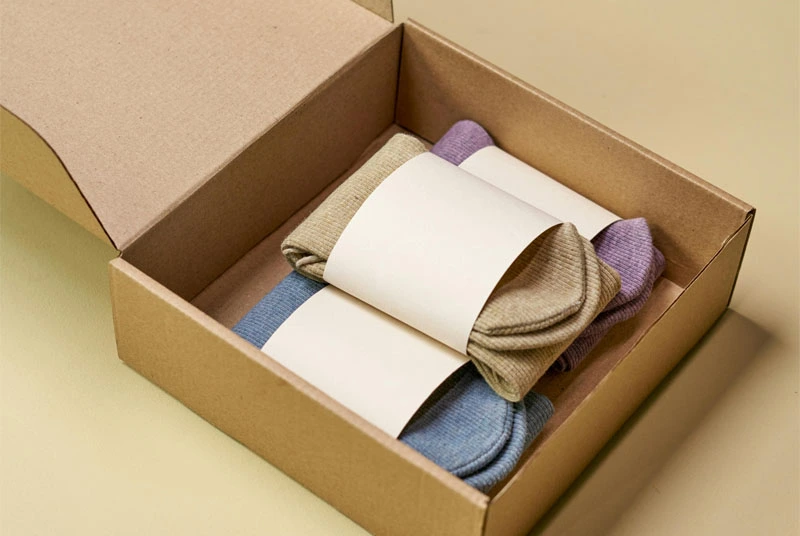
5 Design Tips for Creating Premium Custom Socks
On the battlefield of brand marketing, even tiny details serve as touch points with consumers. But there is one detail that is always missed. It’s tucked away in the ankle and secreted in the shoes – but it holds the power of softness overcoming hardness – and that is custom socks. For companies that want to create a whole brand universe, a pair of thoughtfully designed custom logo socks can be much more than just an accessory. It’s a mobile brand ad, a comfortable experience at your fingertips and a secret weapon to building brand loyalty, helping your brand cash in on a win – even if it’s a small one. Why Sock Design Is More Important Than You Think In the accessory planning of many brands, socks are often classified as a category that is "remembered after the fact". However, data and market trends indicate that this notion is already outdated. According to a report by market research firm Euromonitor, the global sock market is growing steadily, and consumers are increasingly viewing socks as an important item for expressing their personality and lifestyle. Unlike T-shirts or hats, the logos or designs that are casually revealed on socks can arouse stronger curiosity and generate more buzz, becoming a kind of "low-key showing off". When employees attend business meetings wearing uniform custom-made socks or when customers roll up their trouser legs in the gym, the brand's image is precisely disseminated in the dynamic. From the theme cultural socks of high-tech companies to the fan socks of football clubs, uniform sock designs have become an effective medium for uniting communities and identifying identities. Moreover, socks are close-fitting items, and their comfort, breathability and durability directly affect the wearer's feelings. A pair of high-quality custom-made socks can deeply implant in the user's mind the good impression that "this brand understands me" and "this brand pays attention to quality" through daily wearing experiences. Tip 1 — Choose the Right Yarn The selection of yarn is the basis of custom socks bulk, so it endows the socks with comfortable, durability and season suitability. As the basis of customization, yarn is like the foundation of a building and it has direct impact on the quality of the end product. Combed cotton is the best material for everyday socks. Its long fibers contain less impurities that make the skin soft and the wearing experience friendly. When compared with normal cotton, socks crafted out of combed cotton are not only more resistant to pilling and deformations but are also perfect for business socks, or daily casual socks. For brand customization with higher quality, it is recommended to use the combed cotton content over 80% to keep the basic comfort. Functional fibers address professional needs in specialized application areas. Coolmax® polyester fiber having four-channel structure provides excellent moisture management by moving sweat away from the skin surface. It is excellent for custom sports brands or company team building events. Merino, whose natural temperature regulating and antibacterial qualities make it the choice material for outdoor brands, golf clubs. Blended art is the secret to balancing cost and performance. The comfort of cotton is preserved in the cotton-polyester blend(80/20), and the addition of polyester improves wear resistance. The addition of 5-10% spandex (Lycra) can greatly enhance the elasticity and recovery of socks so as to avoid the embarrassment of loose socks and sliding socks. It is with the best performance under this scientific proportion mixing scheme for the big size enterprise orders to pursue the cost. Tip 2 — Pick the Correct Sock Length The sock length is more than an aesthetic choice that limits when it can be worn. Selecting the right length is to select the best expression space in terms of distance for brand customization. No show socks are designed for low-cut shoes like loafers, boat shoes. They are very much hidden inside the shoes and can be thought as a fashion knowing effect of “not wearing socks”. This design is perfect for design firms, creative agencies and many other companies which want to keep a stylish, modern image but should really consider the quality of your anti slip rubber strip, you don't want your socks rolling off while your clients/ customers are walking. Ankle socks just have the right length to see your ankle and is a classic pairing of casual shoes and socks. Its moderate reveal makes it perfect for Logo display without being too flashy. Tech companies and start-up teams often adopt this length as their standard company culture sock, as it best represents the balance between professionalism and a casual, laid-back attitude. Crew Socks is the classic length for most socks, running from the ankle to the middle of the calf with adequate protection and support. This sock length features the largest design area and is best for showing simple or complex patterns and slogans. For more“traditional” industries like finance or law, the mid-tier styles tend to be the most popular for corporate customization, as they are the perfect mix of affordable and elegant enough for potential clients. Knee-high socks, which began as professional athletic wear, have infiltrated the realm of casual and dressy fashion. Its full lower legs coverage design gives extra warmth and compression support, which also fits for custom sports such as cycling clubs, skiing clubs, etc, and contents of brand can be extended in this protection case. Tip 3 — Focus on Cushioning, Compression & Fit Fitted, high-performance socks have said goodbye to the crude “a piece of fabric wrapping the feet” era and evolved into functional and divided jigsaws. Knowing the art of balancing padding, compression and fit is how you get professional grade custom socks. The cushioning should be vary designed under the pressure distribution of the layout of foot. Areas most buffers are broken into are: Heel: It absorbs the natural force of gravity, thus it has the maximum pressure load and needs the maximum padding. The sole of the foot: Important for gait progression, it is lightly cushioned to shield the metatarsal bones. Instep: Make them light and thin so you can have comfy space inside your shoes. Toes: Getting the best of both worlds when it comes to flexibility and protection. Brands are
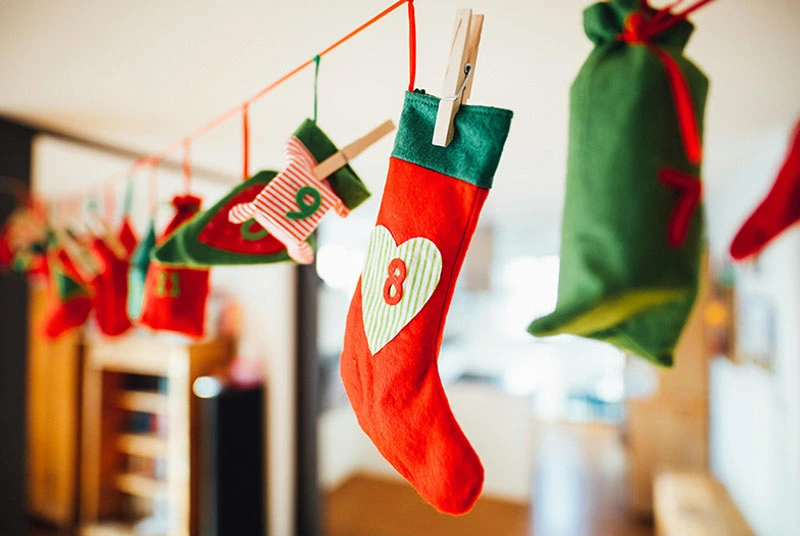
Your Cozy Guide to Winter Holiday Socks: Trends You’ll Love
As the gentle winter breeze quietly passes by, the festive bells are about to ring in our ears. In this season filled with a sense of ceremony, we always look for those exquisite little items that can brighten our mood and add warmth. And a pair of unique festive socks is just such a perfect choice - it is not only a warm protector for our feet, but also the finishing touch of our outfits, and even a heartwarming gift for conveying friendship. Today, let's explore the charming world of winter festive socks together and present you with a professional and caring purchasing guide. Why Holiday Socks Become a Winter Essential The chill of winter not only requires thick coats to withstand, but also needs to be cared for at the details. Thick socks for the winter is more than just ornamentation. Socks are the cold weather’s first defense line, keeping foot temperature locked in and making the body feel warm and fuzzy. Whether it’s a cozy family gathering or a boisterous office holiday party, a pair of festive socks will have you marching in time with the merry festival beat, revealing your sense of humor and fashion flair. As a gift, socks are both practical and fun. A pair of carefully selected socks convey a delicate sentiment of "I care about your comfort and happiness". Top Holiday Sock Trends This Season This season's holiday sock market is truly splendid. Whether you prefer the classic style or are in search of something new and trendy, there is always a style that can touch your heart. Christmas socks, wool socks, Sherpa socks, floor socks, and many other types of socks are all very common styles of socks in winter. The current designs are all very fashionable and unique. Classic Christmas Socks Traditional components including red and green colors, Santa Claus, reindeer, snowflakes, and so on are still popular as ever. So, if you want to add the classic elegance to this Christmas, these are your perfect choices, especially for those indoor family time and Christmas tree decorating. Minimalist Winter Aesthetics If you prefer a subtle elegance, then a simple design featuring geometric snowflakes, the outline of a fir tree, or simply using festive tones such as wintergreen fruit red or pine needle green, would be your ideal choice. They are versatile and retain a festive atmosphere. Fuzzy Socks The ones with a sheepskin look, those fluffy socks we're talking about here. They not only wrap your feet in the feel of soft clouds when you wear them but their cute shape like fashion item makes them best for use in home relaxation. Holiday-Themed Sports & Daily Wear Socks Mix the holiday cheer with the sport sock and mid-calf sock styles. When worn with boots or sneakers, it can show a peek of playful festive color that makes your daily commute or weekend adventures a blast. Materials That Make Holiday Socks Truly Cozy The pattern is indeed important, but what truly determines the quality of a pair of socks is the fabric that comes into contact with the skin. Fuzzy polyester blends This type of material usually creates an extremely soft and fluffy texture, and is also very durable. It is a great choice for those who are looking for a "cute" appearance and a warm foot feel. Cotton-rich socks Cotton is so popular because it is breathable and good for the skin. Socks made from a good amount of cotton can absorb moisture and wick it away, giving you dry and comfortable feet all day long. Merino wool socks This is the top choice for outdoor enthusiasts and those who pursue a quality lifestyle. Merino wool has an unparalleled ability to regulate temperature - it keeps you warm without making you feel stuffy, and it is extremely lightweight, odor-resistant, and is the ultimate choice for functional fabrics. Why fabric matters more than the pattern Please remember that no matter how exquisite the pattern is, if it is not carried by high-quality fabric, it will only be a one-time decoration. Investing in high-quality fabric is investing in lasting comfort and joy. Different types of socks have different functions. If you have sufficient budget, you can purchase socks of different materials to suit your various daily activities. For example: Wool socks have excellent functions of keeping warm and absorbing sweat. When it's cold or during skiing, choosing thick wool socks can help maintain warmth very effectively. What Makes a High-Quality Holiday Sock Softness without shedding The stitching on both the inside and outside of high-quality socks should be smooth. The use of high-quality yarn and meticulous weaving techniques ensures that the socks do not shed fibers or get tangled. Stretch that keeps shape The leg part and the sole part of the sock should have good elasticity, including stretch and rebound. A good sock should fit closely to the foot without making you feel tight. More importantly, it should be able to return to its original shape after multiple washes and will not become loose. Smooth toe seams for comfort A good sock always have seamless toe stitch. This can effectively prevent the discomfort caused by friction on the toes, and is especially suitable for long walks or prolonged wearing. Bright, clean knitted patterns High-quality printing and knitting techniques ensure that the patterns are clear and the colors are rich, and they will not fade or become blurry even after multiple washes. Winning the Holiday Market: From Gifts to Custom Collections Holiday socks are not only excellent choices for personal purchase, but also an excellent medium for connecting business and emotions. Corporate gifting favorites Customize a batch of exclusive holiday socks printed with the company's logo or slogan, instead of traditional gift cards. This approach is both novel and full of human touch, and can greatly enhance employees' sense of belonging and customers' satisfaction. Custom designs for events & clubs Whether it's the company's annual meeting, the team's activities or the reading club, customizing uniform socks can become a fun way to unite the team

How to Knit Socks — And How Factories Actually Do It
Welcome to the wonderful world of socks! From the loving hands of a hobbyist hand knitter to the whirring sound of machines in a contemporary factory, the production of a comfort sock is a process that is both art and science. Maybe you know the basic tricks of hand knitting socks, but you’re just curious about how a factory that packs thousands of pairs of socks every day rolls. This blog will go behind the scenes to show you the industrial process of taking a yarn to a completed pair of knit socks. We'll look at the distinctions in hand-crafted knit socks vs machine-made and hone in on the delicate features of modern knit sock crafting. How Modern Factories Knit Socks Unlike the manual and linear process, factory production is a highly automated and interlinked system. Each step is meticulously calculated to ensure efficiency, consistency and outstanding quality. Step 1: Yarn Selection & Pre-Treatment This is the foundation of all high-quality knit sock. In the factory, we use large conical spindles. The yarn is typically treated before it goes into the weaving stage. This is a process of waxing or lubricating the yarn by spraying a lubricant, which greatly reduces the friction of the yarn with the machine needles that move at a very high rate, especially for merino and alpaca socks. Then it's essential to know how to knit a sock at this step since your own design (or my pattern if you are using one of them) has been put through the test, especially for that step (i.e. doing this step may prevent yarn breakage, stop weaving defects, or stop knitting defects, and it can also help ensure a uniform and smooth knitting texture, and which precipitation from this perfect step will always be an excellent one), and a good foundation has been laid for the next step on your way to success. Step 2: Machine Programming & Pattern Design If the yarn is the component of the body of a sock, then the program is where its soul lies. Our designers will use the professional CAD (Computer-Aided Design) software to transform their ideas into digital weaving instructions. These include: Structural Design: Define the knitting structure (ribbing, plain weave, jacquard, etc.) for various parts such as the sock opening, sock body, heel, sock surface, and toe. Color Design: Precisely control the timing of introducing any color yarn to weave very complex patterns. Once the design is completed, the program is input into the advanced computerized knitting machine, allowing the machine to execute each command accurately and without error. Step 3: Knitting the Sock: Tube, Heel, and Toe Modern sock-making machines are engineering marvels. They can weave a complete knitted socks in three dimensions and as a single piece, which is completely different from the two-dimensional, piece wise sewing logic used in manual knitting. Leg opening and leg shaft: The machine begins to weave a cylindrical shape. The leg opening usually adopts a more elastic ribbed structure. Back heel: This is the key point of the technology. The machine will perform the "pick thread" operation, stopping the weaving on some needles and only reciprocating on other needles, thus forming a bag-like heel structure. This process is fully automated and does not require manual intervention. Leg surface and sole: After the back heel is completed, the machine resumes cylindrical weaving, but the leg surface part may adopt a more durable structure, while the sole part may focus more on cushioning. Toe: Similar to the back heel, the machine begins to reduce the number of needles, creating a wedge-shaped toe bag suitable for the foot shape. Ultimately, what came out of the machine was a basically formed "half-waving sock", with only the toe part open. Step 4: Toe Closing (Linking) This is one of the few steps for how to knit a sock that require the participation of highly skilled workers, and it is also an important indicator of the quality of the socks. We use a process called "linking". Workers operate a linking machine, precisely connecting each coil at the toe opening of the sock with the corresponding other coil. This process forms a seam that is flat and seamless, almost imperceptible, and is called "boneless sewing". This is similar to the "knitting up" effect in hand-knitting, but it is much faster and more consistent than manual work. Step 5: Washing & Softening The freshly unwashed socks contain oil and tension from the textile manufacturing process, making them feel rather rough. They will be sent to large industrial washing machines for cleaning. At the same time, we will add environmentally friendly softening agents, which not only give the socks a soft and skin-friendly touch, but also further enhance the elasticity of the yarn, making the socks more comfortable and durable. Step 6: Boarding (The Secret to Perfect Shape) "Shaping" is the secret weapon that makes socks look neat, standard, upright and beautiful. Each damp sock is placed on a heated metal foot mold that is exactly the same size as the target size. This foot mold is usually made of aluminum and is equipped with steam or electric heating. Under the influence of heat and tension, the socks are precisely stretched and ironed into the perfect shape, and then dried. This not only gives the socks an attractive appearance, but also ensures the absolute accuracy of the size. Step 7: Final Inspection & Packaging Before leaving the factory, every pair of socks must pass through the keen eyes of the quality inspectors. We will check for any flaws such as thread pulling, holes, color differences, or incorrect connections. The socks that pass the inspection will be paired according to customer requirements, folded (usually using efficient automatic folding machines), and placed in custom tags and packaging bags. Finally, they are packed and ready to be shipped to brand manufacturers all over the world. What Materials Are Used to Knit Socks? Choosing the right yarn is the key factor in determining the performance, comfort and lifespan of socks. Cotton & Organic Cotton Cotton: This
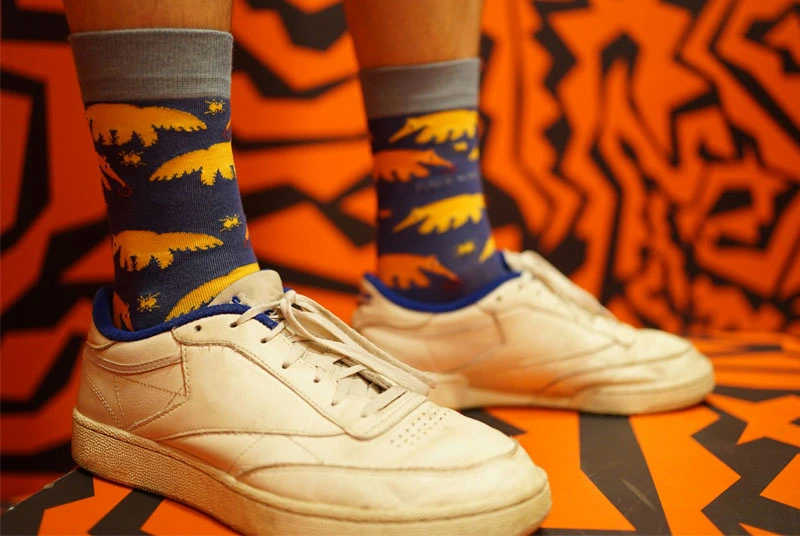
Halloween Socks Guide: Styles, Trends & Where to Buy Them
When it comes to Halloween, people invariably think of strange-shaped costumes, pumpkin lanterns and other items that are characteristic of Halloween. There is a small yet practical accessory that not only enhances the Halloween atmosphere but is also very practical - that is the Halloween socks. This guide will show you how to choose it. Why Halloween Socks Are So Popular Why have Halloween socks become a trend recently? The reason is quite simple - because of its cost-effectiveness. It is not like ordinary decorations that can only be used once and then become unusable. And the design can be diversified. It can be tailored to different age groups to suit one's own unique Christmas style. In addition, it is also very suitable for giving as a gift. I think whoever receives it will surely be happy. Types of Halloween Socks Halloween socks can also be differentiated based on different circumstances. Let's talk about Fuzzy Halloween socks, Kids Halloween socks, Halloween socks for men, Performance Halloween socks. Fuzzy Halloween socks The fuzzy Halloween socks are usually made of coral fleece or plush materials. They are not only soft to the touch but also provide good warmth. It is particularly suitable for wearing when staying at home to relax. Moreover, due to its fluffy texture, it is also an excellent choice for keeping warm in autumn and winter. Kids Halloween socks The children's Halloween socks are specially designed for kids. These socks usually have bright and interesting patterns. Some of them are specially designed with anti-slip features, which is also to prevent the children from slipping their feet when they are running, jumping or playing. Halloween socks for men Who said that men's socks are mostly in black, white and gray colors? Halloween socks break away from the conventional limitation of men's socks being available only in three colors - black, white and grey. Make it look low-key while incorporating some Halloween elements to add a touch of fun. For example, in terms of color, a gradient shading technique is employed. In terms of personalization, patterns featuring three-dimensional skulls, witches, etc. are added. Performance Halloween socks If your Halloween party has many activities and requires a lot of physical exertion from you, then performance Halloween socks would be more suitable for you. These types of socks often incorporate some features of sports socks. They are made using fabrics that can absorb sweat, and there are also cushioning designs at the heel and toe areas, which greatly facilitate your exercise. Materials: What Makes Good Halloween Socks The material of a good Halloween sock is very important. Here are some recommended materials for you to choose from. Cotton blends When this cotton is blended with spandex or other elastic fibers, it notably improves the socks’ ability to bounce back into shape. Take common daily scenarios: whether you’re bending over to tie your shoes (stretching the sock around the ankle), or walking for a long time (with the sock constantly fitting the curve of your foot), the blended fabric can quickly spring back to its original form, avoiding sagging at the heel or loose cuffs. This not only better addresses the practical needs of everyday wear but also extends the socks’ lifespan—you won’t have to replace your favorite Halloween-themed socks after just a few washes. polyester Plush-style socks tend to be notably softer, making them ideal for at-home wear or short stretches of outdoor activity. Polyester fibers themselves bring two key perks: they’re durable and easy to care for—no fussy maintenance needed. Better still, their fluffy texture locks in heat effectively, adding just the right amount of warmth when the air turns chilly during the Halloween season. Wool blends Pure wool socks often shrink quite a bit when exposed to moisture. But this downside can be eased a lot by combining wool with nylon or polyester. Importantly, the key qualities that make wool great don’t disappear: it has excellent warmth-retaining performance, plus strong abilities to absorb sweat and draw out excess moisture. This means if you’re someone who stays active during Halloween—whether it’s walking around neighborhoods for candy or joining lively party games—wool-blend socks will work really well for you. Design Trends for Halloween Socks The Halloween socks have always seen various innovations every year. Everyone came up with many ideas, such as the following ingenious designs. Glow-in-the-dark patterns Luminous socks can help you stand out at the Halloween party. In an eerie and dark atmosphere, the Luminous socks shone brightly in the night, and they could become the focus even without makeup. Furthermore, if the child wears these socks, then as a parent, you can immediately locate your child by the night-vision effect. There is no need to worry that your child might get anxious and lose track of you due to running around in the crowd. Cute vs spooky themes For children, a pair of Halloween socks with cute patterns is simply irresistible. And it also reduces the horror element of Halloween, so as not to scare the children. Of course, the spooky silly-themed socks have also become very popular recently. Designers often use asymmetrical socks, holey socks, etc. to avoid clashes in style, allowing you to have a new and unique experience with your outfit. Fuzzy 3D details Fuzzy 3D details are becoming a popular trend nowadays. The designer ingeniously employed the three-dimensional flocking technique, bringing the patterns on the socks to life: the vines of pumpkins grew soft down, the Outlines of ghosts wrapped in fluffy fibers, and even the silk threads of spider webs seemed to touch the real textures. This technology combines touch and vision, allowing people to truly immerse themselves and further experience the unique atmosphere of the Halloween joy. I think no one could resist it, right? Matching family sets The identical Halloween socks for parents and children are currently creating a warm trend, serving as an excellent choice for creating a festive atmosphere within the family. The socks in the set range from baby to adult styles, and the patterns are exactly the

Where to Buy 100% Wool Socks
We at Sockcn are the leading sock manufacturing and sourcing company, we know there are too many choices in the market. The pursuit of genuine, high-quality 100% wool socks may be a bewildering chase with words like "wool blended" and "pure wool" frequently confusingly interchanged. This is the noise-cutting definitive guide. Not only will we tell you exactly where to buy 100% wool socks, but we will also empower you with the knowledge to recognize a quality pair of socks, understand what makes 100% wool socks unique, and help you make an informed purchase, regardless of whether you are buying for yourself or for your business. What Makes 100% Wool Socks Worth Buying? Before getting into the “where,” there is a “why” that should be clearly understood. Why has wool been the go-to fabric for explorers, hikers, and anyone with a penchant for comfort for so long? Thanks to its unique natural qualities. Natural Insulation & Temperature Regulation Unlike synthetic fibers, wool is a live material. It is made up of keratin proteins that form millions of small air pockets. These pockets contain air, offering an outstanding insulation for cold weather. On the other hand, they release heat to your feet in summer, so they don’t overheat. This natural temperature moderation enables your feet to feel comfortable in many different climates and makes 100% wool socks a year-round staple, all-season necessity. Moisture-Wicking and Odor Resistance Wool can take in moisture up to 30% of its own weight without feeling wet. This amazing moisture-wicking mechanism draws sweat away from your skin, keeping your feet dry, and greatly decreasing your risk of blisters. And since wool naturally contains lanolin, it's then-antibacterial. That means that bacteria that cause foul odors are inhibited even after a long day. Wool socks, the answer to your feet stinking after one day, have some serious legs (no pun intended, but maybe intended) – you can wear them for days without the fear of odor, a major plus for travelers and hikers. Comfort, Softness & Long-Term Durability That stereotype about wool materials being prone to shedding has persisted for far too long. In fact, when modern processing techniques (such as adding anti-tangle nylon) are combined with the soft and elastic characteristics of Merino wool, 100% pure wool socks are both comfortable to wear and fit closely to the skin. Moreover, wool fibers have a natural curling property, which gives the socks a more breathable and elastic feel, and can adapt to your foot shape without causing you to feel suffocated. The elasticity of wool fibers also makes it very strong - the fibers can bend up to 20,000 times without breaking, meaning your wool socks can maintain their shape and strength, unlike cotton or cheap synthetic materials. Types of 100% Wool Socks Not all wool is created equal. Understanding the different types will help you choose the perfect sock for your needs. Merino Wool Socks Originating from Merino sheep, this is the benchmark for performance and everyday comfort. The fibers of Merino are very fine and soft so you don’t get itchy. They provide the best of everything: excellent temperature regulation, superior moisture management and a lightweight feel. This makes them perfect for hiking, sports and everyday use. Cashmere Socks When it comes to luxury and softness,cashmere cannotbe beaten. Taken from the undercoat of cashmere goats, these fibers are unbelievably fine, light and offer an unattainable cosy warmth. Cashmere socks are not really about high-intensity buffing, so much as luxed-out comfort, ideal for lounging around the house or as a deluxe gift. Alpaca Socks Alpaca wool is a very warm material. The fibers of both alpaca and sheep's wool are hollow, which allows these natural fibers to float when spun into yarn—but alpaca contains more air pockets than sheep's wool, which means alpaca socks are warmer for their weight. They are also naturally hypoallergenic (insoluble in water and free of lanolin) and have great moisture-wicking properties. For warmth without bulk, you can't beat alpaca. Where to Buy 100% Wool Socks Now, let's explore the primary retail channels for purchasing authentic 100% wool socks. Premium Wool Brands Brands such as Smartwool, Darn Tough and Icebreaker have made their names with top quality Merino wool products. They spend a lot of money on research, design and quality control and produce dependable, cutting-edge socks. You can buy directly on their websites or from authorized dealers such as REI or selected outdoor shops. This is a perfect solution for users looking for a trusted branded performance. Hiking/Trekking Retailers Outdoor and hiking stores are typically the go to place for high performance wool socks. Their buyers are seasoned experts in gear that stands up to the elements, so their shelves are filled with tried-and-true, functional options from industry leading brands. This is the right place to get advice from experts on activities specific advice on mountaineering or long distance trekking. Online Marketplaces There are lots of wool socks from many brands and sellers on platforms like Amazon and eBay. While this gives you variety and ease, it also comes with a big warning: the risk of fake products, misleading descriptions, and varying quality. Be very cautious, read reviews thoroughly and when buying from these sites use the verification tips we provide at the end of this guide. Where to Buy 100% Wool Socks in Bulk When it comes to companies, retailers or institutions that want to purchase 100% wool socks in bulk, the buying process is a little different as they are offered at wholesale rather than retail. Wholesale Platforms B2B platforms such as Alibaba and Global Sources allow international buyers to connect with manufacturers and trading companies.They provide a lot of choice and good value for money. But its the buyers responsibility to do the due diligence. You have to really vet suppliers, ask for samples, and verify the claims they make about the authenticity of materials used and their manufacturing capabilities. Factories Offering Private Label + Custom Packaging That is Sockcn where a professional manufacturer manufacturer like sockcn can play better with other words is true. We provide seamless bulk sourcing solution more than just supply a generic product. Our services include: Private Label Sock Manufacturing We make 100% wool socks to your exact specifications

CIF vs FOB Shipping Terms for the Sock Industry
In international sock trade, CIF and FOB are the two most commonly used trade terms. They clearly define the boundaries of cost, risk, and responsibility between the buyer and seller, directly impacting manufacturers' quotations and buyers' procurement costs. FOB Shipping Terms FOB is the abbreviation of Free On Board. Core meaning: Based on the Incoterms rule, the seller has fulfilled its delivery obligation when it places the goods on board the vessel at the port of shipment nominated by the buyer. This means that the risk of good passes from the seller to the buyer when they cross the ship rail (or are being loaded onto the ship). Duties of the seller: To Prepare the necessary socks at port of shipment within the contract time. Take care of export customs and pay export duty and tariff. To assume all costs and risks involved in bringing the goods to the port of shipment and loading the goods on board the vessel. On loading, the buyer shall inform the seller. Duties of the Buyer: To charter and book shipping space, and pay the ocean freight from the port of shipment to the port of destination. To buy marine insurance on the goods (optional, but generally purchased). Bearall of the risks and costs after the loading of the goods onto the ship at the port of shipment (including ocean freight, insurance, unloading fees at port of destination, import customs clearance and so forth). Key Criteria for High Quality Wool Socks CIF is the abbreviation of Cost, Insurance and Freight. Core meaning: the seller must pay the cost and freight necessary to bring the goods to the port of destination; and the seller must obtain marine insurance to protect against the risk of loss of or damage to the goods during the voyage. But keep in mind, the place where the risk transfers is the same as FOB: when they are offloaded from the ship at the port of shipping. The "cost," not the "risk," is borne by the seller. Duties of the seller: All the obligations of FOB (preparation of goods, export clearance, loading, etc.). Be responsible for chartering and booking of shipping space and for payment of normal ocean freight from port of shipment to port of destination. It is also responsible for procuring marine insurance for the goods and paying the insurance premium. Duties of the Buyer: Bear the risks after the goods are loaded onto the ship at the port of shipment (although the insurance is arranged by the seller, the beneficiary of the claim is the buyer). Bear the responsibility of handling import customs clearance and paying all import duties and fees. Bear all costs after the goods arrive at the port of destination, such as unloading fees, terminal charges, etc. FOB vs CIF: Key Differences Shipping Terms FOB CIF Responsibility and Control The buyer is responsible for arranging transportation and insurance, and has control over the shipping company and routes. The seller is responsible for arranging transportation and insurance, and has control over the shipping company and shipping routes. Risk transfer point The risk transfers when the goods are loaded onto the ship at the port of shipment. This is exactly the same for both. Insurance The buyer decides and pays for it. The seller decides and pays for it. Applicable Scenarios Appropriate for buyers who have experience in imports and want to manage their own shipping services and costs. Appropriate for buyers who have small quantities to purchase and don’t want to complicate things by having to manage the shipping by themselves. How Sock Manufacturers Typically Price CIF and FOB Orders The manufacturer's quote is based on the principle of cost addition. FOB Pricing Formula: FOB Unit Price = (Socks Production Cost + Factory Profit + Domestic Transportation Cost + Port Charges + Export Customs Clearance Charges) /Quantity Domestic Transportation Fee: Truck freight from the factory to the port of loading. Port Charges: local charges at the port which are incurred before shipment, such as booking fees, THC (Total Handling of Cargo), document fees, custom clearance fees, etc. CIF Pricing Formula: CIF Unit Price = FOB Unit Price + Unit Shared Ocean Freight + Unit Shared Insurance Premium Unit Shared Ocean Freight: The ocean freight cost for the whole shipment is divided equally among each pair (or dozen) of socks. Unit Shared Insurance Premium: It is usually worked as 110 % of the total value of the goods (CIF value) multiplied by your insurance rate and then apply a per unit cost. FAQ Does all the cost really cover "free shipping" under CIF term? No. The CIF price includes the ocean freight and insurance to the destination port. It does not include port unloading charges, import duties, customs clearance fees, or inland freight from the port to your warehouse. These need to be paid separately. What specific steps does the buyer need to take under FOB? Appoint a freight forwarder: Notify the seller of your freight forwarder’s contact details. Arrange transportation: Your freight forwarder will book the vessel and arrange insurance (essential!). Settle up the alley charges: Settle ocean freight, insurance premiums, and all port of destination charges at port of origin. Who is responsible for claims if goods are damaged at sea? FOB: You make your claim to your own insurance company. CIF: You hold the claims, but the supplier’s insurance pays. You need to contact the supplier to obtain the insurance policy and submit the claim documents. Socks are bulky; how to avoid shipping costs? The shipping cost is calculated by volume instead of weight. Ask the supplier for the actual packaging size and total volume before place the order, and have your freight forwarder to get a quote as well to avoid later disagreement on account of billing method. No. The CIF price includes the ocean freight and insurance to the destination port. It does not include port unloading charges, import duties, customs clearance fees, or inland freight from the port to your warehouse. These need to be paid separately. Appoint a freight forwarder: Notify the seller of your freight forwarder’s contact details. Arrange transportation: Your freight forwarder will book the vessel and arrange insurance (essential!). Settle up the alley charges: