
To be honest, we've all been there. You find a pair of socks you absolutely love. They're comfortable, they look great, and they feel like a hug for your feet. Then, after a few months of loyal service, disaster strikes. A tiny hole peeks out from the toe, the heel becomes thin as tissue paper, or the elastic gives up the ghost, leaving you with a pair of sad, slouchy ankle-warmers. It's a sock tragedy! But what if you could find—or better yet, create—socks that stand the test of time? Socks that are less like a fleeting romance and more like a lifelong partnership with your feet? The quest for the most durable socks isn't just about thickness; it's a fascinating science. So, let's unravel the thread and discover what truly makes the best durable socks last through countless washes and miles. What Makes a Sock Durable? Think of a sock as a tiny, flexible suit of armor for your feet. It faces friction, moisture, stretching, and crushing forces daily. The durability of this "armor" depends on a few key engineering marvels. Fiber strength & material composition How tightly woven is the fabric? A loose knit is like a wide-mesh net—it leaves plenty of room for fibers to rub, snag, and break. A high-density knit, on the other hand, creates a tight, compact fabric where the fibers support each other. This density is achieved through advanced knitting techniques that leave fewer gaps for wear and tear to begin. It’s the difference between a loosely packed crowd and a tightly-knit phalanx—one is easy to break through, the other is formidable. Fabric density & knitting techniques How tightly woven is the fabric? A loose knit is like a wide-mesh net—it leaves plenty of room for fibers to rub, snag, and break. A high-density knit, on the other hand, creates a tight, compact fabric where the fibers support each other. This density is achieved through advanced knitting techniques that leave fewer gaps for wear and tear to begin. It’s the difference between a loosely packed crowd and a tightly-knit phalanx—one is easy to break through, the other is formidable. Toe & heel reinforcement The toe and heel are the front lines in the war on sock longevity. They are the high-impact zones. That's why the most durable socks feature extra layers of fabric in these areas. This reinforcement, often called "terry cushioning," isn't just for comfort; it's a strategic doubling of the armor exactly where the enemy (friction) attacks most fiercely. Elastic durability & shape retention What good is a strong body if it loses its shape? The elastic in the cuff (usually Spandex or Lycra) is the memory of the sock. A sock with poor elastic will soon forget its job, sliding down your ankle and bunching up in your shoe. High-quality elastic retains its "memory" wash after wash, ensuring the sock stays up and maintains its fit, which is crucial for preventing blisters and uneven wear. Best Materials for Durable Athletic Socks Now that we know what makes a sock durable, let's meet the all-star team of materials that make it happen. Nylon for abrasion resistance Nylon is the undisputed heavyweight champion of abrasion resistance. It's incredibly tough and gives the sock its backbone. A high nylon content, especially in the toe and heel areas, is a tell-tale sign of a sock built to last. Think of nylon as the sturdy frame of a car—it takes the hits so the interior doesn't have to. Polyester blends for moisture-wicking + strength Polyester is a fantastic multi-tasker. It's strong and excellent at wicking moisture away from the skin. In durable athletic socks, polyester blends work synergistically with nylon, providing strength while keeping feet dry. A damp sock is a weak sock (and a stinky one!), so moisture management is directly linked to durability. Spandex/Elastane for long-term stretch stability Spandex (or Elastane) is the yoga master of the group—it provides the essential stretch and recovery. Typically making up only 2-5% of the material composition, its role is critical. It’s what gives the sock its snug fit and ensures it bounces back to its original shape after being stretched, time and time again. Without it, even the strongest sock would become a shapeless bag. How to Choose Durable Sports Socks Armed with this knowledge, you can now become a savvy sock shopper. Here’s your practical guide on how to choose durable sports socks. Check the fiber ratios Flip that tag over! Look for a blend high in Nylon (for strength) and Polyester (for moisture-wicking), with a small amount of Spandex (for stretch). A cotton-heavy sock might feel soft initially, but it's a recipe for a short lifespan in high-intensity activities. Look for reinforced heel/toe & arch support Give the sock a quick inspection. Can you see and feel extra cushioning in the heel and toe? Many durable socks also feature arch support bands, which hug the foot and reduce fabric slippage and fatigue. Inspect knitting density Hold the sock up to the light. Can you easily see through it? If so, it's probably a lower-density knit. A better, more durable sock will be more opaque, indicating a tighter, more resilient fabric. Choose moisture-wicking blends to reduce friction damage Remember, moisture is the enemy. Wet skin is up to 40% more prone to friction. By choosing socks that wick sweat away, you're not just staying comfortable; you're actively reducing the primary force that destroys socks. Select the right thickness for your activity Thicker isn't always more durable if it causes your foot to overheat or your shoe to fit too tightly. A sleek, medium-weight sock might be more durable for running, while a thick, cushioned one is better for hiking in heavy boots. Match the thickness to the activity. What Retailers & Outdoor Brands Should Know About Sourcing Durable Socks If you're reading this as a retailer or brand manager, you know that selling subpar socks is a fast track to high return rates and unhappy
Ankle vs No Show Socks: Which Style Fits You Best
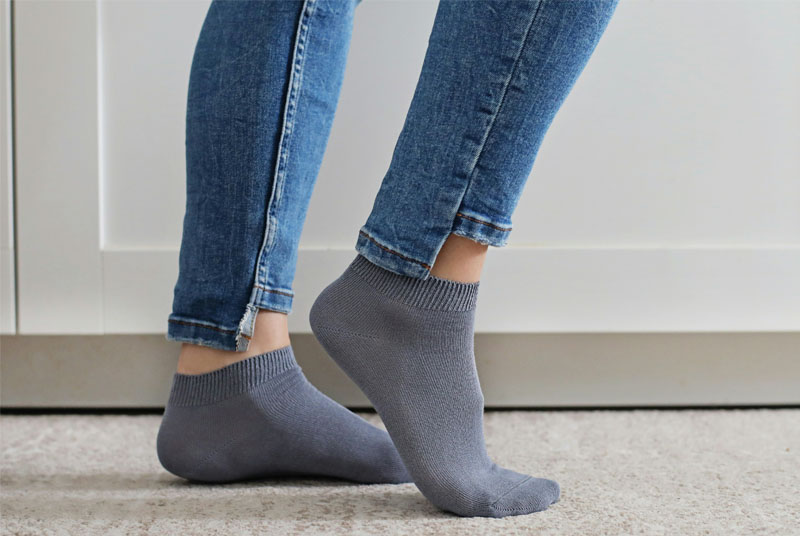
In the current society that is obsessed with fashion, sock style is an important consideration in dressing. With elegant loafers, airy sneakers or elegant open toe shoes, the socks must be the right one. Have you ever been in a situation where you were bewildered with too many choices: which one were the best one for me to buy? This article will provide you with a deep understanding of no show socks and ankle socks, helping you make the most informed choice. What Are No Show Socks? What are no-show socks and why are they so popular? Their cuffs are very low and typically not higher than the height of the shoe sole, so they remain completely hidden inside the shoe and give the feet a rejuvenating feeling of not having socks on. No show socks are perfect for boat shoes, canvas shoes, short heel high top shoes, etc to stop them from being seen so it doesn't break the simplicity lines of the overall outfit. What Are Ankle Socks? Ankle socks, sometimes also referred to as "low-cut socks", are slightly higher than no show socks. The sock cuff is precisely located below the ankle bone. They offer a certain level of ankle coverage without being as high as traditional short socks that completely encase the ankle. The ankle socks strike an excellent balance between "invisibility" and "protection". They not only prevent the heels of your shoes from rubbing against your feet, but also expose just the right amount of trim when you bend over or sit down, adding a touch of casual style. Fiber percentage There is no doubt that the fiber content of wool determines the basic performance of a sock. The higher the wool content, the better the warmth, breathability and antibacterial effect of the socks. Durability The durability of wool socks greatly affects the brand's return policy. For example, Darn Tough's lifetime warranty policy is due to the excellent durability of the product. Wool blended with synthetic fibers in the right amounts can significantly increase durability and elasticity. No Show Socks vs Ankle Socks Coverage This is the most fundamental difference between no show socks and ankle socks. No show socks aim for the ultimate minimal coverage, only protecting the front and back of the foot, and hardly involving the ankle at all. While ankle socks offer more coverage, covering the area above the heel, providing a thin layer of cushioning for the ankle. Style visibility In terms of the visibility of these 2 socks, the design of no show socks is intended to completely conceal, ensuring a neat and tidy look. In contrast, ankle socks do have some decorative attributes. When combined with Capri pants, athletic pants or skirts, the exposed, intentionally ragged sock edges become the finishing element, adding a bit of flair to your clever layering. Slip resistance Due to the extremely shallow toe openings of the no show socks, their ability to wrap around the heel is relatively weak. Therefore, preventing the socks from slipping off is the core challenge in their design. High-quality no show socks will add silicone anti-slip strips at the heel and toe openings to address this issue. In contrast, ankle socks, with their higher leg shafts, can more securely wrap around the foot and usually have more reliable anti-slip performance. Material Choices for Both Styles No matter which style you choose, the material is the key factor determining the comfort level. Cotton blends Cotton is the most common material in socks industry, favored for its excellent breathability and high cost-effectiveness. While pure cotton is comfortable, it lacks elasticity and has average moisture-wicking properties. Therefore, cotton blends with a small percentage of spandex and polyester etc. Fibers offer more durability and elasticity while retaining the advantages of cotton. Wool blends Don't think that wool socks are only for winter! Merino wool and other fine wool blends have excellent temperature regulation and moisture absorption and evaporation capabilities, which can keep your feet dry. They are also naturally antibacterial and deodorizing. It is an excellent choice for outdoor activities throughout the year. Whether it's a hidden sock or an ankle sock style, they can provide all-day comfort. Performance fibers For sports enthusiasts, high-tech synthetic fibers such as CoolMax and acrylic etc. are the preferred choice. These fibers have an extremely strong moisture management ability, which can quickly transfer sweat from the skin surface and evaporate it, keeping the feet cool and dry, and effectively preventing the formation of blisters and unpleasant odors. Common Problems & Solutions No show socks slipping When you buy no show socks, please choose the socks that have silicone anti-slip strips at the heel and the cuff. When wearing, make sure to align and press the silicone strips against the heel of your foot, so as to achieve the best fixation effect. Ankle socks showing too much If you think the ankle socks show too much, you might consider choosing some stylish ones in various colors to add eye-catching details to your outfit. Sweat & odor control What makes socks sweat-wicking, moisture-absorbing, and odor-preventing is the fabric composition. Go for wool blends or technical fiber materials. Also, select socks that have antibacterial treatments with silver ions or copper ions, which stop bacterial growth at the source and offer long-term odor protection. Buying Tips Fit & sizing consistency Socks are not only "standard size". If the socks are too tight, they will compress the feet and affect blood circulation, and if they are too loose, they will bunch and slip. Please be sure to consult the size chart from the brand and select according to the length of your foot. Look for reinforced heels If the heel of the socks is allowed to have a reinforced design, it will better fit your feet, prevent the socks from rotating or slipping, and bring a big boost to wearing experience and durability. Bulk or custom options for retailers If you are a retailer of socks and want to produce unique socks, you can pay attention to the popular brands on the market and refer to their
Sock Sizes Explained: How to Find the Right Fit
Have you ever eagerly peeled back the packaging on a new pair of socks only to discover they are as tight as bound feet or too loose to fit in your shoes? Selecting the correct sock size is much more than just looking at the shoe size. The whole process is a rigorous discipline involving ergonomics, the technology of textile materials and the market standards of each region. Well-fitting socks can not only serve as the foundation for comfort, but also help improve athletic performance and the health of your feet. This guide will lead you into the world of sock sizes, from conceptual foundations to hands-on solutions, so you can precisely pinpoint the pair of 'chosen socks'. How Sock Sizes Work In order to get the right socks, we first need to understand the rationale of sock size. It isn’t an arbitrary number, but a system of measurement based on data of the foot and certain rules. Foot length matters The most critical information that you need to know about sock size is how long your feet are, and this is commonly expressed in either centimeters or inches. That’s because the sole and heel of the socks must be tailored to the shape of the user’s foot in order not to move or press. How to measure the size of your feet by yourself: Stand against a wall with your feet rested on a white paper, make a mark on the heel and the tip of your longest toe with a pen, and then measure the straight distance between the two points. It is advisable to perform the measurement in the afternoon or evening, as your feet will expand slightly after a day's work. This timing for measuring can accurately reflect your true desire for tightness of the socks. Shoe size vs. sock size One common misconception is equating shoe size with sock size. Although the two are highly correlated, they are not identical. Length of foot and width of foot are the main factors in determining shoe size, with some extra room allowed to the activity of foot inside the shoe. And sock size usually corresponds to the net size of the length of the foot, and it is necessary to have certain elasticity to closely wrap the foot. So, you may find that sometimes your shoe size corresponds to a range of sock sizes (such as shoes size US 9-10, which corresponds to sock size M) rather than single sock size. Applying the narrow fit shoe size straight to sock due might make socks too tight. Especially for children's sock sizes, because children’s skin is much more delicate and feet comes in different shapes, shoe size is not the only reference point for choosing children's sock sizes, please choose socks size based on length of your feet and width of your feet. Why sizing varies by region There are various size standards used across the world and which are influenced mainly by the historical and cultural differences of their users. The three most common systems are: US size: It is approximate divided for age and gender (such as men's size, women's size, children's size), and there is a suitable range for foot length. EU sizes: The most consistent and scientific, shoe size based on the length of the shoe last, which is expressed in centimeters as shoe size. For example, when it comes to size EUR 42, the foot length is 26.5 centimeters. That’s the simplest way to choose which socks. Asian sizes: Some Asia countries for example Japan, South Korea adopt the cm system as well but the size might be smaller. For example, for shoes of 26.5 cm, a pair of Asian branded footwear will usually have less space inside than a pair of European shoes of that size. So, it’s just the safest deal if you want to avoid buying the wrong size when getting socks from a different place convert the foot length to inches in cm. Sock Size Chart Overview Here is a universal sock size chart for your quick reference. Please be aware that this is for your reference only. Differences may exist between various brands. Suggestion: In case foot size of user lies between two sizes and foot shape is narrow, it is advised to go for smaller size for better fitting. If you have wide feet or high insteps, select a larger size for comfort. Different Sock Types, Different Fits The length and style of socks are key variables that influence size selection. No show & ankle fit The fit of this low-top socks style comes with the most stringent requirements. As most of them are hidden inside the shoes, the size difference will be felt immediately. The only requirement is that the position of the heel precisely falls on your heel cup. When the socks are too small the heel moves forward and the toes are being blocked. If it is too large, the heel slips down to the sole of the foot and the sensation to wear is unbearable. So in the case of no show socks and ankle socks, you should match your foot length as closely as possible. You could even opt to buy a size half a size too small from what you normally wear, that way the socks will be as "invisible" as they can be and won’t move. Crew & mid-calf fit Mid-calf socks (end just below the middle of the calf) and crew socks (the most common height) should be ordered slightly looser. We also need take into account the circumference of the calves, apart from the feet fit. Various brands can be adjusted for different calf thicknesses by increasing the elasticity of the sock body. When you choose, apart from the length of your feet, you also want to check if the product description includes the "wide mouth" or "widened" design, this is very significant for people who have well-developed calf muscles. The size range of this style of socks is usually large, and one size fits several feet length. Knee-high fit considerations Size requirements are the most comprehensive for knee-length socks. Not only have the feet to fit well, but also the length and circumference of the whole
What Is MOQ in Custom Socks Manufacturing
Simply put, the Minimum Order Quantity (MOQ) is the least quantity which factories are willing to produce for the custom sock production. In other words, a MOQ of 500 pairs means that you will need to buy at least 500 pairs with the same style, color and design to have them produced. MOQ is among the first and most critical hurdles when dealing with a factory. What Does MOQ Stand For? MOQ stands for "Minimum Order Quantity". Factories impose MOQs not to intentionally frustrate small customers, but for these essential reasons: Production Cost-Effectiveness: Initiating a production line, figuring out how to make things, procuring custom molds, and pattern making all come with fixed costs. The initial expenditures of producing 100 pairs or 1,000 pairs are more or less the same. Only by attaining a certain volume can these costs be amortized and the price per sock become reasonable. Manufacturing Efficiency: production line focuses on continuity. Too much variation in style, color and design will interrupt the flow of production and adversely affect efficiency and cause more labor and time waste. RawMaterial Purchase: For factories, there are also MOQs for the purchase of raw materials, such as yarn and dyes. If your order is on the small side, the factory may not be able to obtain enough of certain materials from its vendors. How Does MOQ Affect Your Pricing and Inventory? MOQ directly affects your cash flow and risk of stockpiling. Effect on Pricing: High MOQ = Low Unit Price: there is a lower average production cost (pattern fees) for each sock when the order quantity is larger and you can get a more advantageous unit price for the socks. Low MOQ = High Unit Price: The unit cost would be higher as the set up cost will be distributed over less number of socks if MOQ is by nature small or if you just order the MOQ quantity. Effect on Inventory: High MOQ : You now have to lay down more cash, and take even more risk on inventory. If the socks don't sell well, it can tie up your capital. Low MOQ: Less inventory pressure, more flexible cash flow, great for market-testing or personalized orders in small batches. What Can You Do If You Can't Meet the MOQ? If your desired factory's MOQ exceeds your needs, don't give up immediately. Try the following methods: Negotiate with the factory: Be upfront about what you need and what you have to work with budget-wise. Sometimes the factories could be flexible, especially for potential new customers or during off-seasons. Go for easier patterns: Harder patterns (like jacquard or specialty yarns) usually have a higher MOQ. Non-complex patterns (i.e., basic embroidery or colorways) may have a lower MOQ. Look for suppliers with lower MOQs: Factories that cater to small businesses or startups tend to have smaller MOQs (for example, 100-300 pairs), but be ready to pay a higher per unit price. Consider a “group order”batch: Connect with friends or other businesses who have similar needs and pool your order together to reach the MOQ. Is There a Way to Get Custom Socks With No MOQ? Yes, but the options are few and the types of items are different. There’s really no such thing as “zero MOQ” custom sock production, but you can do small-batch customization options like these: DIY Handcrafted Customization: Buy plain socks and embroider, print or paint them yourself or hire a craftsperson. This is for very limited quantities, as gifts. Micro-Customization Existing Styles: Some vendors do “existing styles + small logo” For instance, you can heat-transfer or sew your logo onto socks that are already mass-made. This approach has a significantly reduced MOQ. Locate Factories Providing “Sample” Services: A few factories with large MOQs will make a handful or several dozen “samples” for you on an individual basis. You will have to pay a higher sampling cost, but this is a way to produce in very small quantities of customized products. Example Scenario A: Brand Startup Objective: Customize 500 pairs of socks with a detailed jacquard logo. Result: After they contacted factories, they learned MOQ for this style of design 2,000 pairs. In the end, they pared the design down to embroidery at the ankle and found a factory willing to work with an MOQ of 300 pairs. Scenario B: Wedding Planner Objective: Customize 50 pairs of socks gifts personalized for a wedding of 50 guests. Outcome: No factory had the MOQ, or minimum order quantity, that she could meet. In the end, they went with micro-customization — they bought a batch of high-quality plain socks and then embroider the couple’s names and dates on the sock cuffs, perfectly solving the problem. Conclusion While MOQ (Minimum Order Quantity) is a natural rule in custom sock manufacturing, understanding how to navigate it—choosing the right volume based on budget, market demand, and inventory capacity—can make your project far smoother. Smaller orders don’t always require complex designs or high thresholds; options like simplified patterns, micro-customization, or partnering with flexible suppliers can still bring your ideas to life. If you want a supplier that offers low MOQ solutions, fast sampling, and fully customized production, Sockcn is built exactly for that. With flexible order options and professional support, we help brands, startups, and creators launch their custom sock projects with confidence—no unnecessary barriers, just efficient, quality-driven manufacturing.
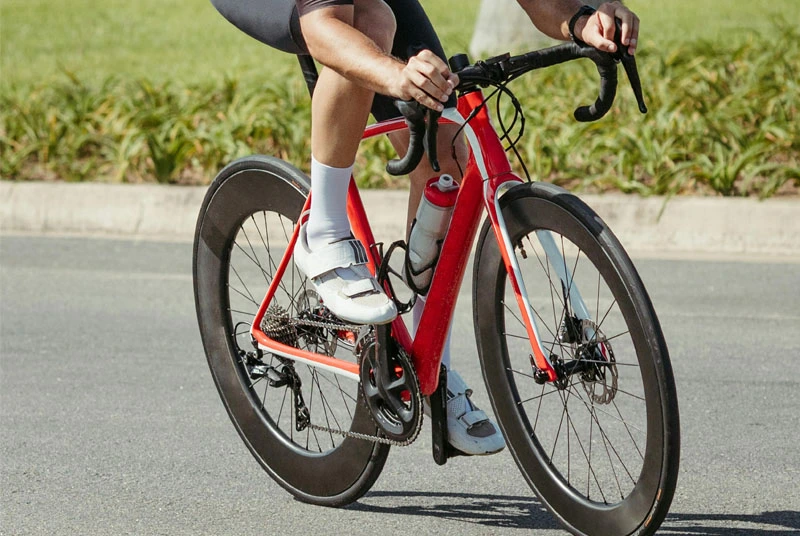
Best Custom Cycling Socks: Performance and Branding in One
In the world of cycling, every detail matters. From the aerodynamics of a frame to the suppleness of tire rubber, cyclists are perpetually chasing marginal gains. But the seemingly mundane socks that many just overlook are actually rather important. They have evolved from basic stocking fillers to mission critical performance equipment and the most powerful brand promotional tool. Personalized cycling socks combine the best of both worlds. They are technical enough to meet the needs of professional riders and provide a unique platform for displaying team identity, brand expression and personal style. Cycling socks for men seems be invisible, but their impact on and off the bike is massive. Why Cyclists Care About the Right Socks If you’re not into cycling, socks might be one of those things you only think about at the very end. But in the eyes of the pro rider, the riding socks are as vital as the riding shorts and the right bike. The wrong socks can cause discomfort, blisters, and overheating in the areas of friction, while the right pair can make a difference in the whole experience on the bike. A good pair of cycle socks can help keep your feet dry and comfortable, and also help prevent sweat-induced friction injuries. Comfort and Breathability on Long Rides During the several-hour cycling journey, the accumulation of friction and heat is an inevitable obstacle during the ride. High-performance cycling socks are made of advanced breathable materials, which can absorb sweat from the skin. This helps keep the feet dry and significantly reduces the risk of blisters. The common ventilation areas on the top of the feet (usually presented in a mesh pattern) provide the maximum air circulation, preventing your feet from overheating and causing discomfort during strenuous uphill sections or in hot summer conditions. Compression and Fit for Performance Best socks for cycling should feel like a second skin – snug, but not too tight. The fit is tight on a level that is designed to stabilize muscles in the foot, with light compression (in some cases) which also reduces the vibration and improves the blood circulation. This can contribute to a decrease in fatigue and crisper feeling in feet for endurance events. Unlike bulky cotton socks that bunch up, a performance sock properly sized will lay flat with no seams to cause pressure points inside a tight cycling shoe. Durability and Anti-Slip Design The continuous pressure and movement inside cycling shoes require durability. Best cycling socks use reinforced fibers in high-friction areas such as the heel and toe to prevent holes from forming. Additionally, many high-end cycling socks are hand-sewn to reduce friction at the seams against the toes and provide a better fit to the feet. What Makes the Best Cycling Socks Generally, a pair of best cycling socks should have breathable fabric and a foot surface ventilation design to prevent the feet from getting too hot during cycling. The exquisite ergonomic design ensures that the cycling socks can fit the feet perfectly like a second skin, reducing additional muscle vibrations and preventing accidental injuries, keeping the joints and muscles in a stable state. The gradient pressure can relieve blood flow in the feet, accelerate metabolism, and alleviate fatigue. Material Matters — Nylon, Polyester, or Merino Wool Nylon:Nylon is a synthetic fiber with excellent wear resistance and elasticity, making it perform exceptionally well in applications that require high loads and frequent friction. Its wear resistance ranks first among all fibers, being 10 times higher than cotton and 20 times higher than wool. The density is low, making it lighter and more elastic when made into socks. It can stretch by 3-6% and fully recover. Polyester:It has excellent anti-wrinkle and shape-retaining properties. The clothes made with it are less likely to wrinkle during wearing and can maintain their original shape. And it also has the characteristic of not sticking to hair, and it can resist ultraviolet rays. During outdoor cycling, it can resist approximately 95% of ultraviolet rays. Merino Wool: It has an extremely strong function of absorbing moisture and wicking away sweat. The hollow fibers ensure that the feet remain dry and breathable during cycling. It can keep you warm in winter and help you sweat in summer. Height and Style — Crew, Quarter, or Aero Socks Crew Socks (20-24cm cuff): A classic, versatile look often favored by mountain bikers and gravel riders. They offer more leg coverage for protection from brush, sun, or cold. Quarter Socks (14-18cmcuff): The modern standard for road cycling. They sit just above the ankle, offering a clean look that doesn't interfere with the leg while providing a perfect canvas for branding. Aero Socks (Ankle or No-Show): The minimalist's choice. These sit below the ankle bone, virtually disappearing into the shoe. They offer a ultra-clean aesthetic and are sometimes claimed to offer a slight aerodynamic advantage. Ventilation and Moisture Control This goes beyond just material. The best socks feature engineered ventilation. Look for: Mesh Panels: Strategically placed on the top of the foot and around the ankle for maximum airflow. Moisture-Wicking Weaves: The very fabric is knitted in a way that pulls sweat from your skin to the outer surface of the sock where it can evaporate. Custom Bike Socks for Teams and Brands We can offer customized services covering all aspects such as color, size, logo, length, material, and pressure value. Customized cycling socks are not as costly as cycling clothing and equipment, which makes it difficult for a small business to get off the ground. The relatively low cost of socks makes them a great choice for a cycling brand to start its business. Large brands that offer custom cycling socks can showcase their brand value in the details. How Custom Designs Build Identity When every member of a team pulls on the same custom-designed socks, it creates an instant sense of unity and belonging. It’s a symbol of shared purpose and pride. For a brand, it’s a moving billboard. A striking sock design gets noticed in pelotons, at event start lines, and in post-ride café photos. Branding with Logos, Patterns, and

EXW in Sourcing: Why Your “Cheap” Socks May Cost You More
What is EXW EXW meaning is that the seller delivers the goods at the designated location (such as the customer's factory, warehouse, etc.) and completes the delivery process, with the seller having the lightest responsibility. Seller's responsibilities: Delivery location: In case of EXW, the seller is obligated to make the goods available to the buyer at the seller’s premises and is not responsible for loading the goods or undertaking the export customs clearance. Risk transfer: Once the goods have been delivered, the buyer assumes all risk of (including but not limited to) transportation damage, customs clearance problems, etc. Cost responsibility: Before delivery, the seller is responsible only for the costs (such as packaging, inland transportation, etc.), and the buyer pays all the costs after delivery. Buyer's responsibilities Transportation arrangement: The buyer needs to arrange transportation, customs declaration and clearance themselves, and bear all costs and risks. Risk assumption: If the goods are damaged or lost after delivery, the responsibility lies with the buyer. Applicable scenarios The buyer is familiar with the export process or wishes to fully control the transportation. Domestic trade or the situation where the buyer can directly handle export procedures. Notes for Attention If the buyer is unable to handle the export procedures, it is recommended to use the FCA term instead of EXW shipping terms. The seller can assist in providing documents or insurance information, but the cost will be borne by the buyer. The Real Cost of EXW Shipping for Your Sock Order Under the shipping terms of EXW, the out-of-pocket costs that the buyer is responsible for are customs clearance, shipping to the country of destination, customs at the destination port and potentially additional insurance for transport, charges of the freight forwarding agent, storage charges, and so on. If the goods are lost or damaged during transportation, the seller is not responsible for compensation. The buyer needs to communicate with the freight forwarder to handle the compensation issue, and the time cost cannot be estimated. EXW vs FOB The core differences between EXW and FOB lie in the delivery location, the point of risk transfer, the cost assumption, and the scope of responsibility. In EXW shipping terms, the risk is transferred when the goods are delivered at the seller's warehouse and the buyer bears all the costs. In FOB shipping terms, the risk is transferred when the goods pass over the ship's rail at the port of shipment. The seller is responsible for export clearance and the costs before the port of shipment. EXW vs FCA The core differences between EXW and FCA lie in the point of risk transfer, the responsibility for export customs clearance, the obligation to load the goods, and the way of cost bearing. Under EXW shipping terms, the risk is transferred at the seller's factory and the buyer is responsible for export customs clearance and loading. Under FCA shipping terms, the risk is transferred when the goods are delivered to the carrier and the seller is responsible for export customs clearance and loading. Questions to Ask Before You Accept an EXW Quote Does the buyer have the capacity for export? This is the most important. Is the seller willing to cooperate in providing the detailed information of the goods, the loading details (including data, weight, and dimensionsetc), and other documentary files? Under the EXW shipping terms, all costs related to the export (such as booking fees, loading and unloading charges, customs clearance fees, shipping costs, etc.) are borne by the buyer.If the seller provides additional assistance (such as arranging for the delivery of goods to the designated port warehouse by a logistics company), these expenses should also be borne by the buyer. Both the buyer and the seller need to clearly communicate about the cost attribution in advance to avoid any unnecessary disputes. Conclusion The EXW shipping term ostensibly gives the buyer the greatest control and seemingly the lowest product price. However, in reality, it brings extremely high complexity, unforeseen costs, and potential risks. For buyers of goods like socks, especially small and medium-sized enterprises, it is like a thin layer of ice covering a cost trap. When you receive an attractive EXW offer in the future, please don't just focus on the unit price of the product. Actively ask the supplier for FOB or FCA quotations and conduct a total cost comparison. In the vast majority of cases, choosing FOB or FCA and entrusting the professional affairs within China to professional suppliers and freight forwarders will enable you to obtain a more transparent, more controllable, and ultimately truly more "cost-effective" procurement result. Remember, savvy procurement doesn't focus on the figures on the quotation sheet; instead, it considers the total cost of ownership when the goods safely arrive at your warehouse.
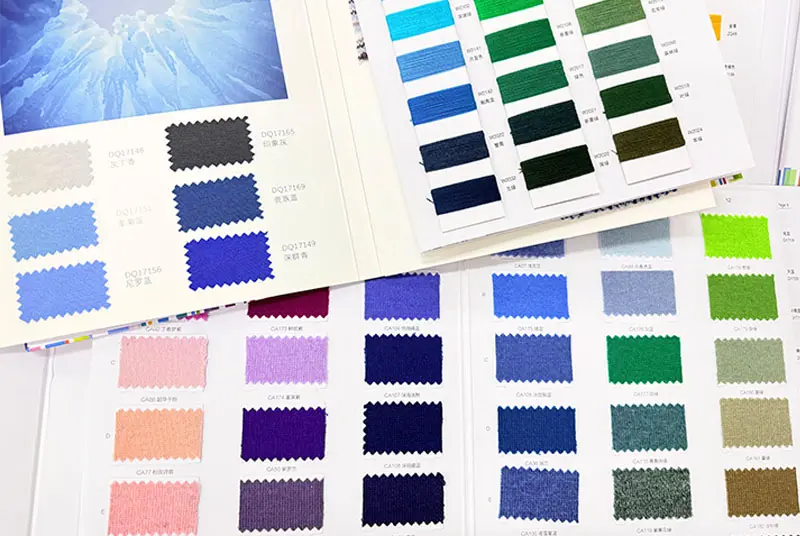
What Is Color Fastness in Socks
What Is Color Fastness As a professional sock manufacturer, we are well aware of your concern about product quality. Among them, “color fastness” is one of the main evaluating indicators of socks quality. In this article, we will explain this concept in detail and introduce how we guarantee the long-lasting color stability from the production side. Key Factors Affecting Color Fastness in Socks The durability of color is no random chance; it can be attributed to the following three main components: Material factors Different fibers have different affinities for dyes and bonding mechanisms. For instance, cotton fibers show hygroscopic absorption, which facilitates the penetration of dye, but the fibers also lose color by washing; The difference is that the polyester fibers are much more compressed, so the polyester holds the dye much more tightly. Therefore, it is important to consider the material type for employing a suitable dyeing method and the appropriate dye. Dyeing technology We utilize advanced high-temperature, high-pressure dyeing process. The mechanism is that using certain process conditions dye molecules deeply penetrate into fiber interior and react with components inside fiber followed by forming stable complex one after another giving the ability of color fixation much higher than one attained from traditional processes. Chemical substances and softeners The choice of chemical additives in the post-treatment process is extremely significant. The addition of the wrong softeners, or the use of harsh chemicals, can break down the bonding between the fibers and the dye and cause it to fade. We have opted for sustainable additives with only the slightest effect on color fastness, yet which also provide enhanced wearing comfort and ensure the colors stay as vibrant for as long as possible. How We Ensure Color Fastness as Your Manufacturer In order to ensure that the product leaving the factory can meet the high standard, we have made a tough quality inspection: Washing fastness test: With professional test equipment, we simulate various household washing methods to test the color change of samples before and after washing, and the products meet the national standards. Color fastness to friction test: color fading on dry and wet socks is quantitatively tested by an instrument under friction conditions, so as to avoid the problem of color loss caused by daily wear and friction. Stain resistance color fastness test: Simulate the environment of human sweat to check whether the color is stable under acidic and alkaline environment, which can be used in real life. It was with the help of these critical tests system that we could impartially test the color fastness of every batch of our products. Educating the End-Consumer: Proper Garment Care To protect the excellent quality of the sock to the greatest extent, consumer has advised to use as following: Turn and wash: To reduce surface abrasion is recommended that socks are turned inside out before washing. Cold gentle wash: Warm or cold water below 30℃ (warm or cold), gentle cycle is recommended. Use neutral detergent: Do not use strong detergents with chlorine bleach ingredient. Dry in a ventilated and cool place: After washing, please dry it as soon as possible. Do not expose to the sun for long time! Conclusion As your reliable supply chain partner, we always prioritize product quality. As for color fastness, we bring you socks with lasting colors and stable quality by high-grade raw materials selection, advanced dyeing techniques and rigorous quality control. We are convinced that long-term values to you can only come from products that are tested in the market. Should you have any enquiries, please do not hesitate to contact us for professional communication at anytime.

Christmas Socks Guide for Brands: Fun, Fuzzy & Festive Styles
Every holiday season has its heroes: twinkling lights, jingling music, steaming hot cocoa… and, of course, Christmas socks. It’s the first thing we scramble to find on Christmas morning (hopefully not the lonely, single ones from the laundry basket), and it’s the perfect, cozy canvas for festive cheer. Whether they’re fuzzy, funny, oversized, or full of sparkle, Christmas socks have a magical ability to turn even the grouchiest December day into something warm and cheerful. For brands, retailers, and growing sock labels, Christmas socks are not just festive accessories — they’re one of the most reliable, joyful products of the entire gifting season. This guide will walk you through why Christmas socks stay evergreen, what styles people can’t resist, and how businesses can turn this classic holiday item into a sales-friendly superstar. Why Christmas Socks Never Go Out of Style Christmas socks are like the holiday season’s version of comfort food — cozy, nostalgic, and impossible to refuse. Trends come and go, but the demand for festive socks remains steady year after year. Why? They’re universal. Kids, teens, adults, grandparents — everyone can enjoy a pair of cheerful Christmas socks. They’re affordable gifts. Even when the economy wobbles, customers still buy holiday socks because they’re small, adorable, and budget-friendly. Gifting a pair says, “I didn’t just get you any old gift; I got you a tiny, fuzzy hug for your feet.” They deliver instant joy. In a world that can feel too serious, slipping on a pair of socks adorned with grumpy reindeer or dancing gingerbread men is an instant mood-lifter. They’re a wearable inside joke, a secret handshake with your own feet. They’re a social tradition. Offices use them for Secret Santa. Families use them for matching Christmas photos. Brands use them for giveaways. It’s a festive “language” everyone speaks. Simply put: Christmas socks have permanent residency in the holiday shopping cart. Exploring Popular Styles of Christmas Socks The beauty of Christmas socks lies in their incredible diversity. There’s a perfect pair for every personality on your nice list. To help retailers and brands expand their holiday lineup, let’s take a stroll through some of the most beloved styles — the ones customers reach for year after year. Kids Christmas Socks Kids' socks are where the magic is most palpable. Think bright colors, beloved characters like Santa and his elves, and maybe even a jingle bell or two. They’re not just socks; they’re a costume for the feet, fueling imaginations and making the pitter-patter of little feet even more delightful. For brands, capturing that sense of wonder is key. Imagine a sock that tells a mini Christmas story! Christmas Socks for Women Ladies' Christmas socks range from elegantly subtle to joyfully bold. Think soft, fuzzy Christmas socks in solid festive colors, delicate Fair Isle patterns, or playful motifs like kittens in Santa hats. They’re a way to express personal style while staying cozy, whether peeking out of a winter boot or curled up by the fire. The demand for variety and quality here is immense. Men’s Christmas Socks Gone are the days of boring black dress socks. Mens Christmas socks have become a fantastic avenue for self-expression. From socks featuring a tasteful Nordic pattern to the hilariously bold funny Christmas socks with slogans like “I’m Only Here for the Cookies” or a portrait of a grumpy Santa, men are embracing the fun. They’re the perfect accessory for the office holiday party or a relaxed family gathering. Funny Christmas Socks This category deserves its own spotlight! Funny Christmas socks are the life of the party. They feature sassy slogans, pop culture parodies (think “Elf on the Shelf… and a Bit Weird”), and hilarious illustrations. They’re the perfect gift for the person who has everything but needs a good laugh. For a brand, creating a clever, shareable funny sock can generate immense buzz. Best Materials for Holiday Comfort A festive sock that feels like sandpaper is a Christmas tragedy. Comfort is king (or Santa!). The best socks blend softness with durability. Cotton: Breathable, soft, and perfect for everyday wear. Bamboo: Incredibly soft, hypoallergenic, and eco-friendly – a major selling point for modern consumers. Fleece/Faux Sherpa: The gold standard for fuzzy Christmas socks. They’re like a warm fireplace for your feet. Blends: Materials like cotton-polyester blends offer shape retention and longevity, ensuring the socks survive many holiday seasons to come. Choosing the right material isn’t just about comfort; it’s about communicating quality and care, values that reflect directly on your brand. Selling & Branding Ideas for Businesses So, how do you turn these festive foot-warmers into a roaring success for your business? It’s all about smart strategy and a sprinkle of branding magic. Add logo or packaging for brand exposure A sock isn’t just a sock; it’s a mobile billboard. Imagine your beautifully designed logo or brand name subtly woven into the cuff. Every time someone wears them or folds them, they see your brand. Pair that with custom packaging – a festive drawstring bag or a clever box – and you’ve transformed a simple product into a memorable unboxing experience. It’s marketing that people actually want to receive. Bundle socks for gift sets Nobody buys just one potato chip, and the same often goes for socks! Create themed bundles: a “Family Pack” with coordinating designs for everyone, a “12 Days of Socks” advent calendar, or a “Cozy Couple” set. Bundles increase average order value and solve the giver’s “what else do I get?” dilemma. They’re a ready-made gift solution. Plan bulk orders early for the season The holiday rush waits for no elf. To ensure you have enough stock to meet demand (and avoid a nightmare before Christmas), it’s crucial to plan your bulk orders early. Partnering with a reliable supplier who can handle large volumes while maintaining quality is the cornerstone of a successful holiday season. A little foresight now means a smooth, sleigh-full-of-profits season later. Choosing the Right Supplier This is perhaps the most crucial step. Your supplier is your Santa’s Workshop. You need a partner who is reliable, communicative, and

Best Merino Wool Socks: A Complete Guide for Outdoor Brands
In the pursuit of both functional and comfortable textiles, Merino wool socks have become the new standard for outdoor sports and everyday wear. If you are planning to start your own Merino socks brand, I hope this guide can help you clarify your plans more clearly. What Makes Merino Wool Socks the Best Choice for Brands In terms of fiber structure Its scales organization of scale layers plays the role of temperature regulation system - in the case of ambient temperature increasing, the scale layers are opening, enhancing the air permeability. When it gets cold, it shuts to trap the air. Latest report by International Textile Testing Center (ITTC)10 High quality Merino wool fibers have breaking strength as high as 4.5cN/dtex in 2025, which is significantly higher than that of regular cotton fibers (2.8cN/dtex). This allows Merino socks to preserve 92% of the shape after prolonged use which is a great advantage compared to the 78% acceptance rate of polyester blended socks. In the realm of sustainability, LCA certified Merino wool has only one-third the carbon footprint of synthetic fibers and is 100 % biodegradable. For a brand owner, sourcing Merino raw materials delivers three points of advantage in competition: validation of technological innovation (such as Smartwool's patented Indestructawool technology), acknowledgment of green consumption (a 40% increase in the pass rate of the EU eco-label certification) and a premium price potential (gross profit margin for top end series can in some cases be as high as 58%). Best Merino Wool Socks for Women Women are always talented with shopping and have a good sense of fashion. What are the best merino wool socks for women? What Women Value in Wool Socks A six-month follow up surveyed 2,000 active users between the ages of 25 and 45 who rated the product on 14 dimensions. According to the data, the importance score of the arch support system is 9.2/10, among which the Bridgedale's Cloudloop 3D weaving technology has earned the highest satisfaction scores. The focus on the seamless toe construction has grown by 37% year-over-year. In particular, the Anatomical precise cutting design of Icebreaker makes the friction comfort dropped 87%. In terms of visual effect, the search index of products related to gradient dyeing technology is up by 215%. A collection like “Aurora,” created in partnership with Pantone, by Smartwool has driven 270,000 social chatter. These more sophisticated demands also are leading brand to build a more complete product matrix. For example, Stance has created a 360° elastic surround system tailored specifically for yoga practitioners. With 72 pressure monitoring points being dynamically adjusted, it decreases the foot pressure feeling by 63% when moving. Style & Function Examples Take Darn Tough’s tactical series for example. It is 22 stitches sectional woven: area of sole is cross-locked stitched for durability, instep is honeycomb breathable structure, and memory elastic rings are embedded in ankle. This differentiated design was tested by the Natick Laboratory of the US Army and found that it maintained 94% of its original performance after 120 hours of continuous use. For the special populations, Smartwool's diabetes-specific socks that are constructed from medical-grade silver-ion fiber blends (2.1% content) that have been clinically demonstrated to reduce the risk of foot infections by 81%. These examples illustrate the evolving direction for modern Merino wool socks from basic warmth to creation of three-dimensional value of “technology + aesthetic + healthy.” Best Merino Wool Socks for Men What about the men? What do they think it’s the best merino wool socks for men? Key Features Men Look For Based on the results of the North American Men’s Shopping Behavior Institute, decision factors weighed as follows: Wear Resistance Index (45,000 times Martindale test), Humidity Management Property (15min drying test according to JIS L 1096), Rationality of Pressure Distribution (32-zone monitoring on the bottom of foot), and Easy Maintenance (deformation rate after 50 machine washes). Among hiking fans, the double-layer reinforcement for the heel and thumb is the most important factor, and the acceptable thickness is 2.8~3.2mm. Business people opt for the 1.2mm ultra-thin design with anti-slip silicon strips to be perfectly matched with the Oxford shoes. It is also particularly worth noting that men in the mature category (aged 35-50) are 42% more likely to pay a premium for natural materials over synthetic fibers, which serves as a direct catalyst for 18.7% annual growth in the high-end product lines with 80%+ merino content. Ideal Use Cases The performance under extreme conditions best verifies the value of a product.The Mountaineering socks of FITS at the Everest base camp: The actual measurements of FITS mountaineering socks at the base camp of Everest prove that they can still keep a heat retention efficiency of 0.28clo in a -25℃ environment. Toe features Realfleece technology, which boosts local temperature by 4.2°C. Trail Runners features produces an innovative dynamic wrapping system using a 7-stage gradient pressure design to stabilize the runners foot and reduce wobbling fatigue by 17%. For the urban commuter , Pantherella’s MICRO28 range applies the finest 28-needle spinning technology coupled with a 6° subtle heel inclination to relieve a staggering 31% of peak foot pressure on walking 15,000 steps a day. These focused solutions not only meet technical demands of function, but they serve as a key vehicle for brands to gain professional recognition. Brand Tip Leading brands are erecting competitive barriers with supply chain transparency. For example, Icebreaker's "from farm to retail" traceability system connects each pair of socks with the farm on which the sheep were raised, the shearing season, and the processing plant in a line of text printed on each pair of socks. The transparency of this full-process has led to a 36% increase in brand loyalty. In another classic case of brand loyalty, Darn Tough has a a 9.1 Customer recommendation index (the best in the industry) with of 2.3% return rate due to its "lifetime warranty" policy. For Farm to Rice, the localized production model of Farm to Feet 'Emerging brands Farm to Feet's ' Made in the USA ' label as eligible proved to be recognizable to brands who in the Midwest distribution has increased by 28%. Best Merino Wool Hiking
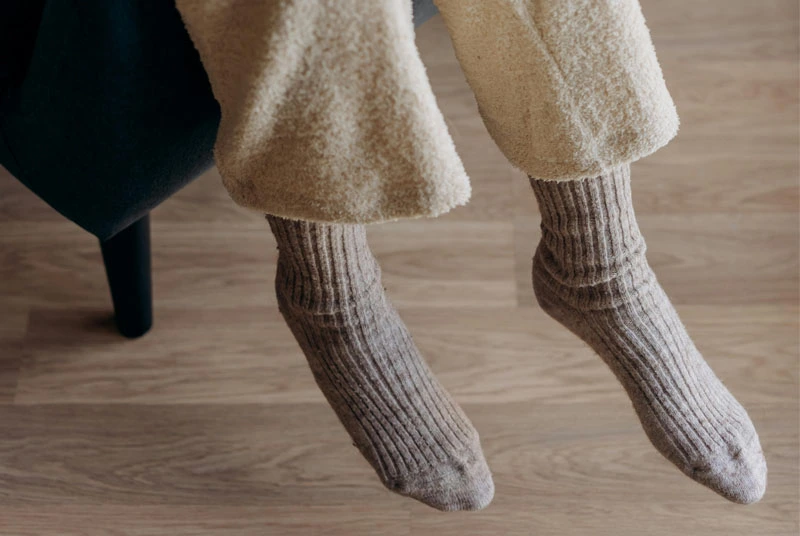
Wool vs Cotton Socks: Which Is Better for Your Brand?
For a brand, the selection of products should be more in line with the brand's value. When it comes to choosing between wool socks and cotton socks, the brand selection often needs to be based on the actual situation. So, how to choose the right brand of socks for yourself? This blog will provide detailed information on this topic. Wool vs Cotton — What’s the Real Difference? Many people distinguish between wool socks and cotton socks by simply touching them. However, in fact, the differences between them can also be compared based on their fiber structure, moisture absorption and sweat drainage functions. Wool Socks vs Cotton Socks in Structure The structural differences between wool socks and cotton socks stem from the different properties of the materials. The flaky and curly structure of wool is more suitable for providing warmth and has greater elasticity. However, the smooth and straight structure of cotton is more conducive to breathability. Cotton vs Wool: Moisture and Breathability Due to the difference in structure between cotton socks and wool socks, cotton socks are better at absorbing sweat than wool socks, but they are not as good at draining sweat. Wool socks are better at preventing your feet from getting sweaty. Although wool has a lower moisture absorption capacity than cotton, it has a fast moisture release rate. After absorbing moisture, it remains fluffy and is not prone to causing foot discomfort. Its dryness is also better. Merino Wool vs Cotton: Comfort Upgrade The softness and breathability of Merino wool will be better than that of cotton socks. Even after wearing for a whole day, your feet won't feel stuffy and damp. It also performs better than cotton socks in balancing warmth and breathability. When it's cold, it won't cause your feet to get cold, and it has a very strong adaptability to different seasons. Are Wool Socks Better Than Cotton for Performance? Many people will raise the question: Are wool socks always better than cotton socks when exercising? After switching to wool socks, I realized that when choosing socks for sports, it's not just about being soft. Wool socks are far superior to cotton socks in terms of "reducing the suffering of your feet"! Today, let's use the plain language that all sports enthusiasts understand to explain the differences between these two. Warmth and Temperature Control The temperature-regulating effect of cotton socks is not very good. During winter exercise, if your feet sweat, the poor exhaust function of the socks will cause the socks to become very cold immediately; in summer exercise, the opposite occurs. As soon as you sweat, your entire foot will become very sticky and prone to slipping. Wool socks can adapt to both cold and hot environments. They are designed based on different weaving techniques for various scenarios. For example, in winter, by adding loops at the bottom and heel of the socks, it is possible to effectively drain moisture during exercise and keep the feet from feeling sweaty and uncomfortable. Odor and Sweat Resistance The sweat-wicking ability of wool is higher than that of cotton socks. Even if you sweat a lot, it can keep your feet dry and not sticky. The root cause of foot odor lies in the fact that bacteria break down the grease and protein in sweat, thereby producing an unpleasant smell. The structure of wool enables it to quickly wick away moisture, and wool is a keratin fiber, which has a natural antibacterial property and can prevent foot odor. Durability and Longevity Wool socks are not more durable than cotton socks simply because of their thickness; rather, it is more due to their inherent properties and the scientific material composition. The resilience of wool is quite strong. Even in areas prone to wear and tear such as the heels and toes, wool socks can withstand the wear. When Cotton Socks Make More Sense Although the characteristics exhibited by wool socks in many aspects are inferior to those of cotton socks, from the perspective of daily wear by customers and from the viewpoint of retailers, cotton socks might be a better and more cost-effective choice. Everyday or Indoor Use When working from home every day, going for shopping or other low-intensity activities, choosing cotton socks is definitely the right choice! Because its texture is relatively soft and smooth, while some wool socks may have a slight itchy feeling. And cotton socks can also be suitable for the elderly and children. Even if worn for a long time, they won't make your feet feel stuffy. Cost-Effective for Bulk Retail For mass retailing, cotton socks offer greater cost-effectiveness. Firstly, the raw materials for cotton socks are readily available, with low and stable costs, and the production process has basically become mature and standardized. Moreover, the target audience for cotton socks is a broad segment of the general public with a high demand. The customer base is extensive (including adults, children, etc.) and the repeat purchase rate is also relatively high. And the cost is controllable. Even if promotional activities are carried out, it can still stimulate consumption, increase the average transaction value, and thereby drive up the overall sales volume. When Wool Socks Are the Better Choice The comprehensive advantages of wool socks lie in their ability to precisely meet specific needs, such as in high-intensity outdoor activities like skiing and hiking. In these particular situations, customers have a greater demand for wool socks. Outdoor and Cold-Weather Use Wool socks have excellent heat retention properties. Good outdoor wool socks know exactly how to protect ankles - the ankle area is designed with a snug fit, not too tight, but soft and just right to wrap around. For activities like skiing or snow camping where "treading on snow feels instantly cold," trust me—go straight for fleece-lined wool socks. Opt for ones with at least 70% wool content; they'll even block that icy tingle when snowflakes land on your socks. Unlike cotton socks that let the cold right through the moment they touch snow, wool