If your feet tend to sweat during long workdays, you’ve probably realized the problem isn’t just wetness — it’s the buildup of heat, odor, and discomfort over time.
In demanding work environments, when wearing work boots or standing for long hours, the wrong socks can make your whole day uncomfortable. Many workers use moisture-control options like custom wool socks to improve comfort and reduce sweat during long shifts
This guide breaks down the best work socks for sweaty feet, including what materials work best, what features actually matter for all-day wear, and how to keep your feet dry during long shifts.For a broader comparison across different materials and use cases, see our guide on best socks for sweaty feet.
Best Socks for Long Workdays
If you’re working a 10- or 12-hour shift and dealing with sweaty, smelly feet, here’s what you need to know upfront. In these conditions, choosing moisture-wicking socks for sweaty feet is one of the most effective ways to keep your feet dry during long shifts.
Best overall: Merino wool blend socks (50-70% wool with nylon/spandex) — especially moisture-wicking wool socks designed for long workdays
What to avoid: 100% cotton – it absorbs sweat but won’t release it, leaving your feet wet and prone to blisters
Key features to look for:
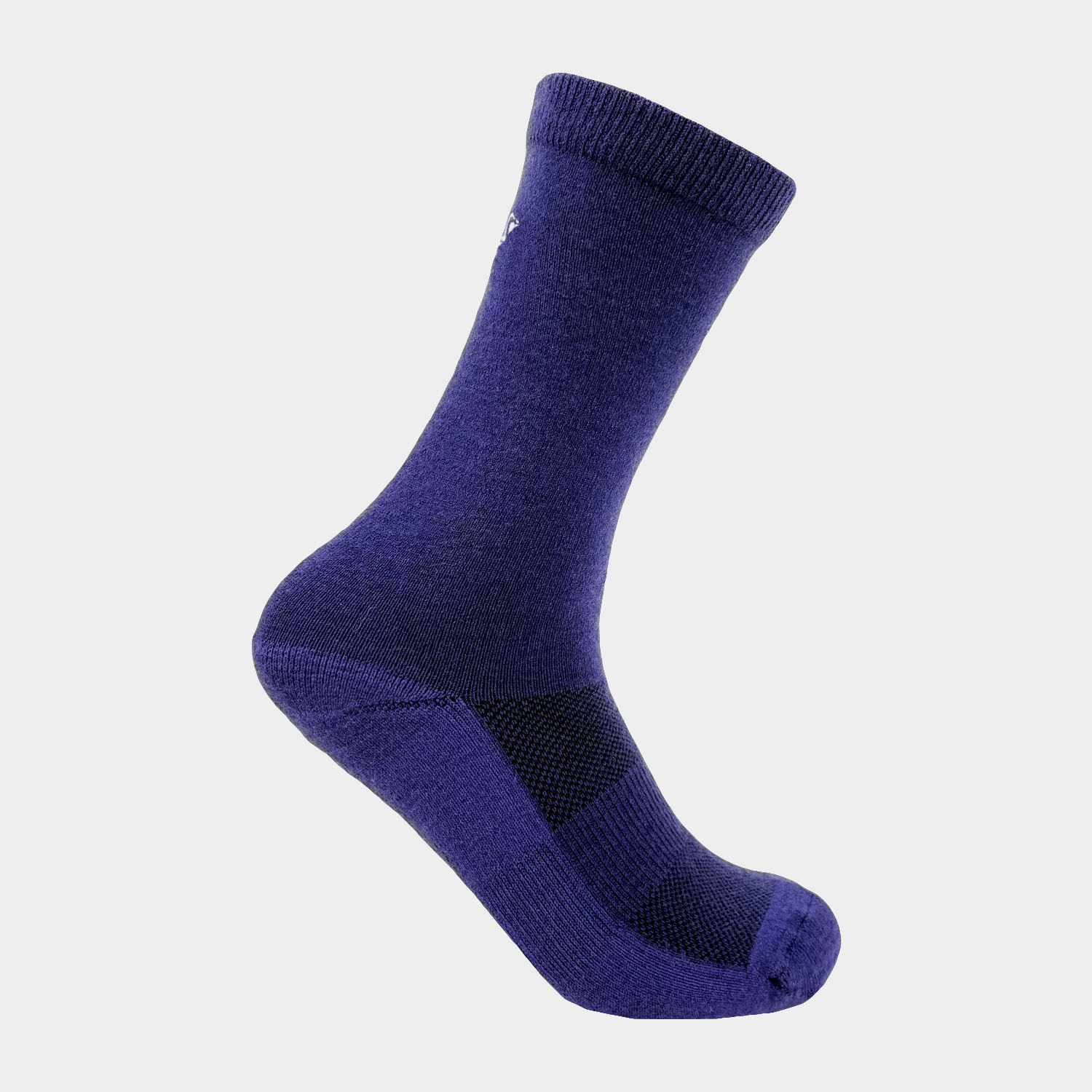
- Terry loop cushioning (looks like a towel on the inside)
- Mesh venting panels on the top of the foot
- Seamless toe to prevent friction blisters
- Reinforced heel and toe for durability
Spend a little more on quality work socks. Your feet will stay drier, smell better, and you’ll avoid the discomfort of soaking wet socks halfway through your shift.
Why Work Environments Make Sweaty Feet Worse
Your feet are naturally designed to sweat. Each foot has around 250,000 sweat glands—more than most other parts of the body. On a physically demanding workday, your feet can produce up to a pint (about 473 ml) of sweat. But sweat itself isn’t the problem. The problem is the environment your feet are in.
Safety shoes and work boots are usually made of leather, often with steel toes or composite protection layers, and they typically have little to no ventilation.
This means the heat and moisture generated by your feet have nowhere to escape. In these conditions, materials like wool perform better because they help regulate moisture instead of trapping it inside the boot environment.
A typical office worker might wear shoes for 8 hours a day, often sitting for long periods. But in many industries—manufacturing, logistics, construction, healthcare, food service—workers often stand or walk continuously for 10 hours, sometimes even 12–14 hours. Sweat keeps being produced, but has no chance to evaporate, leaving your feet constantly soaked in a damp environment.
When this environment meets the wrong socks, problems begin. Cotton socks act like a sponge. If you’re still considering cotton, here’s a detailed explanation of are cotton socks good for sweaty feet. They absorb water but lock it inside the fibers, keeping it pressed against your skin. This leads to maceration—the same wrinkled, pale skin you get after soaking in water. Softened skin is much more prone to tearing under friction, which is how blisters form. In many cases, blisters aren’t caused by poorly fitting boots, but by the wrong socks soaking your skin.

What Features Matter for All-Day Wear
Material only solves half the problem. The other half lies in the construction of the sock. For all-day wear, the following three features are essential:
Terry cushioning structure
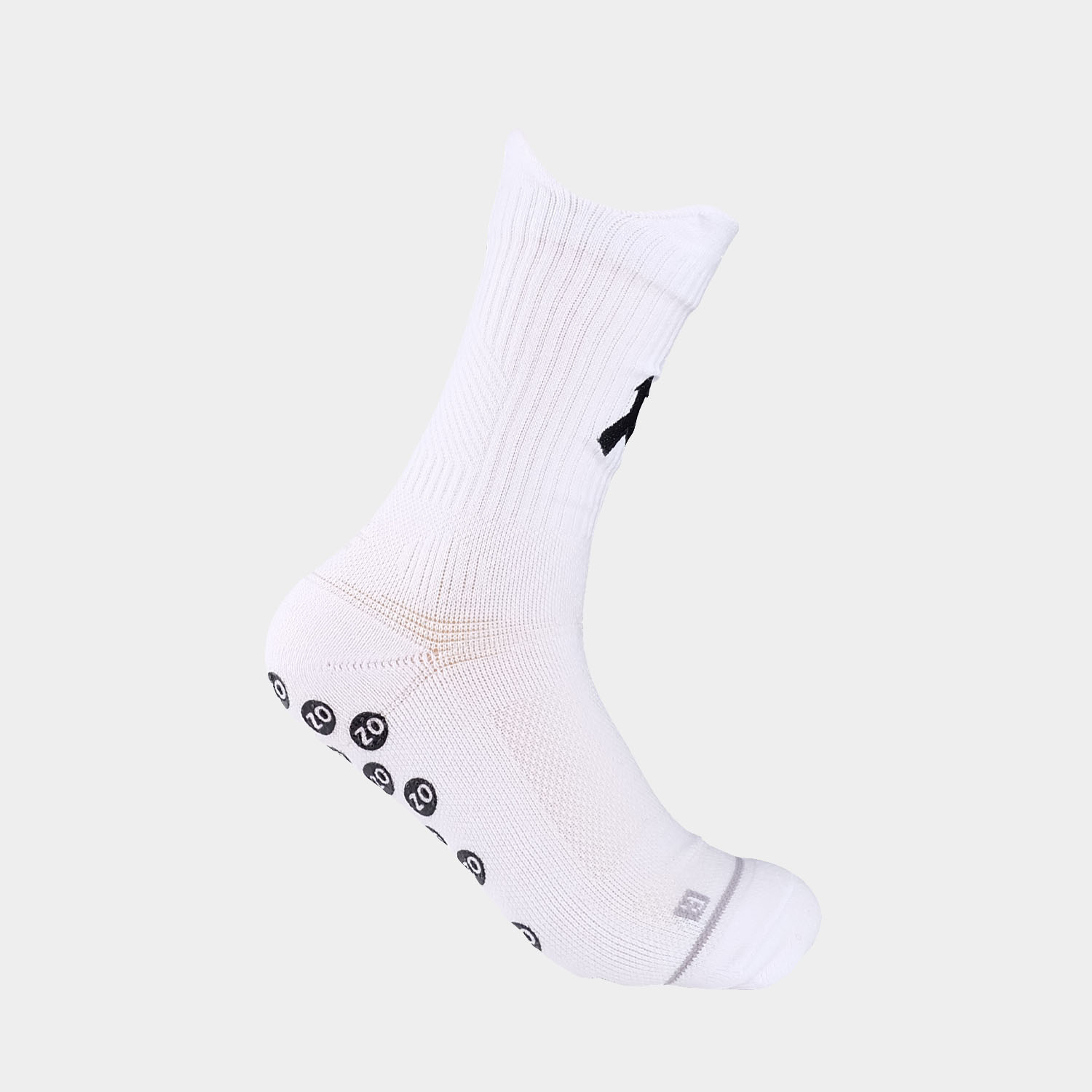
Not all “thick socks” are the same. Dense, flat thick socks can actually trap more heat. What you need is a terry loop structure—turn the sock inside out, and it should look like a towel with small loops.
These loops act like tiny springs, lifting the fabric away from your skin and creating a thin air layer that allows moisture to evaporate instead of soaking your feet.
Zoned knitting / mesh ventilation
Hold the sock up to the light. You should see semi-transparent mesh zones—usually around the instep and arch.
Hot air rises. These mesh zones act like chimneys, allowing heat and moisture to escape upward toward the opening of the boot. This targeted ventilation is far more effective than traditional socks with uniform thickness.
Seamless toe and reinforced areas
Seamless toe: Traditional socks often have a raised seam at the toe. Over long hours of friction, this seam repeatedly rubs against your toes, becoming a major cause of blisters. Choose seamless or flat-seam designs.
Reinforced heel and toe: Work boots are tough on socks. The heel and toe experience the most wear. Socks reinforced with high-density nylon or extra terry cushioning in these areas can last several months longer.
Best Materials for Work Socks
Here’s how the main materials compare for sweaty feet:
Material | Moisture Management | Drying Speed | Odor Control | Verdict |
Cotton | Poor – absorbs but holds moisture | Slow | Poor | Avoid for work |
Synthetics (polyester, nylon) | Good – wicks moisture away | Fast | Fair – traps bacteria | Good for durability, but can get smelly |
Merino wool | Excellent – absorbs 30% of its weight while feeling dry | Moderate | Excellent – natural antimicrobial | Best choice for most |
Merino Wool: The Gold Standard
Modern merino wool is nothing like the scratchy wool sweaters you remember. It’s fine enough to wear comfortably against skin.
The real advantage is how it handles moisture. Merino wool socks can absorb up to 30% of their own weight in moisture inside the fiber structure – while the surface next to your skin stays dry. It acts as a buffer, managing humidity before sweat becomes a problem.
If you’re wondering why wool performs so well for moisture and odor control, you can read more in our guide on are wool socks good for sweaty feet.
Synthetics: Fast-Drying Workhorses
Synthetic fibers like polyester and nylon are hydrophobic – they repel water. Instead of absorbing moisture, they move it through capillary action from your skin to the outer layer of the sock where it evaporates.
Pros: Very fast drying, highly durable
Cons: Can feel clammy when overwhelmed with sweat, and synthetic fibers tend to hold onto odor
The Sweet Spot: Blends
Here’s the insider approach: you don’t want 100% of any single material.
- 100% wool is too fragile for steel-toe boots – you’ll wear through the heel quickly
- 100% synthetic gets smelly and can feel slippery when wet
The ideal blend: 50-70% merino wool (for moisture management and odor control) plus 30-50% nylon or spandex (for durability and fit). This gives you the best of both worlds.
Work Boots vs Regular Shoes: Sock Differences
Not all work footwear is the same. Your socks should match your specific shoes.
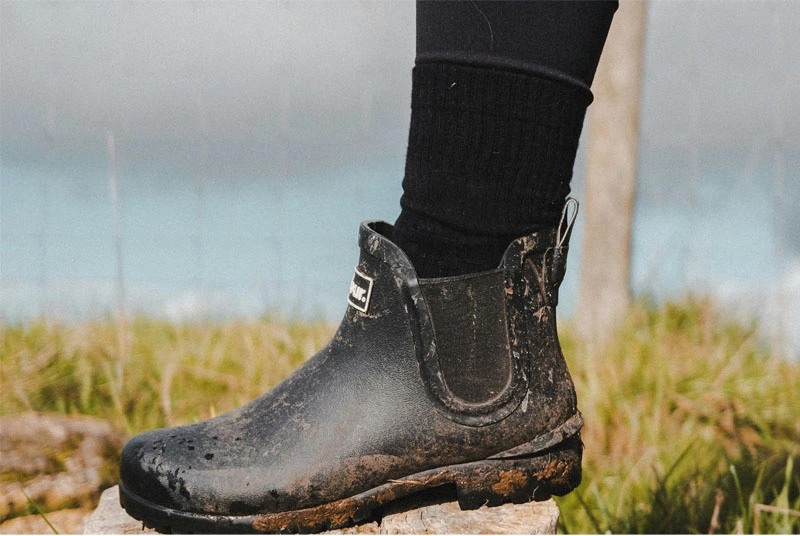
When wearing work boots (steel-toe boots, construction boots, heavy-duty safety footwear):
- Height: choose crew or knee-high socks to prevent friction from the boot opening
- Cushioning: choose full or maximum cushioning—steel toe areas need enough padding
- Reinforcement: heel and toe must be reinforced
- Terry structure: full terry throughout the sock, not just underfoot
When wearing regular work shoes (nursing shoes, kitchen shoes, office footwear):
- Height: ankle or crew length is usually enough
- Cushioning: medium to light cushioning—comfortable but not bulky
- Ventilation: mesh panels are more important due to tighter shoe interiors
- Subtle design: neutral colors that match uniforms or workwear
If you wear steel-toe boots, prioritize height and full cushioning. If you wear regular work shoes, prioritize ventilation and odor control—especially in environments like hospitals or kitchens where odor matters more.

How to Keep Feet Dry During Long Shifts
Even the best socks work better when used properly. Here are practical strategies for staying dry during 10–12 hour shifts.
Rotate your socks
Never wear the same pair two days in a row. Socks need time to fully dry and recover their structure.
Rule of thumb: keep at least 3–4 pairs in rotation. Let them rest for 24–48 hours after wearing.
Change mid-shift
For shifts longer than 12 hours—or in hot conditions—a mid-shift sock change makes a huge difference.
- Keep a spare pair in your locker or bag
- During a break, wipe your feet with a towel
- Put on a fresh pair
- Hang the used pair to dry before taking it home
Manage your boots
Socks aren’t the only factor—your boots matter too.
- Boot dryer: worth investing in if you sweat heavily or work in wet environments
- Shoe rotation: alternate between two pairs if possible
- Insoles: replace regularly as they absorb sweat and bacteria
Washing and care
Proper care helps maintain performance:
- Turn socks inside out before washing
- Use cold water
- Never use fabric softener—it damages moisture-wicking properties
- Air dry or tumble dry low
How to Keep Feet Dry During Long Shifts
Use this checklist to evaluate any sock:
- Material: Merino wool content 50% or higher? (If synthetic, is it a moisture-wicking blend?)
- Terry loop: Inside of the sock has a towel-like texture?
- Mesh venting: Visible thinner panels on top of foot or arch?
- Seamless toe: No bulky seam across the toe box?
- Reinforced heel/toe: Extra material or denser knit in high-wear areas?
- Height: Tall enough to cover boot cuff? (for work boots)
- Fit: Snug but not tight – no bunching or slipping?
If you can check all seven, that pair of socks can carry you through even the longest workdays.
Conclusion
Swamp foot doesn’t have to be part of your workday.
The principle is simple: cotton traps moisture against your skin, while merino wool and performance blends help manage it — moving sweat away, reducing odor, and keeping your feet dry enough to prevent blisters.
Upgrading your socks is a small change that makes a big difference: drier feet, less odor, fewer blisters, and better comfort through long shifts.
For brands, retailers, and buyers, these same principles apply when developing high-performance work socks — material selection, construction, and durability all directly impact real-world use.
Choosing the right approach doesn’t just improve comfort — it defines product quality.