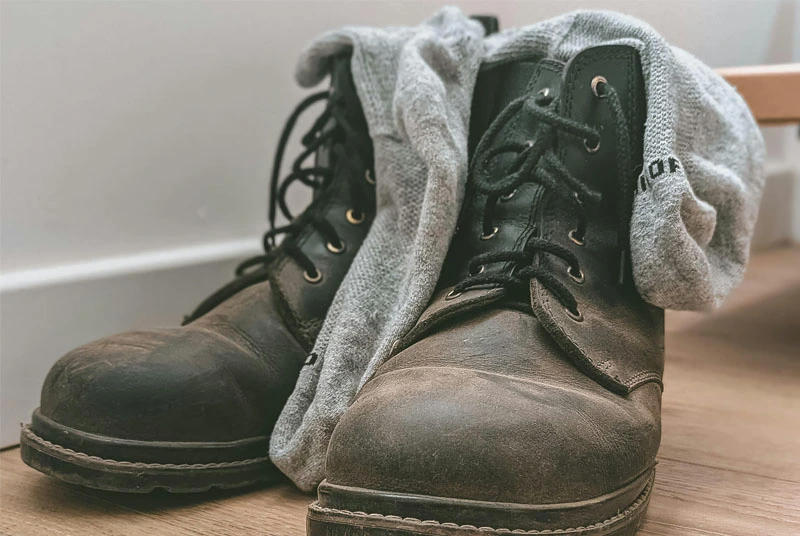
When many people hear “wool socks,” their first reaction is: will they be hotter? more stuffy?
But in reality, for people with sweaty feet, wool—especially merino wool—is often drier and more comfortable than cotton.
If your feet tend to sweat, the problem is usually not that your socks don’t absorb sweat, but whether moisture can be effectively managed and regulated. Many people only realize this after switching materials—especially when trying custom wool socks, where the difference in dryness and comfort becomes much more noticeable over time.
In this article, we’ll explain why wool socks don’t make your feet feel stuffy and can actually keep them dry, as well as the key differences between wool, cotton, and synthetic socks.
Quick Answer: Are Wool Socks Good for Sweaty Feet?
Yes, merino wool socks are one of the best choices for people with sweaty feet.
Unlike cotton, which traps moisture against the skin, merino wool actively moves moisture away. It absorbs vapor into the fiber core (keeping your skin feeling dry), then releases it outward, and dries relatively quickly. In addition, wool is naturally antibacterial, so it is less likely to develop odor even after long periods of wear.
What people with sweaty feet want most:
- Move moisture away from the skin
- Natural odor resistance
- Temperature regulation (cool in summer, warm in winter)
- Soft and non-itchy (merino wool)
If you’re struggling with sweaty or smelly feet, switching to merino wool socks is one of the best upgrades you can make.
In many cases, moisture-wicking socks are also recommended as they are specifically designed to manage sweat and keep feet dry more efficiently.
Why Wool Doesn’t Feel Wet (Even When It Absorbs Sweat)
This is exactly where wool breaks common assumptions.
Most people think that if a material absorbs moisture, it will feel wet, cold, and sticky—like cotton. But wool works differently.
Absorption vs Moisture-Wicking
Cotton is hydrophilic: it absorbs moisture into the spaces between fibers. Once saturated, it stays wet, feels heavy, and dries slowly. Your skin remains in constant contact with moisture, leading to that “swampy feet” feeling.
Wool has a hydrophobic exterior and hydrophilic interior: wool fibers can absorb up to 30% of their weight in moisture without feeling wet. The moisture is pulled into the fiber core, away from your skin. The outer surface remains relatively dry while moisture is gradually released into the air.
This unique property means that even when your feet sweat, wool socks can still keep your skin dry and comfortable. In real use, this is often where wool socks stand out the most, especially when compared to cotton socks that quickly become damp and uncomfortable.
Why This Matters for Sweaty Feet
When your feet sweat, the goal is not to stop sweating—but to manage it.
Wool absorbs moisture, isolates it from your skin, and allows it to evaporate over time. This reduces friction (fewer blisters), prevents skin maceration (wrinkling), and limits bacterial growth.

Temperature Regulation: Cool in Summer, Warm in Winter
Another common misconception is that wool is only suitable for cold weather. In reality, wool is one of the few materials that can actively regulate temperature in both directions.
How Wool Regulates Temperature
Wool fibers naturally have a crimped structure, creating millions of tiny air pockets. These pockets trap air and provide insulation. But unlike synthetic insulation, wool is breathable—it allows heat and moisture to escape.
In cold weather: the air pockets retain body heat and keep you warm. Even when wet from sweat, wool still insulates (unlike cotton, which loses insulation when wet).
In hot weather: wool’s breathability allows excess heat to escape. Its moisture-wicking properties keep the skin dry, which actually makes you feel cooler than wearing sweat-soaked cotton socks.
Real-World Example
Imagine wearing thick cotton socks while hiking in summer. Your feet sweat, the cotton becomes saturated, and you end up with heavy, damp, uncomfortable socks that feel hot and sticky.
Now imagine wearing lightweight merino wool socks. Your feet still sweat, but the wool moves moisture away, keeps your skin dry, and remains comfortable even after absorbing moisture. Many hikers and runners specifically choose merino wool socks for hot-weather activities.
Merino Wool vs Regular Wool: What’s the Difference?
Not all wool is created equal. If you’ve tried wool socks in the past and found them itchy or uncomfortable, you were likely wearing regular wool (often from coarser sheep breeds). Merino wool is a different story.
Feature | Merino Wool | Regular Wool |
Fiber Diameter | Ultra-fine (under 18.5 microns) | Coarse (over 24 microns) |
Feel | Soft, non-itchy, comfortable against skin | Can be scratchy and irritating |
Moisture Wicking | Excellent | Good |
Odor Resistance | Excellent (natural lanolin content) | Good |
Breathability | Excellent | Moderate |
Price | Higher | Lower |
Why Merino Wool Is the Gold Standard
Merino wool comes from Merino sheep, bred for their exceptionally fine, soft wool. The fibers are so fine that they bend easily, which eliminates the prickly sensation associated with coarser wools.
For sweaty feet, Merino wool is the clear winner. It offers all the moisture-wicking and temperature-regulating benefits of wool, but with a softness that makes it comfortable for all-day wear—even for people with sensitive skin.

Wool vs Cotton vs Synthetic: Which Is Better?
Here’s how Merino wool stacks up against cotton and synthetic materials (like polyester or Coolmax) specifically for sweaty feet.
Feature | Merino Wool | Cotton (100%) | Synthetic (Polyester/Coolmax) |
Moisture Wicking | Excellent (absorbs into fiber, skin stays dry) | Poor (absorbs between fibers, skin stays wet) | Excellent (quickly moves moisture to surface) |
Drying Speed | Moderate to Fast | Slow | Very Fast |
Odor Control | Excellent (natural antibacterial) | Poor (traps bacteria) | Poor to Moderate (requires treatment) |
Temperature Regulation | Excellent (cool in heat, warm in cold) | Poor (cold when wet, hot when thick) | Moderate (breathable but lacks insulation) |
Comfort | Soft, non-itchy (Merino) | Soft initially, but heavy when wet | Varies; can feel synthetic |
Durability | Moderate (best when blended with nylon) | Moderate | High |
Best Use Case | All-day wear, hiking, travel, work, sports | Low-activity, dry conditions | High-intensity sports, quick-dry needs |
When to Choose Each
- Choose Merino wool if you want all-day comfort, odor control, and temperature regulation. It’s ideal for work, travel, hiking, and everyday wear.
- Choose synthetic (Coolmax, etc.) if you need maximum drying speed for intense sports like running or cycling. Just be aware that synthetic socks tend to trap odor more quickly.
- Avoid cotton if you have sweaty feet, unless you’re in a cool, dry environment and only wearing them for a short time.
For a more detailed breakdown of materials and activity-specific recommendations, check out our “What Are the Best Socks for Sweaty Feet: 2026 Guide” .
When Wool Might Not Be the Best Option
Although merino wool performs well for most people with sweaty feet, there are situations where it may not be the best choice.
- You need maximum drying speed
For high-intensity activities with heavy sweating—such as trail running with water exposure or multi-day hiking where you need to wash socks in the field—synthetic socks (Coolmax, polyester) may dry faster than wool.
- You are on a tight budget
Merino wool socks are more expensive than cotton or basic synthetic socks. A good pair typically costs more. However, they often last longer and perform better, making them a worthwhile investment for many users.
- You are sensitive or allergic to wool (rare)
True wool allergies are uncommon, but some people are sensitive to lanolin or coarse fibers. If you’ve had discomfort with wool before, try fine merino wool—many people who find regular wool itchy can wear merino comfortably. Alternatively, bamboo or high-quality synthetic blends are good options.
- You need extreme durability
While merino wool is durable, it is less abrasion-resistant than synthetics. For heavy-duty work (such as construction) or environments with high wear, choose merino blends with higher nylon content (30–50%) for added durability.
Conclusion
So, are wool socks good for sweaty feet? Yes—especially merino wool.
Unlike cotton, which traps moisture and makes your feet feel damp and cold, merino wool absorbs moisture into the fiber core, keeps your skin dry, and gradually releases it. It naturally resists odor, regulates temperature (cool in summer, warm in winter), and provides all-day comfort.
While synthetic socks also have their place—especially for high-intensity activities requiring fast drying—merino wool remains the most well-rounded choice for sweaty feet.
If you’re ready to try them, look for socks labeled merino wool and blended with nylon and spandex for better durability and fit. Your feet will thank you. For those looking to improve everyday comfort, exploring well-designed custom wool socks is often a simple but effective place to start.