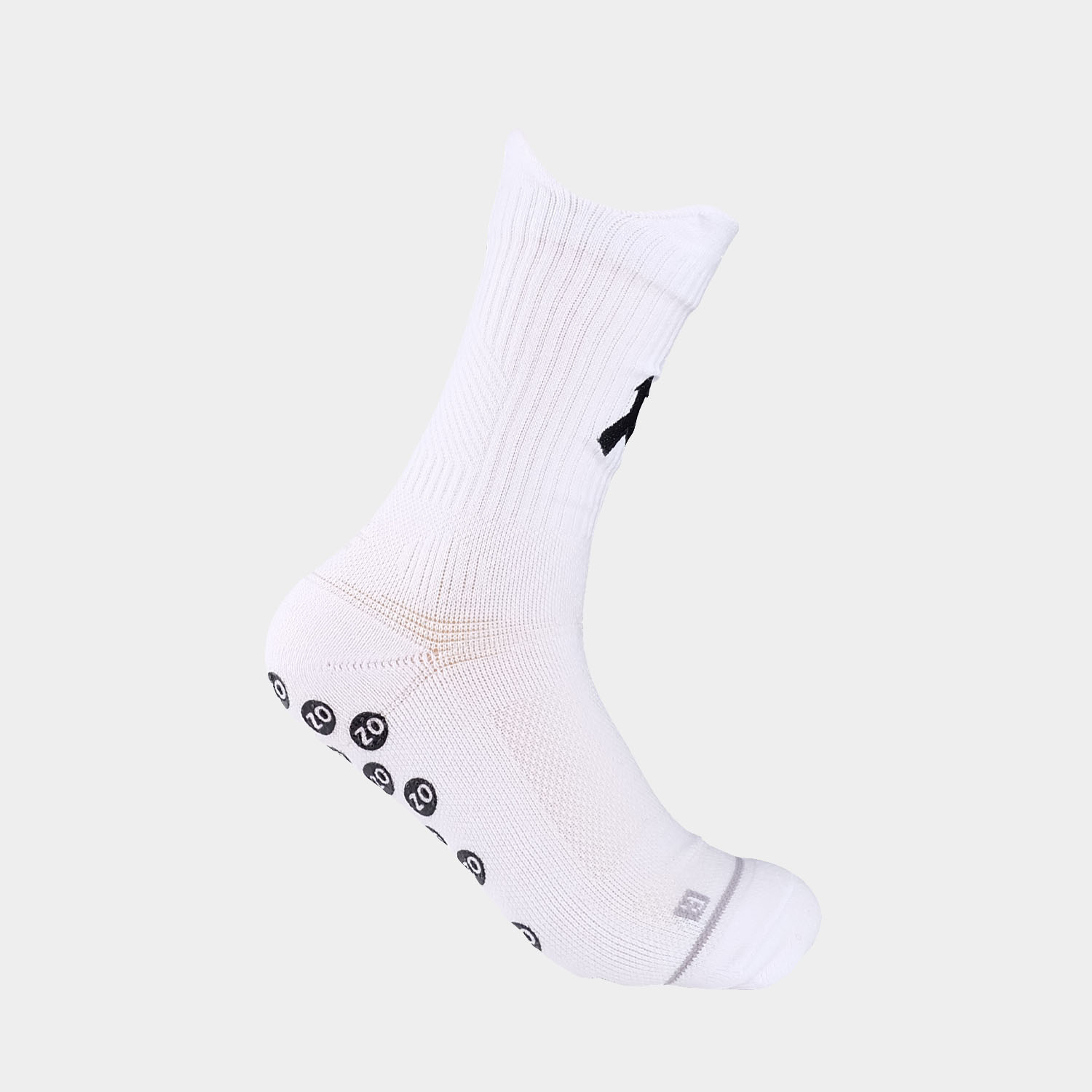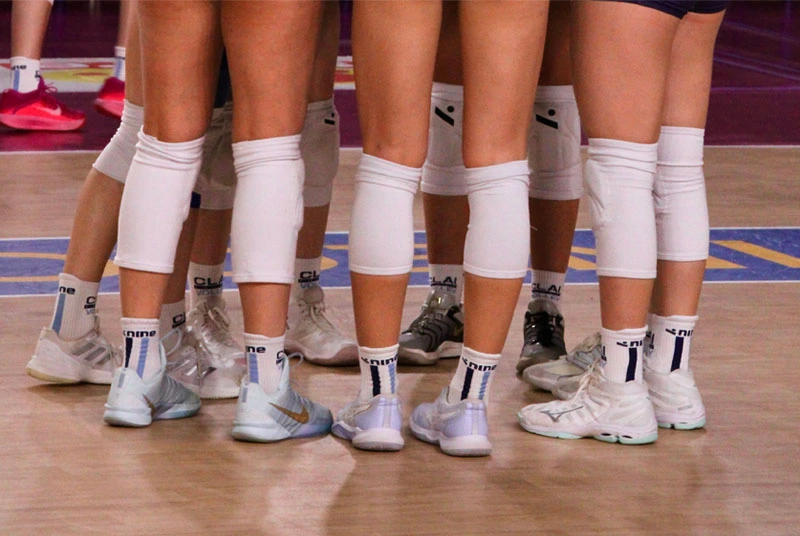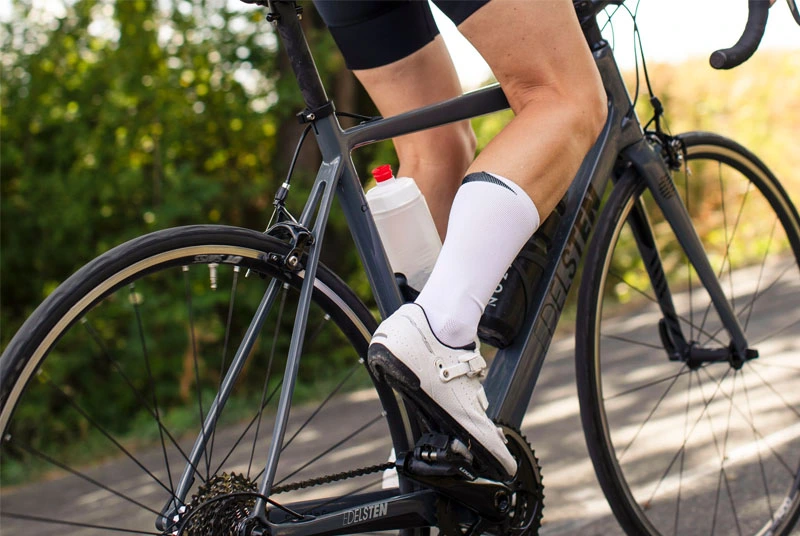
Over the past few years, custom crew socks have become one of the most popular sock styles. From streetwear to athletic wear to brand merchandise, more and more companies are launching their own custom crew socks.
For brands, a well-designed pair of socks isn’t just an accessory—it can also be an extension of brand culture and a recognizable product in everyday outfits. If you’re new to developing branded socks, you can also read our complete guide to custom socks with logo.
Why Custom Crew Socks Are Popular for Brands
Custom crew socks are favored over traditional promotional items for these reasons:
- Generous design space: Extending from mid-calf to ankle, crew socks offer ample area to showcase logos, patterns, or brand messaging without appearing as overbearing as large-logo T-shirts.
- High Daily Utility: Socks are an essential item worn by everyone daily. When a promotional item offers genuine practical value, people are far more likely to keep and use it.
- Long-Term Brand Exposure: A quality pair of socks can be worn for months or even years. This means your brand message travels with the wearer, appearing in cafes, offices, gyms, and various other settings with every step.
Popular Custom Crew Sock Design Ideas in 2026
Retro Varsity Stripe Socks
Retro athletic stripe designs remain a consistently popular sock style. Inspired by sports socks from the 70s to 90s, they offer a vintage aesthetic while remaining highly versatile. Ideal as a staple product for athletic, campus, or lifestyle brands.
Design Key Points:
- Use 2-3 high-contrast color combinations, such as navy blue with bright yellow or burgundy with off-white
- Vary stripe widths—narrow stripes at the ankle paired with wider stripes on the calf create visual depth
- Add micro logos or vintage year numbers on the instep or calf back for a custom touch
Material Recommendations:
- 80% combed cotton + 18% nylon + 2% spandex blend. Combed cotton offers softness and durability, nylon enhances abrasion resistance, while spandex ensures a secure, non-slip fit.
- Incorporate 10% cashmere or merino wool to elevate warmth and luxurious texture, ideal for fall/winter styles or premium gifts.
- For student demographics or athletic teams, opt for moisture-wicking polyester blends to maintain foot dryness.
Bold Graphic Streetwear Socks
Street culture has long transitioned from niche to mainstream. For brands targeting young consumers, vibrant, eye-catching designs often align perfectly with core brand identity. These socks serve as statement pieces themselves. When designed with sufficient edge, they become focal points of streetwear outfits, actively showcased on social media.
Design Key Points:
- Use all-over repeating patterns, weaving brand logos, geometric icons, or core graphics across the entire sock surface
- Employ brand standard colors to ensure visual consistency
- Graphics should be bold and details minimalist to remain recognizable from a distance
- Experiment with digital culture elements like pixel art or glitch art
Material Recommendations:
- Polyester (85%) + Spandex (15%) blend. Polyester fabric offers strong adhesion for digital printing and high color fidelity, ideal for complex all-over patterns.
- For enhanced comfort, consider polyester-cotton blend (50% polyester + 30% cotton + 20% nylon), balancing print quality with cotton’s soft feel against the skin.
- For graphics requiring dimensionality, explore loop terry fabric with added loops on the sole or heel for comfort and visual depth.

Nature & Outdoor Inspired Socks
With the rise of outdoor activities and sustainable lifestyles, more sock designs are incorporating natural elements.
Design Key Points:
- Color Palette: Typically earth tones like moss green, rock gray, terracotta, and taro purple
- Scene-specific motifs such as tent patterns for camping themes or mountain silhouettes for hiking themes
- Incorporate functional elements like reinforced soles and breathable mesh panels for both style and durability
Material Recommendations:
- Merino Wool Blend (50-60% Merino Wool + 40-50% Nylon). Merino wool offers natural odor resistance, moisture-wicking properties, and superior temperature regulation—ideal for outdoor enthusiasts.
- Organic cotton (70%) + bamboo fiber (20%) + spandex (10%). Bamboo fiber offers natural antibacterial properties and excellent breathability, while organic cotton provides eco-friendly sustainability. Ideal for those seeking outdoor style in everyday wear.
- Incorporate terry cushioning in the forefoot and heel areas to enhance padding and reduce fatigue during extended walking or hiking.
Mismatched Pair Socks
“Asymmetrical socks” have become a wildly popular creative design trend in recent years. By varying colors, patterns, or textures between left and right socks, they deliver a uniquely personalized visual statement. These conversation-starting designs naturally attract attention on social media.
Design Key Points:
- Different patterns on each sock, but consistent overall theme. Both socks should be designed under the same concept.
- Coordinate colors: Even with different patterns, maintain a consistent color palette.
- One sock can feature a main pattern with negative space, while the other has an all-over texture print, creating a contrasting yet unified effect.
Material Recommendations:
- Even with different patterns, use the same base material for both socks to ensure consistent wear comfort. A combed cotton blend (75% cotton + 23% nylon + 2% spandex) is a reliable choice.
- For complex knitted patterns, ensure both socks use the same yarn count and density to prevent uneven tightness between feet.
- Incorporate terry cloth material in specific areas (e.g., sole) on one sock while keeping the other smooth for a “surprise” tactile experience.
Minimal Logo Custom Crew Socks
Minimalist style remains a foolproof choice—understated elegance often signifies quality.
Design Essentials:
- Place a small, high-precision embroidered logo at the ankle to evoke a premium retail aesthetic.
- Opt for neutral base tones: navy blue, charcoal gray, or oatmeal.
- Minimalism doesn’t equate to simplicity—fabric texture becomes paramount.
- Strategically position the logo; the outer or rear ankle area works well.
Material Recommendations:
- Cotton (80%) + Silk (10%) + Spandex (10%). The high-cotton knit structure combined with silk imparts an elegant sheen and exceptionally smooth feel.
- Combed cotton (70%) + polyester (20%) + spandex (10%). This blend offers comfort and durability, making it ideal for brand staple products.
- Embroidery considerations: When selecting logo embroidery, avoid using socks with overly thin bases. We recommend fabrics with a density of 200 stitches or higher to ensure the embroidery lies flat without showing through.
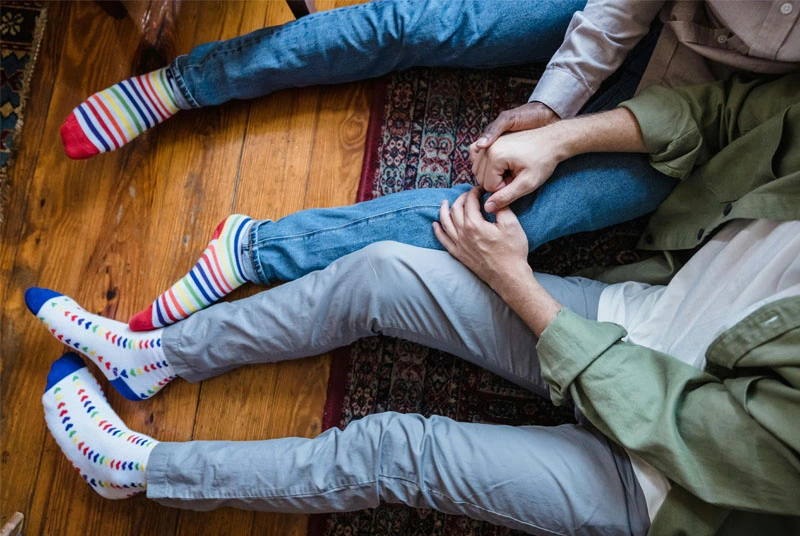
Earth Tone Vintage Socks
Beyond the ever-reliable black, earth tones remain highly popular in 2026 sock color trends, such as caramel, olive green, rust red, and off-white.
Design Highlights:
- Textured cotton blends enhance the vintage aesthetic.
- Pairing with vintage stripes or minimalist patterns creates a natural, nostalgic style. These designs are ideal for lifestyle and outdoor brands.
Material Recommendations:
- Combed cotton blends
- Cotton + small wool content blends
These materials offer comfort while enhancing the socks’ texture.
Custom Quote / Message Socks
Text designs are another highly popular sock style. Brands can express their philosophy through short phrases or slogans like “Stay Wild” or “Keep Moving.” This approach not only offers visual recognition but also strengthens brand expression.
Design Essentials:
- Keep text brief: Names, dates, initials, or short words work best
- Use bold fonts: Thin fonts distort or break when stretched
- Choose placement wisely: The calf area is safest for text
- Hidden messages on soles add playful charm: Ideal for social media photos
Material Recommendations:
- Prioritize text clarity: High-density combed cotton (85%) + spandex (15%). High-density knitting sharpens text edges and minimizes stretching distortion.
- If budget permits, embroidered text outlasts printed designs with superior texture.
For sole areas, opt for durable nylon blend (60% nylon + 40% cotton) due to frequent shoe friction requiring enhanced durability.
Key Design Tips for Custom Crew Socks
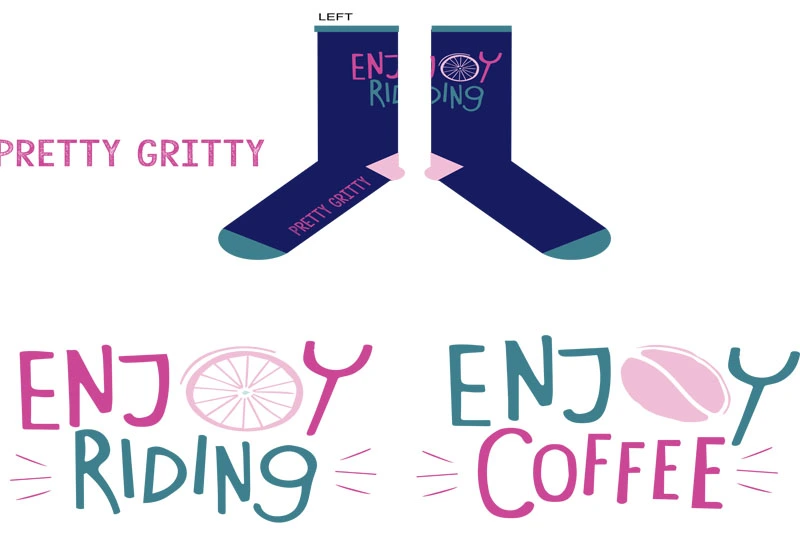
Keep Designs Knitting-Friendly
When designing custom socks, selecting the right production method for your goal is crucial—wrong choices can lead to fading, pattern breakage, or rapid wear.
Key production method comparison:
- Jacquard Knitting: Patterns are directly woven into the fabric, becoming part of the sock’s structure. Suitable for simple repeating patterns (stripes, dots), typically limited to 2-4 colors, and cannot handle gradients or photo-realistic details.
- Digital Printing: Patterns are heat-transferred onto the sock surface. Suitable for complex gradients, photo-realistic images, or precise brand color matching.
- 360-Degree Printing: Socks are mounted on a cylindrical printer for full coverage of the instep, sole, and sides without pattern breaks.
Avoid extremely fine lines or minute details in designs, as these may not print clearly on the fabric.
Use High-Contrast Colors
Socks stretch, bend, and move, requiring sufficient color contrast to remain visible.
Color selection principles:
- Dark base with light patterns, or light base with dark patterns
- If designs include text, always test contrast between text color and sock base color
- When using brand standard colors, provide Pantone numbers or RGB values to manufacturers to ensure color accuracy
- Limit overall colors to 3-5 to avoid clutter
Choose the Right Materials
Materials impact both wear comfort and pattern presentation.
- Combed cotton blend (cotton/nylon/spandex): The gold standard for everyday wear—soft, breathable, and shape-retaining
- Bamboo fiber blend: Ideal for dress socks, offering excellent breathability and a silky feel
- 100% polyester: Suited for athletic socks with superior moisture-wicking properties
- Spandex-enhanced: Improves stretch and shape retention
For athletic teams or frequent wearers, prioritize moisture-wicking fabrics to reduce blister risks from dampness. For work or daily wear, cotton blends offer comfort and breathability.
Consider Logo Visibility
If socks serve as brand ambassadors, logo visibility is paramount.
Common placement options include:
- Calf area: Most visible when sitting or walking
- Top of foot: Naturally displayed when crossing legs
- Outer ankle: Subtle yet noticeable
- Sole: Hidden surprise, ideal for social media engagement
- Logo size should be moderate: too large appears clumsy, too small risks being overlooked. Generally, a logo height between 3-5 cm yields optimal results.
Conclusion
Truly visible custom crew socks feature contrasting colors, uncomplicated patterns, comfortable fabrics, and clear design intent. They never overpower but subtly showcase the wearer’s taste.
Whether you’re creating employee perks for your brand or launching a retail item destined to go viral on social media, remember: Respect fabric properties, design with purpose, and consider real-world wear scenarios—and you’re halfway to success.
Have a custom sock idea for your brand?
Our team helps brands turn sock concepts into real products. We provide support with material selection, color matching, and knitting-friendly design adjustments to ensure the final socks look exactly as expected.