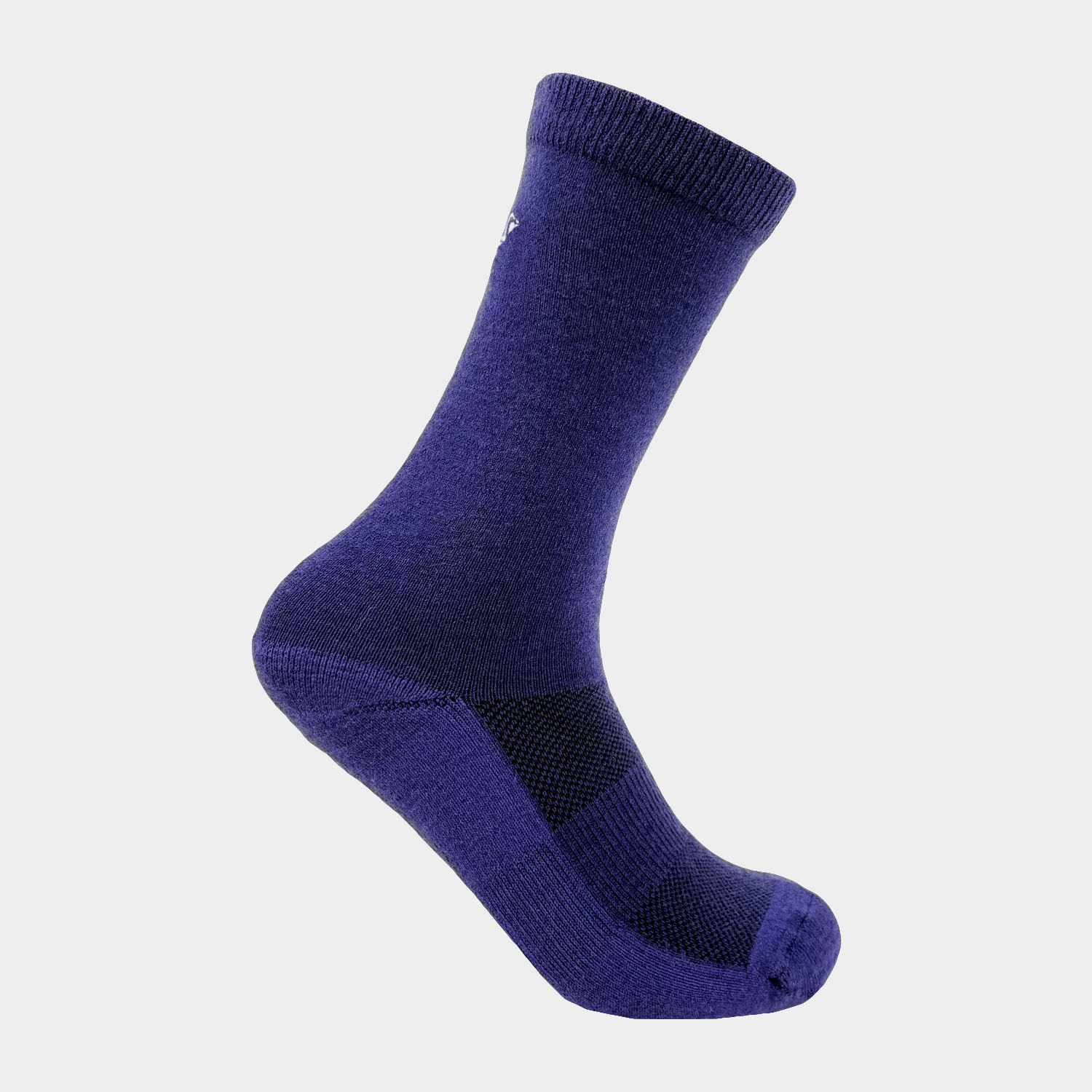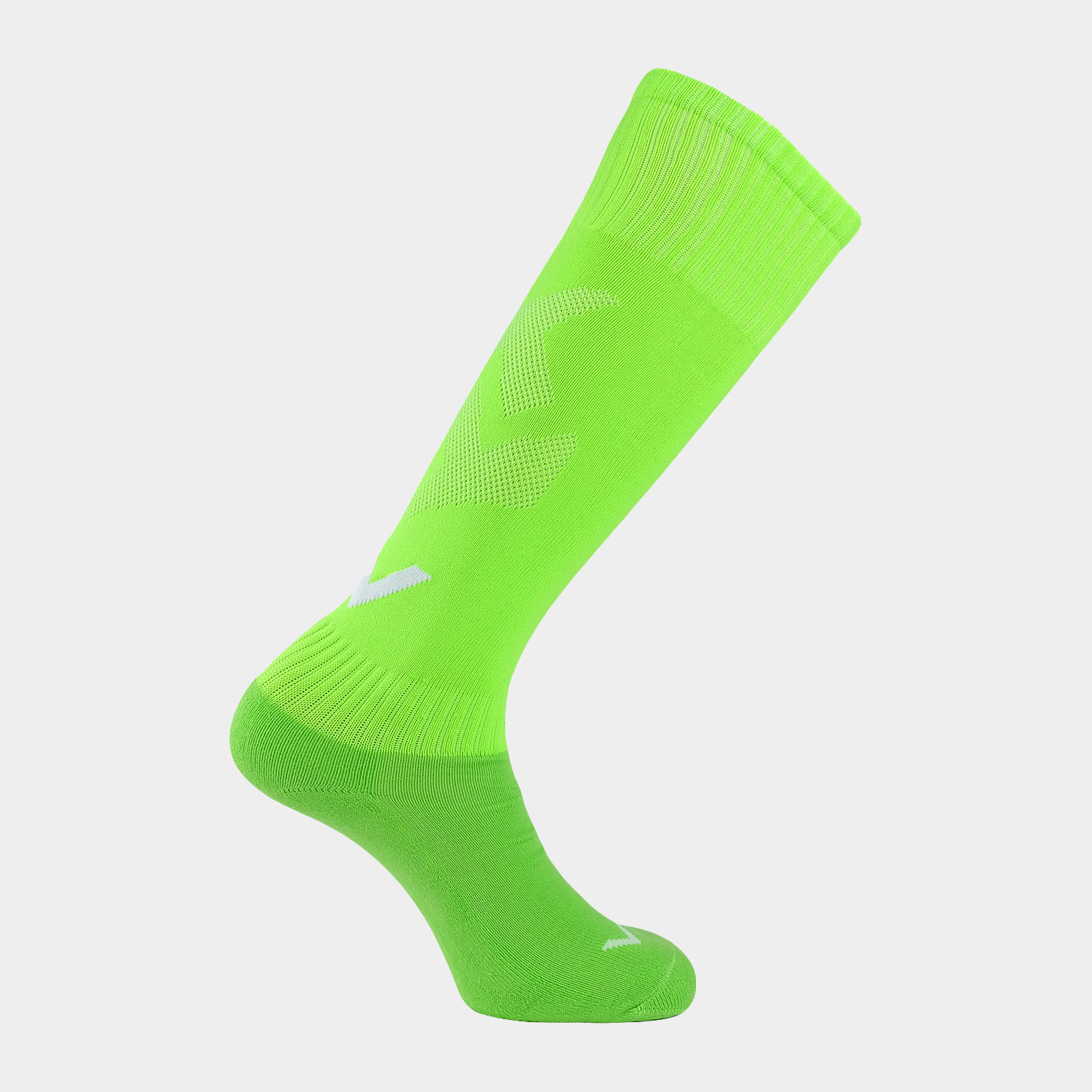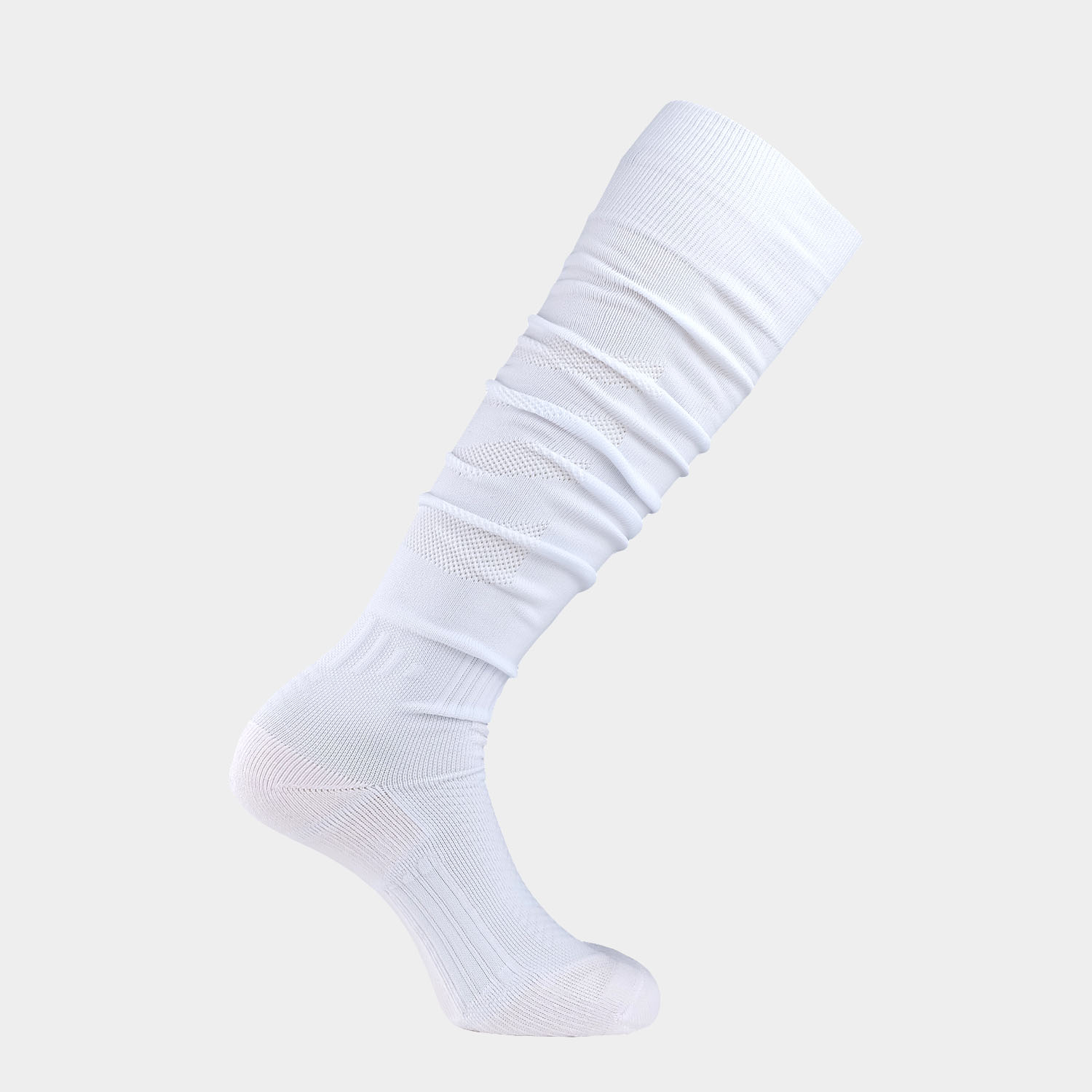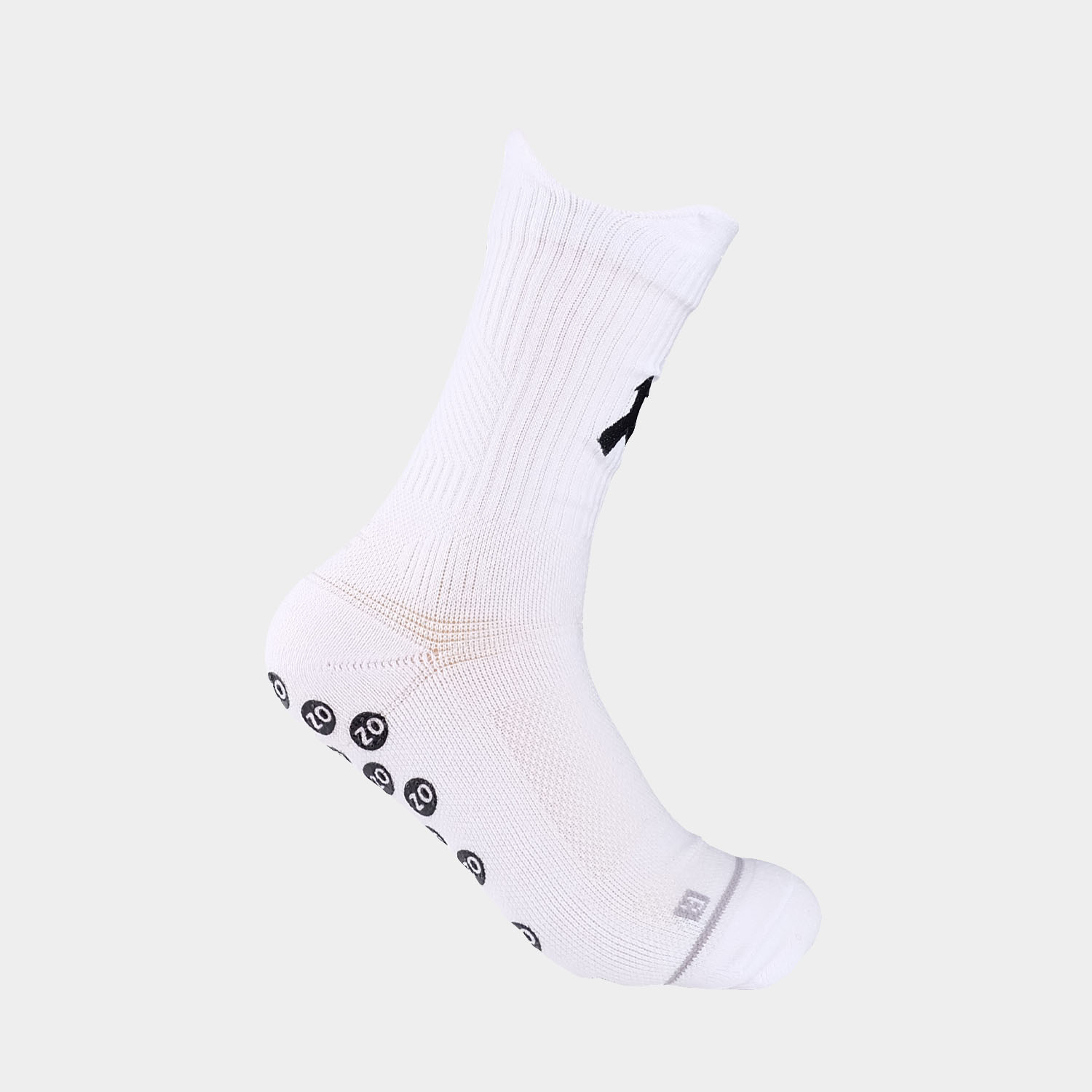
Custom socks with logo are widely used by brands, teams, and companies to increase visibility and create recognizable merchandise.
In this guide, we explain how logo socks are designed, where logos can be placed, the available manufacturing methods, and how brands work with factories to produce them.
Why Custom Socks With Logo Are Popular
Custom socks with logo have become a popular branding tool for companies, sports teams, and retail brands. Compared with traditional promotional products, socks combine everyday practicality with strong visual branding, making them an effective way to increase brand exposure.
First, logo socks help improve brand visibility. When a brand’s logo or signature design is integrated directly into the sock pattern, the product itself becomes a walking advertisement. Every time the socks are worn, the brand gains additional exposure in daily life.
Second, custom socks help brands stand out in competitive markets. In retail environments where many socks may have similar materials or colors, adding a recognizable logo or design element helps consumers quickly identify a specific brand.
Finally, logo socks can help build long-term customer recognition. When customers have a positive experience with a product, the visible logo makes it easier for them to remember the brand and purchase it again in the future. For many brands, custom socks therefore serve both as a functional product and as a subtle but effective branding strategy.

Custom Logo Sock Styles
Logos can be applied to different sock styles depending on how visible the branding needs to be and how the socks will be used. Retail brands, sports teams, and corporate buyers often choose specific sock lengths to match their target audience and product positioning. If you’re unsure which style fits your needs, see our guide on sock types and how to choose the right one.
Below are some of the most common sock styles used for custom logo socks.
Custom Ankle Socks
Custom ankle socks are a popular choice for casual wear and summer collections. Because the sock sits below or just above the ankle, branding is usually placed on the front cuff or the top of the foot.
Many lifestyle and athletic brands choose ankle socks for retail collections because they are lightweight, comfortable, and easy to match with sneakers or training shoes. Although the visible logo area is smaller compared with longer sock styles, ankle socks remain a practical option for subtle brand exposure in everyday wear.
Custom Crew Socks
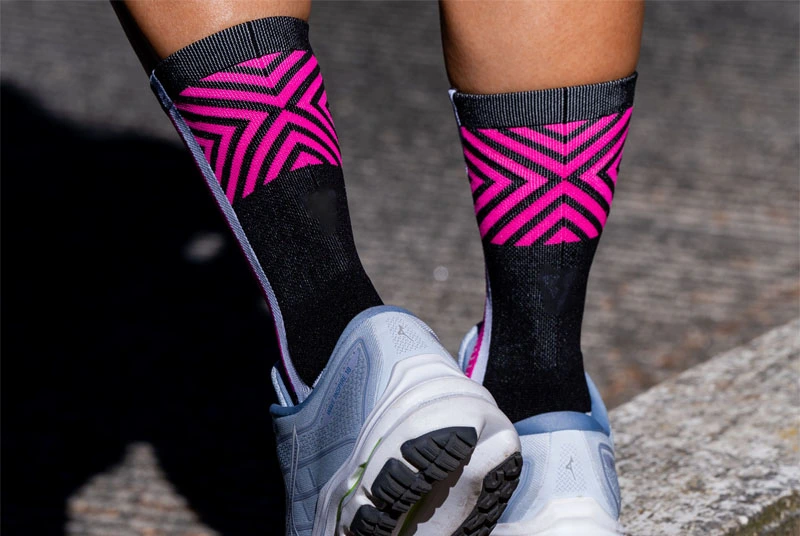
Custom crew socks are one of the most common styles used for logo socks because they provide a larger visible area for branding. The extended cuff allows logos, patterns, or brand colors to be integrated directly into the sock design.
Many lifestyle brands and streetwear labels prefer crew socks for retail products because the logo can remain visible when worn with shorts, skirts, or cropped pants. The design can be woven directly into the sock structure, ensuring that the branding remains durable without affecting comfort or flexibility.
For inspiration on how brands design crew socks that customers actually wear, see our guide on custom crew sock design ideas.
Custom Knee High Socks
Custom knee high socks are commonly used for sports teams, uniforms, and performance applications. Because the sock extends up the calf, it offers a large area where logos, team names, or stripes can be incorporated into the design.
Football teams, basketball clubs, and training organizations often choose knee high socks because they combine branding visibility with functional support. The taller structure also allows manufacturers to integrate compression zones or cushioning features while still maintaining a clear logo display.
Where Logos Can Be Placed on Socks
Normally, the logo is located on the sock in the visibility zone (upper part, around the ankle or the cuff) to be easily viewed, so that someone could recognize the brand when they see the logo at first glance. Technically speaking, with the exception of the toes and heels that must remain logo free, logos can be applied to socks just about anywhere you like.
If the logo is not too complicated, for example just some simple letters or some geometrical figures, we advise a jacquard logo. The designer of supplier will design readable knitting pattern of those socks according to the logo, then proceed with production. Have you knitted sweaters before? The process is just similar to knit sweaters.
However, when the logo is too complicated or with too many specific details, all the below options are highly feasible. The placement of a logo greatly affects visibility and comfort. Learn more in our detailed sock logo placement guide
Logo Production Methods
Different manufacturing techniques can be used to add logos to custom socks. The choice of method depends on the complexity of the design, the desired texture, and how the socks will be used.
Some production methods integrate the logo directly into the sock structure, while others apply the logo after the sock has been knitted. Understanding these options helps brands choose the most suitable solution for both appearance and durability.
Jacquard
Jacquard knitting is one of the most common methods used for custom logo socks. In this process, the logo or pattern is woven directly into the sock during the knitting stage.
Because the design becomes part of the fabric structure, jacquard logos are durable and maintain flexibility without affecting comfort. This method is widely used for retail socks, lifestyle brands, and team socks where the logo needs to remain visible but still feel soft when worn.
Jacquard works best for logos with clear shapes and limited color changes, making it a practical solution for large-scale production.

Embroidery
Embroidery adds a raised logo to the sock surface by stitching the design onto the finished product. This technique creates a textured and premium appearance, which is why some fashion brands use it for small logos or signature marks.
However, embroidery is typically used for simple designs placed near the cuff area, since dense stitching can affect flexibility if applied to large areas of the sock. For this reason, embroidered logos are often used as a decorative element rather than the main design pattern.
Printing
Printing methods allow logos or graphics to be applied directly onto the surface of the sock after production. This approach is useful for complex artwork, gradients, or photo-style designs that are difficult to achieve with knitted patterns.
Printed logos are commonly used for promotional socks, event merchandise, or short production runs where visual impact is the main priority. However, the durability and texture of printed designs can vary depending on the materials and printing technology used.
Designing logo socks requires balancing branding and wearability. In our custom socks design tips guide, we explain common mistakes and best practices.
Custom Logo Socks for Different Applications
Custom logo socks are used in many industries because they combine practical everyday use with effective brand visibility. Companies, sports organizations, and retail brands often incorporate logo socks into their product lines or promotional strategies.
Depending on the purpose, the design approach, sock style, and logo placement may vary. Below are some of the most common applications for custom logo socks.
Teams
For retail brands, custom socks with logo are often developed as part of seasonal collections or lifestyle product lines. By integrating brand colors, patterns, or logos into the sock design, companies can create recognizable products that strengthen brand identity.
Many fashion labels, streetwear brands, and lifestyle retailers use logo socks as an accessible entry product for customers. Compared with larger apparel items, socks are relatively affordable, making them an effective way to introduce new customers to a brand.

Retail Brands
For retail brands, custom socks with logo are often developed as part of seasonal collections or lifestyle product lines. By integrating brand colors, patterns, or logos into the sock design, companies can create recognizable products that strengthen brand identity.
Many fashion labels, streetwear brands, and lifestyle retailers use logo socks as an accessible entry product for customers. Compared with larger apparel items, socks are relatively affordable, making them an effective way to introduce new customers to a brand.
Corporate Gifts
Many companies use custom socks as corporate swag for events, employee gifts, and promotional campaigns. Because socks are practical and easy to distribute, they are often chosen as branded merchandise for conferences, marketing activities, or company celebrations.
Many organizations design socks featuring their logo or corporate colors to create memorable giveaways that people can actually use in daily life. As a result, logo socks have become a popular alternative to traditional promotional items such as pens or keychains.
MOQ and Cost Considerations
Before customizing logo socks, the first thing to do is to check MOQ with suppliers based on your design. For different styles of socks, MOQ is different. If the quantity you want is lower than MOQ, please be free to ask the supplier for possible suggestions. For example,you plan to make 50 pairs of socks with your logo to test the market first, then adding embroidery logo on similar already socks is a better choice for you.
Wht’s more, your budget for your socks projects is also an important point for customization. For the socks with same materials and quantity, jacquard logo is always the cheapest because the logo is knitting into the socks while the others are added after the socks are finished.
Packaging and Brand Presentation
Many brands also invest in custom packaging to strengthen brand identity.Explore different options in our custom sock packaging guide.
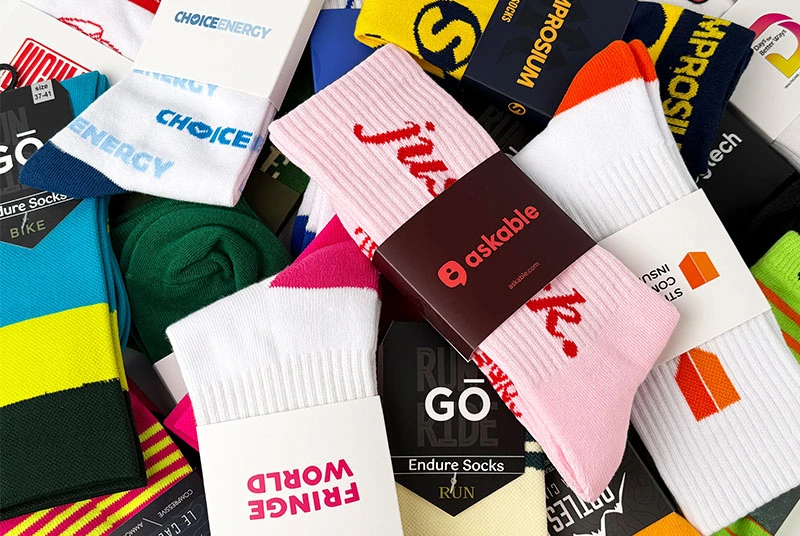
And for the packaging, there are multiply ways to choose from, like belly wrap, header card, hanging set. On the packaging, they can add their brand name, logo, materials, care instructions and so on.
Moreover, stickers are also useful on the packaging. Like size stickers , they can tell the customers the size of the socks. And for the bar-codes, the warehouse can scan them to help with the sale details.
Best Practices for Designing Logo Socks
Since the logo works so well for a brand, not only in the market, but also in expressing the socks, we should try our best to design a suitable logo for the socks. But how to design a logo? Here are some useful and sincere suggestions.
Balancing Aesthetics and Comfort
Before conceiving our logo, we should clarify the brand spirit we want to convey. While maintaining creativity, also take into account the aesthetic appeal of the logo. For instance, we should avoid overly complex logos. Too many details can to some extent affect the stretching of socks and reduce their wearing comfort. At the same time, for some people whose feet are more sensitive, we should try to avoid adding logos on the soles of our feet as much as possible to reduce the discomfort caused by movement friction.
If you are not quite sure about your final design, you can seek constructive suggestions from the supplier. Alternatively, samples can be made first, and necessary modifications can be made after your trying on in person.
Choosing the Right Materials
After determining the design and position of the logo, it is also very important to choose the appropriate material based on the functionality of the socks.
While you are planing to launch cycling socks, luminous or reflective logos on the upper part can help cyclists get noticed in the dark, which can greatly enhance the safety of cycling while riding in the evening.
If your socks are designed for babies, due to their delicate skin, a simple jacquard logo or a removable woven label would be a better choice.
For some eco-friendly brands, degradable packaging is also a good choice, such as pla fully biodegradable bags and waist bands made of recycled paper

Choosing a Custom Socks Manufacturer
Choosing the right manufacturer is a critical step when developing custom socks with logo, especially for brands planning large production runs or long-term product lines. A reliable supplier not only produces the socks but also supports the development process, from design adjustments to sampling and mass production.
When evaluating potential manufacturers, brands typically consider several key factors. Production experience is important, particularly if the factory regularly produces logo socks for retail brands, sports teams, or promotional campaigns. The sampling process is another essential step, as it allows brands to test materials, logo placement, and overall comfort before placing bulk orders.
Minimum order quantity, production lead time, and quality control standards should also be reviewed carefully. These factors can affect both the final product consistency and the efficiency of the supply chain.
For a more detailed overview of how to evaluate suppliers, see our guide on tips for choosing a custom socks bulk supplier, where we explain the key criteria brands use when selecting a manufacturing partner.
Conclusion
Custom socks with logo offer brands a practical way to combine everyday products with strong visual branding. From choosing the right sock style and logo placement to selecting suitable production methods, each step plays an important role in creating socks that are both comfortable and recognizable.
Whether the goal is retail merchandising, team uniforms, or promotional giveaways, well-designed logo socks can help strengthen brand identity and increase visibility in daily wear.
By working with an experienced manufacturer and carefully planning the design and production process, brands can develop custom socks that effectively represent their image while meeting quality and performance expectations.