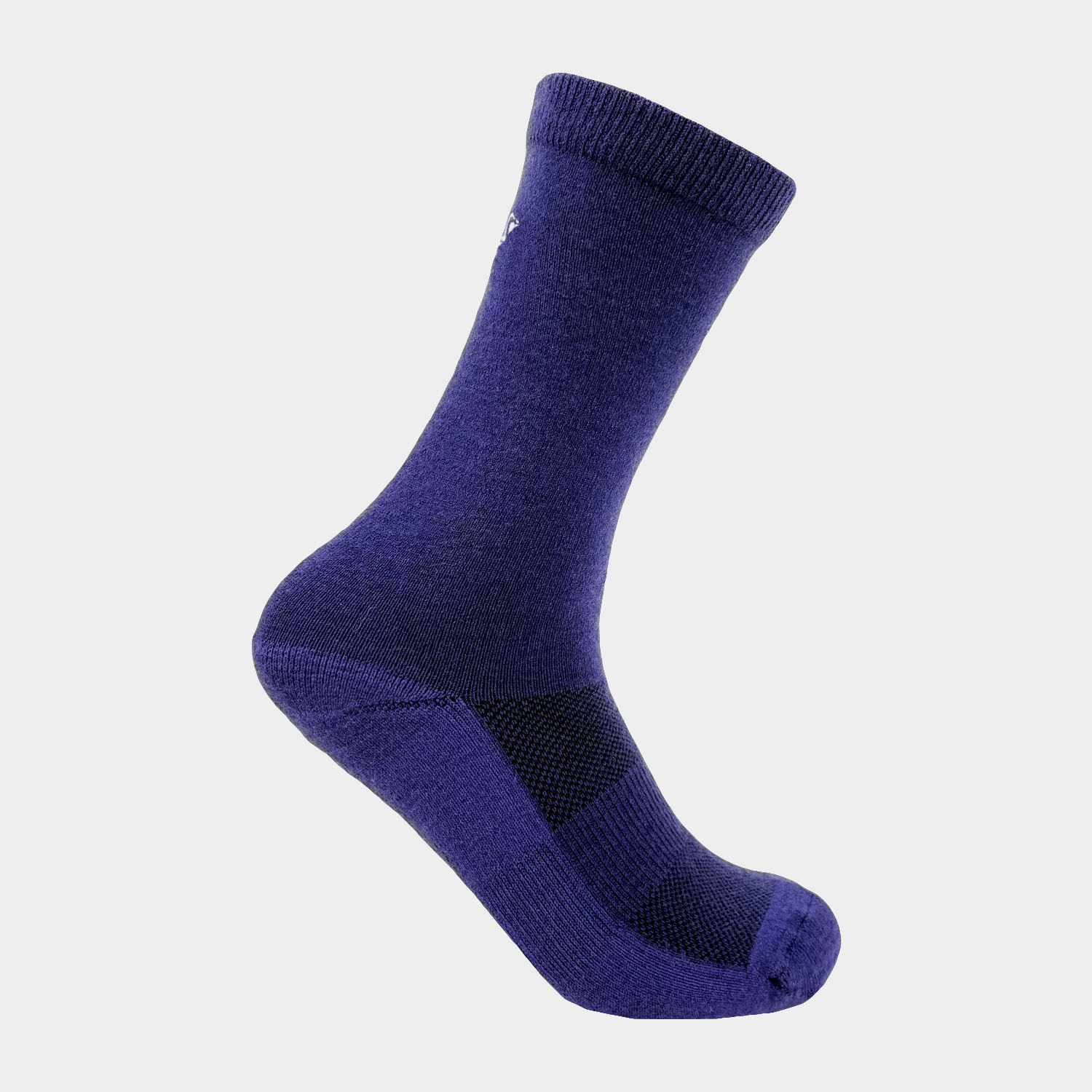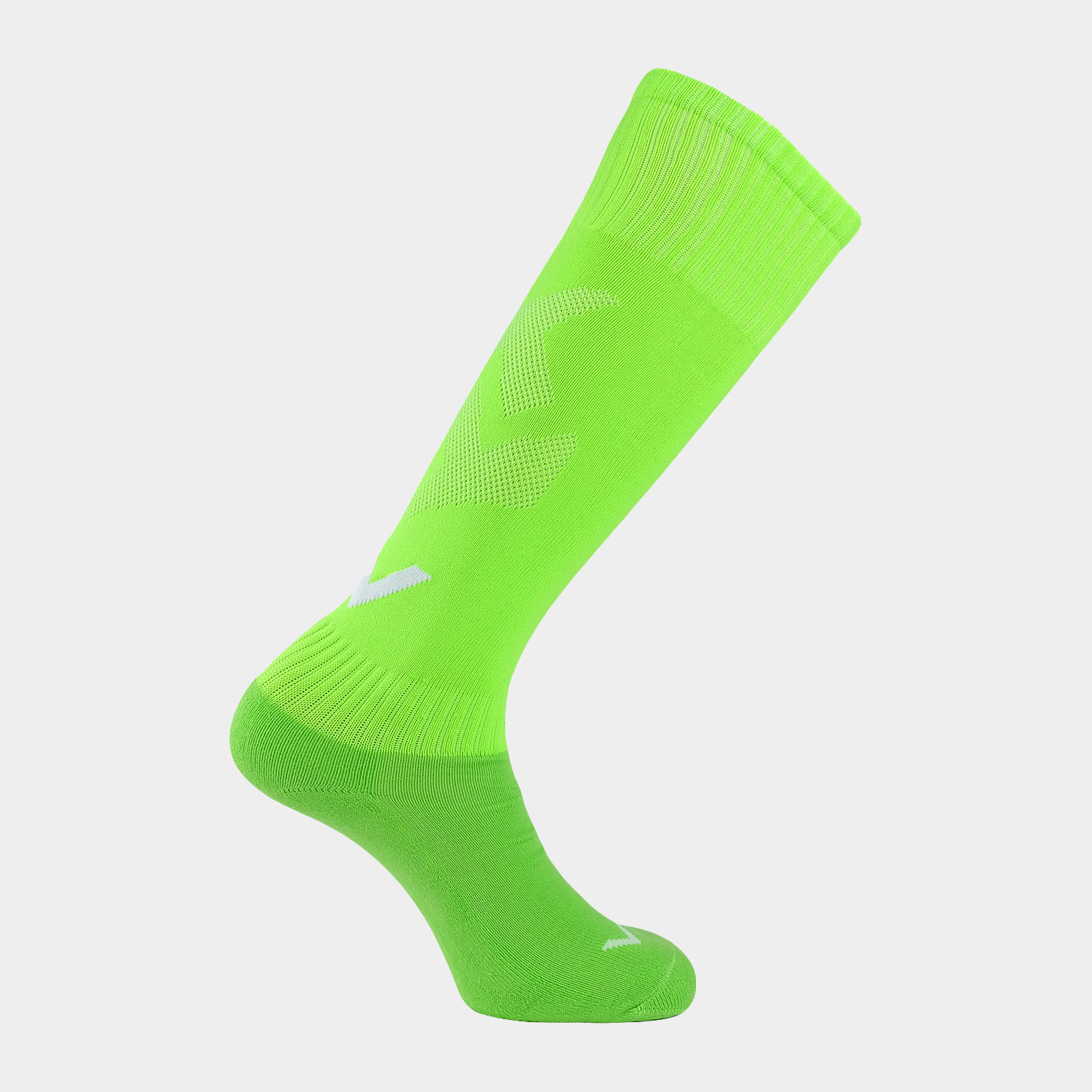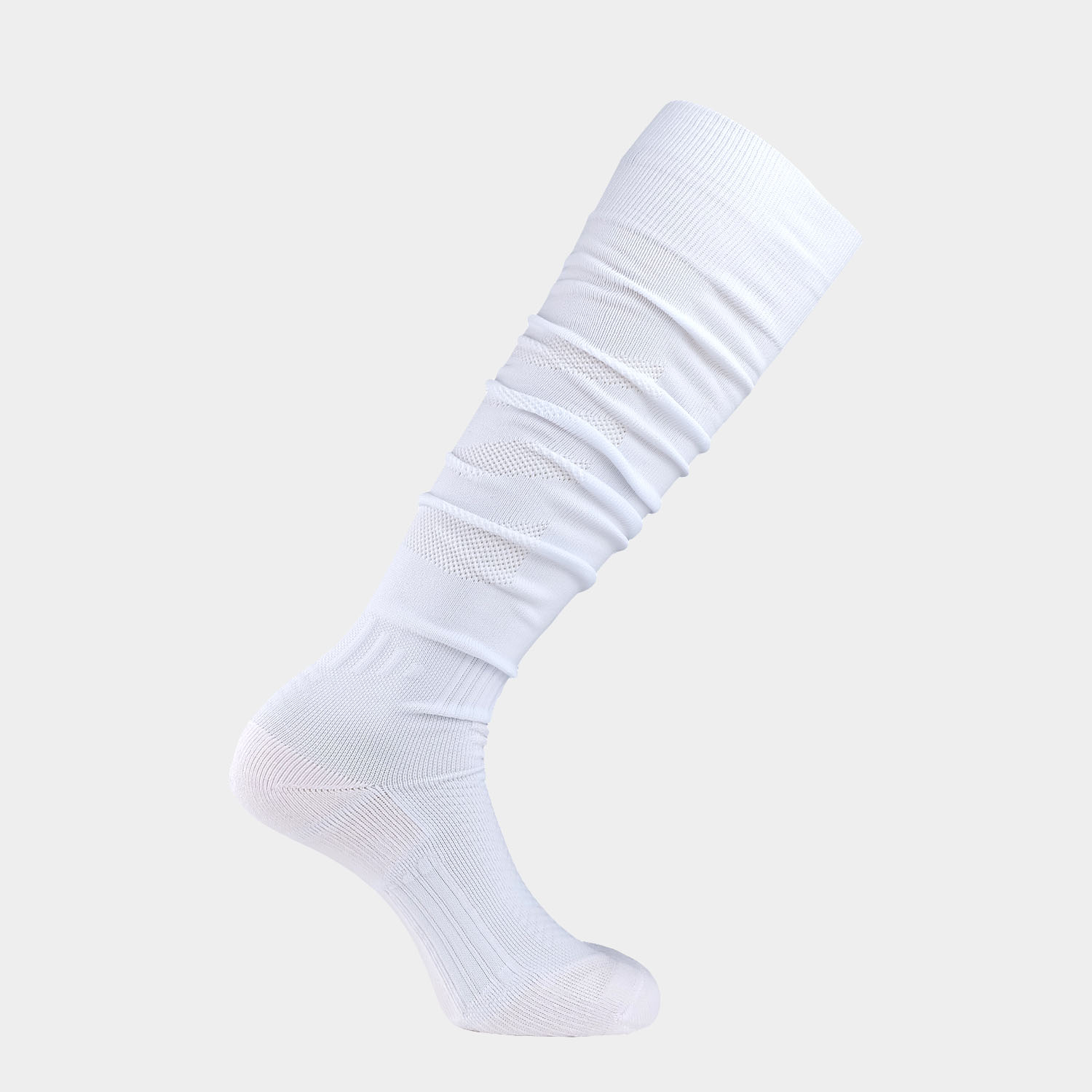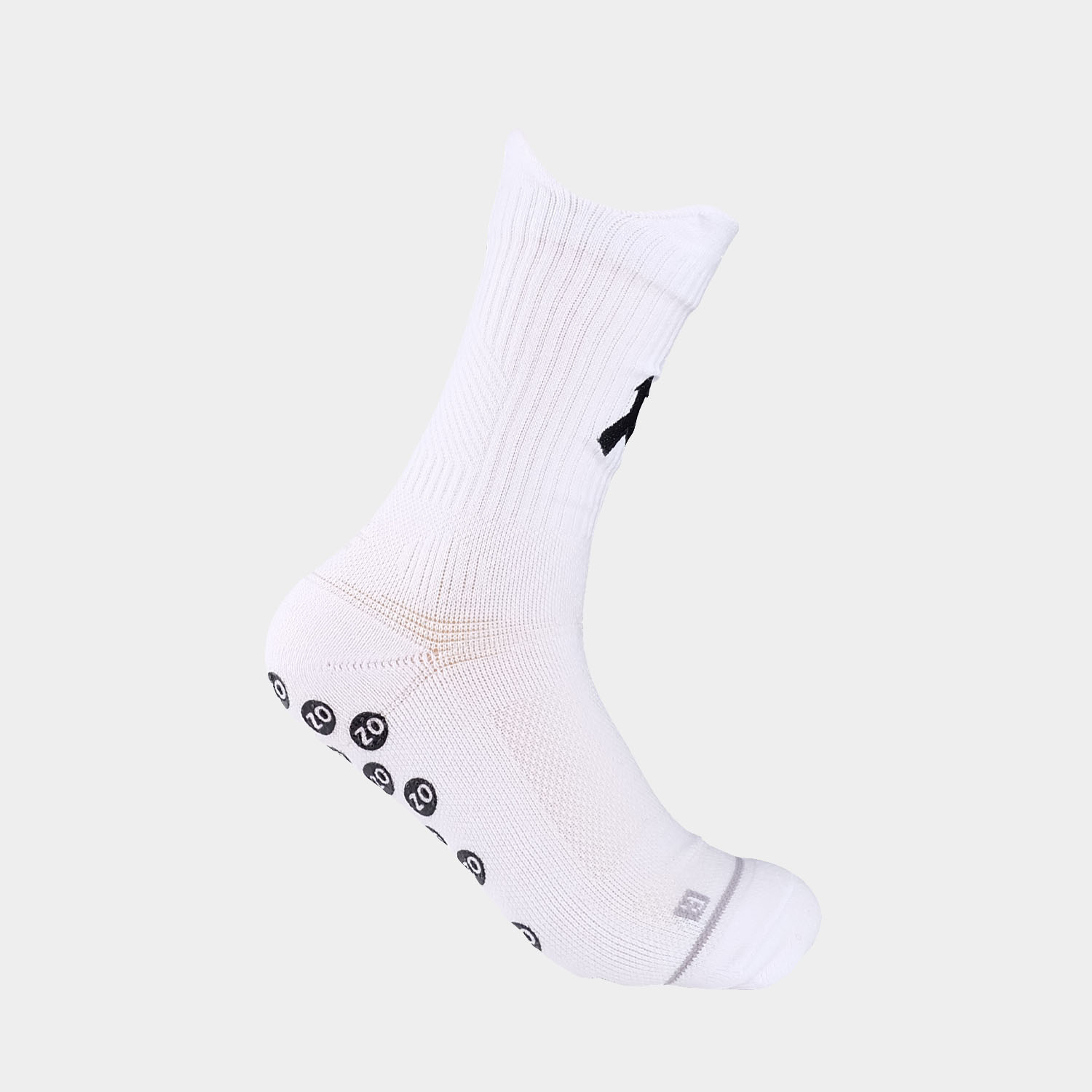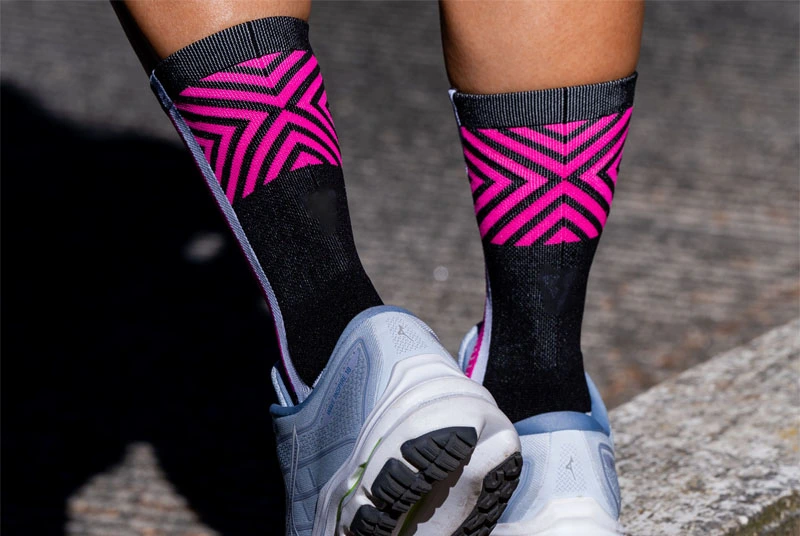
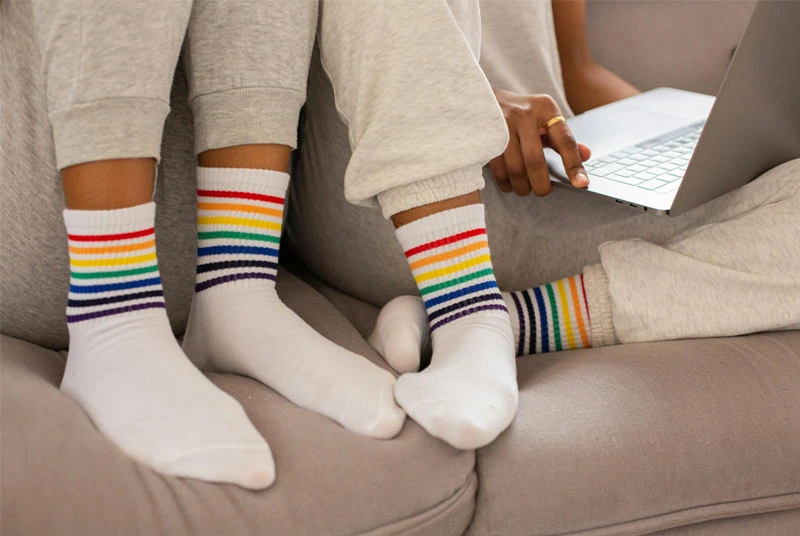
Tube socks and crew socks may look similar, but they work in different ways in daily use and sports. The main difference is how they are made. Tube socks use a straight design with no heel. Crew socks follow the shape of the foot and have a heel pocket.
So crew socks are often the better choice in most situations. They give more comfort and more stability. Many performance styles, such as running socks, use structured support to improve stability during movement. Tube socks still work for casual use and flexible sizing.
This guide compares tube socks and crew socks in fit, performance, and use cases.
What Are Tube Socks?
Tube socks are simple socks made as a straight fabric tube. They do not have a defined heel and they do not have a left or right side. The shape is the same from top to bottom, and the sock uses stretch to fit different foot sizes.
Because there is no shaping, the sock does not follow the natural curve of the foot.
What Are Crew Socks?
Crew socks are widely used for daily wear. They are also used in sports, work, and outdoor settings.
Crew socks have a shaped heel and a structured foot form. This creates a curve that matches the foot. Most crew socks also have elastic zones to support the arch and keep the sock in place.
Because of this structure, the sock fits more closely than simple designs.
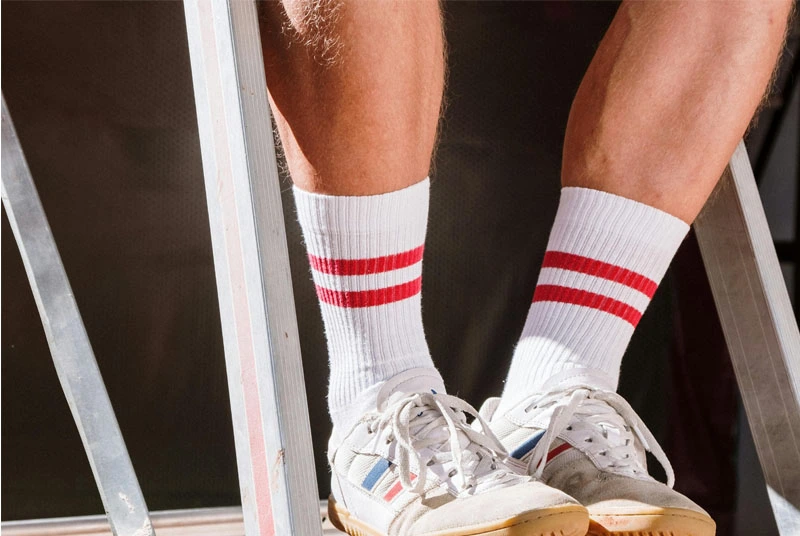
What’s the difference between Tube Socks and Crew Socks?
The main difference is how they are built. One is a simple fabric cylinder and the other follows the actual shape of the foot.
Tube Socks vs Crew Socks Comparison Table
To help you make a quick comparison, here is a summary of the technical specifications discussed above:
Feature | Tube Socks | Crew Socks |
Heel Shape | Straight Cylinder | Knitted L Shape |
Sizing | One Size Fits Most | Specific Size Ranges |
Primary Use | Retro Fashion and Casual | Sports and Performance |
Fit Security | Moderate | High |
Durability | Standard | High with Reinforced Zones |
The Fundamental Construction
The main difference comes from how the socks are made.
Tube socks are made as a straight fabric tube with no heel. The shape is the same, and the sock only takes form when worn. There is no fixed position for different parts of the foot.
Crew socks have a shaped heel pocket and a structured foot form. This creates a fixed layout. Each part of the sock stays in place during use.
Fit and Comfort
Fit depends on how the sock matches the foot.
Tube socks use stretch to fit different sizes. This feels flexible at first, but the fit is not precise. The fabric can move or bunch inside the shoe over time.
Crew socks use their structure to stay in place. The heel acts as an anchor. This reduces movement and helps the sock follow the foot. The result is a more stable fit.
Athletic Performance
Performance shows the difference more clearly.
Tube socks can use many materials, such as polyester, nylon, wool, and other fibers. There is no strict limit on materials. But there is no fixed heel, so it is hard to control where each material goes. Most tube socks use the same structure across the whole sock.
Crew socks allow more advanced design. The shaped heel creates fixed zones. So different materials can be placed in different areas.
For example, manufacturers can add cushioning under the foot and use breathable structures on the top. They can also use stronger yarns in high-friction zones. This type of design is common in performance products such as running socks and other functional socks.
So crew socks are better for sports and high activity. They give better support and better moisture control and better durability.
Durability
Durability depends on how the sock handles friction.
Tube socks wear unevenly over time. There is no fixed heel, so the fabric stretches and rubs in different areas. So it can wear faster in high-contact zones.
Crew socks often last longer. The heel and toe stay in fixed positions, so stronger yarns can be used in those areas. This helps reduce wear and extend the life of the sock.
Which Is Better: Tube Socks or Crew Socks?
Crew socks are often the better choice for most situations. They provide better fit, support, and stability. This makes them more reliable for daily use and activity.
Tube socks still have value in some cases. They work well for casual wear and flexible sizing. They are also a good choice when cost matters.
The best choice depends on how you use the socks.
For Sports
Crew socks are the standard choice in most sports. They provide better fit and stability during movement. This matters for running, hiking, and high-intensity training.
Tube socks were widely used in the past. They were common in sports from the 1960s to the 1980s. Today, they are less common in competitive use. They are still used in training or for a retro look.
Some modern designs combine both styles. These socks look like tube socks but include a shaped heel. This hybrid design balances style and performance.
For Sweaty Feet
For sweaty feet, crew socks are often the better choice. The structure keeps the sock in place and reduces friction during long wear.
Crew socks also allow better material placement. This makes it easier to use moisture-wicking fibers in high-sweat areas and improve airflow.
Tube socks can use similar materials. But because there is no fixed structure, it is harder to control moisture in specific areas.
If moisture control is important, it helps to choose the right material and design. You can explore more in guides such as best moisture-wicking socks for sweaty feet and best socks for sweaty feet.
For Casual Wear
For casual wear, both styles can work well. The choice depends on style and preference.
Tube socks are often used for a relaxed or retro look. Their simple shape and flexible sizing make them easy to wear. They are common in streetwear and vintage styles.
Crew socks give a more structured look. They sit more cleanly on the leg and keep their shape during the day. This makes them easier to match with sneakers, boots, and daily outfits.
In general, tube socks focus on style and flexibility, and crew socks provide a more stable fit and a cleaner look.

Are Tube Socks Still Popular?
Tube socks were widely used in sports from the 1960s to the 1980s. They were part of many team uniforms.
Today, they are more common in streetwear and casual fashion. In sports, they are mostly used for training or low-impact use, not for competitive performance.
Why Are Crew Socks More Popular Today?
Crew socks are more popular today because they offer better comfort, performance, and daily use.
People expect more from basic products. Fit and stability matter more now. Crew socks provide a more secure feel during long wear and movement.
They also support more advanced features. The structure makes it easier to add cushioning, improve airflow, and use different materials in different areas.
Crew socks also work in more situations. They are used for sports, work, and casual wear. This makes them a practical choice for most people.
Modern styles also make crew socks more visible in fashion. They are now part of everyday outfits.
How Brands Choose Between Tube and Crew Socks
Brands choose between tube socks and crew socks based on product goals, target users, and price level.
Tube socks are often used for basic and high-volume products. The simple design allows faster production and flexible sizing. This helps reduce cost.
Crew socks are more common in mid-range and high-end products. The structure supports better fit and allows more advanced features. Brands use them for sports, outdoor use, and performance products.
For products that need specific functions, such as moisture control, cushioning, and durability, structured designs are often used. This is why many performance categories use crew-style construction.
Some brands also choose custom socks to control materials, structure, and branding. This helps them create products that match specific needs and stand out in the market.
FAQ
Q1. Why Are Tube Socks Cheaper Than Crew Socks?
Tube socks are cheaper because the straight design skips the heel knitting process. This simplicity allows for faster production and lower manufacturing costs for bulk orders.
Q2. Which Sock Style Is More Comfortable for Everyday Wear?
Crew socks provide more comfort because the heel pocket acts as a structural anchor. This design prevents the fabric from sliding or bunching inside shoes during daily movement.
Q3. What’s the Difference Between Quarter Socks and Crew Socks?
Height is the primary distinction. Quarter socks end just above the ankle bone for minimal coverage. Crew socks reach the mid calf and provide more space for brand logos or patterns.
Q4. What’s the Difference Between Crew Socks and Ankle Socks?
Height is the primary distinction. Ankle socks sit at or below the ankle bone for a minimal look, while crew socks reach the mid-calf to provide extra protection and branding space. For a deeper dive into height variations, this quarter socks vs crew socks comparison offers more details on specific performance needs.
Conclusion
Choosing the right sock comes down to balancing lifestyle with performance. Whether you need the effortless retro vibe of a tube sock or the technical stability of a crew design, the construction must match the activity. For brands and shoppers looking to lead the 2026 trends, Sockcn combines technical expertise with premium materials to deliver the perfect fit for every step.