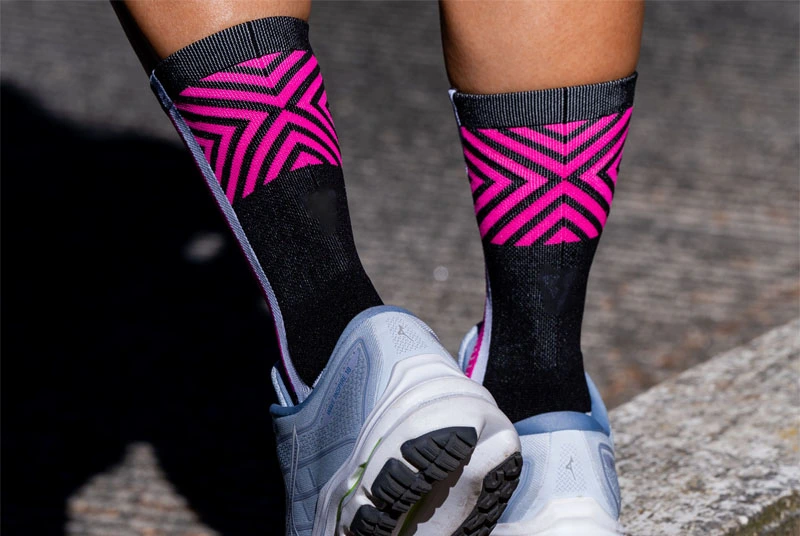

According to The Zoe Report, consumer interest in the argyle pattern surged throughout 2024. Who What Wear confirms Miu Miu, Prada, and Burberry integrated argyle apparel directly into their autumn 2025 collections.
Converting this market momentum requires exact jacquard knitting specifications to minimize pattern distortion. Securing reliable OEM sock manufacturing provides the material selection protocols and technical parameters necessary to execute profitable bulk orders.
What is the Argyle Pattern
The argyle pattern is a geometric textile design built on a diagonal axis. Its visual structure consists of two distinct elements:
- Interlocking Diamond Blocks: The primary solid geometric shapes.
- Intersecting Rakers: A secondary set of contrasting crisscross lines running through the diamonds.
Producing this specific geometry requires intarsia or advanced jacquard knitting programming. Maintaining diagonal symmetry forces manufacturers to control yarn tension continuously. Poor tension management distorts the raker lines, which downgrades the final knitwear to defective inventory.

Argyle Pattern History and Origins
The argyle pattern originated in the Scottish Highlands during the 17th century. Modern apparel brands use this historical pedigree to construct authentic marketing narratives and justify premium retail pricing for custom knitwear.
Clan Campbell of Argyll
Textile historians trace the exact geometric layout to the Clan Campbell, located in the Argyll region of western Scotland. Early Highland weavers created the Campbell tartan using a distinctive green and blue asymmetric grid.
Modifying this traditional square grid into a diagonal orientation produced the first recognizable argyle design. This design adaptation required manual hand-knitting techniques to manage production volume.
From Tartan to Anti-Tartan
Traditional tartans rely on vertical and horizontal intersecting lines woven on a standard loom. Rotating these woven lines 45 degrees creates the diagonal argyle pattern, which textile experts classify as an anti-tartan.
This structural shift forced a manufacturing transition from flat loom weaving to complex circular knitting. Pringle of Scotland commercialized this specific knitted design into golf hosiery during the 1920s.
The Duke of Windsor popularized these garments on the golf course, generating immediate international consumer demand. Translating this historical anti-tartan into modern bulk production requires the precise jacquard machinery used in advanced OEM facilities today.
Why the Argyle Pattern Remains a Timeless Fashion Staple
Consistent inventory turnover forces retail buyers to classify the argyle pattern as a timeless staple, anchoring profitable OEM supply chains.
The Perfect Balance of Classic and Quirky
The fundamental geometric grid provides a conservative foundation. Injecting high-contrast color palettes into the intersecting rakers transforms this base into a bold statement piece. Merchandisers use this visual duality to capture both traditional shoppers and trend-driven demographics within a single product line, maximizing shelf space efficiency.
Versatility Across Seasons and Genders
The argyle design adapts easily to diverse material blends, which minimizes seasonal SKU risks for B2B buyers. Sourcing lightweight combed cotton produces breathable summer hosiery. Choosing between OEKO-TEX certified merino wool vs alpaca dictates the final retail margin for winter knitwear. This universal grid structure broadens the target demographic, expanding the potential retail yield for wholesale orders.
Pop Culture and Nostalgia
Viral consumer trends, specifically the “Old Money” aesthetic and Y2K fashion revivals, heavily feature argyle apparel. Consumers specifically associate the vintage argyle sweater with elite academic uniforms. Retailers capitalize on this nostalgia by integrating the classic argyle print into modern seasonal catalogs, which secures sustained bulk orders for advanced knitting facilities.

Where is the Argyle Pattern Applied Today
Scaling the argyle pattern demands exact OEM alignment.
Classic Knitwear and Apparel
Heavy winter apparel, specifically cardigans and sweater vests, relies on the argyle design to command premium retail positioning.
Producing a heavyweight argyle sweater requires advanced flat-bed knitting machinery to manage complex intarsia color blocks without distortion. Sourcing heavyweight yarns dictates the final tactile quality, which directly determines the retail price point.
Traditional Sportswear and Golf Attire
Professional golf attire and traditional sportswear frequently integrate the argyle pattern to maintain classic country club aesthetics. Substituting traditional wool with moisture-wicking synthetic fibers creates functional athletic garments. This fiber substitution allows merchandisers to market classic geometric designs to performance-focused consumers.
Everyday Hosiery and Socks
Custom argyle socks represent a dominant high-volume retail application for this geometric pattern. Executing the complex intersecting raker lines requires precise circular knitting equipment, which maintains structural integrity across the heel and calf.
What to Look for When Manufacturing Argyle Socks
Preventing defective bulk inventory requires strict supply chain auditing. Verifying machinery capabilities, material certifications, and production flexibility secures profitable geometric knitwear.
Comparing Knitting Techniques
Preventing pattern distortion requires specific sock knitting machine needles. Rendering the intersecting diamond grid accurately demands exact 168-needle or 200-needle circular configurations. Sourcing facilities must operate advanced machinery to accurately render the intersecting diamond grid and crisscross raker lines.
Managing internal yarn tension continuously prevents loose floating threads inside the garment. Integrating a hand-linked toe and a reinforced heel maintains structural integrity under severe physical stress.
Selecting the Right Materials
Securing long-term shape retention relies on blending combed cotton with specific ratios of nylon and spandex.
Premium winter collections capture higher margins by substituting cotton with RWS-certified merino wool or alpaca fibers, which provide natural moisture control and hypoallergenic warmth. Mandating OEKO-TEX certified yarns protects brand equity by confirming the final hosiery remains free from harmful substances.
Providing Customization Options
Validating bold designs without excess inventory risk requires low 100-pair MOQs and accelerated 3-day sampling. Specialized OEM partners like Sockcn execute this end-to-end customization, embedding targeted cushioning, compression zones, and woven brand logos directly into the knitted grid.
Executing 100,000-cycle abrasion testing on these pre-production samples prevents yarn breakage and secures long-term retail margins.
FAQ
Q1. What Is the Structural Difference Between Argyle and Plaid
Plaid forms square grids through intersecting vertical and horizontal lines. The argyle pattern features interlocking diamond blocks arranged on a diagonal axis. Producing standard plaid allows for basic flat loom weaving, while the diagonal argyle geometry demands complex jacquard equipment to manage distinct color transitions.
Q2. Can You Mix the Argyle Pattern with Other Prints in an Outfit
A unified color palette allows stylists to mix the argyle pattern with subtle prints. Pairing these bold geometric diamonds with muted stripes prevents visual clutter. Merchandisers who apply this styling strategy directly increase the cross-selling potential of geometric knitwear.
Q3. How Should I Wash and Care for Argyle Knitwear or Socks
Washing argyle knitwear requires cold water cycles and air drying to prevent fiber shrinkage and pattern distortion. High heat warps the intersecting raker lines. Turning these garments inside out protects external yarn tension, which extends the overall product lifespan.
Conclusion
Profitable argyle manufacturing comes down to finding the exact factory match. Knitting the complex raker lines without pattern distortion requires modern circular machines and precise tension control. Moving these designs to a dedicated Sockcn production line allows buyers to test bold material blends while keeping bulk inventory risks low. Locking down these production details protects brand reputation and keeps wholesale growth steady.