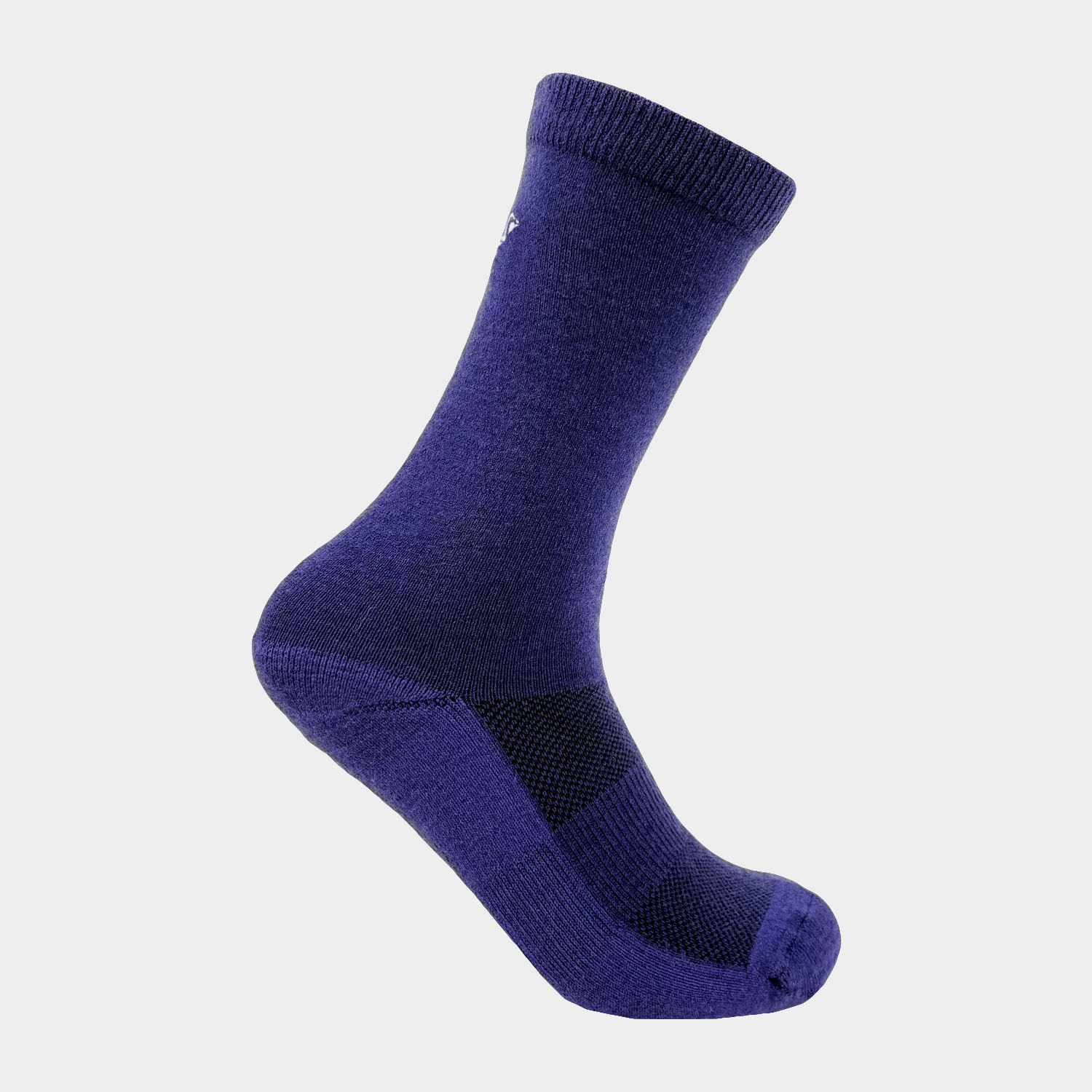
Pull a favorite pair out of the dryer only to find it two sizes smaller, and the answer is clear: wool socks do shrink. Heat, moisture, and friction can cause wool fibers to felt and contract, but the process is largely preventable with proper care. This guide explains why wool shrinks, how much different materials may shrink, what to do with already-shrunk socks, and why some wool socks resist shrinkage better than others.
Do Wool Socks Shrink?
Getting the mechanism right matters, because wool doesn’t shrink the way cotton does. Cotton fibers relax and contract; wool fibers physically lock together and stay that way.
Felting, Not Ordinary Shrinking
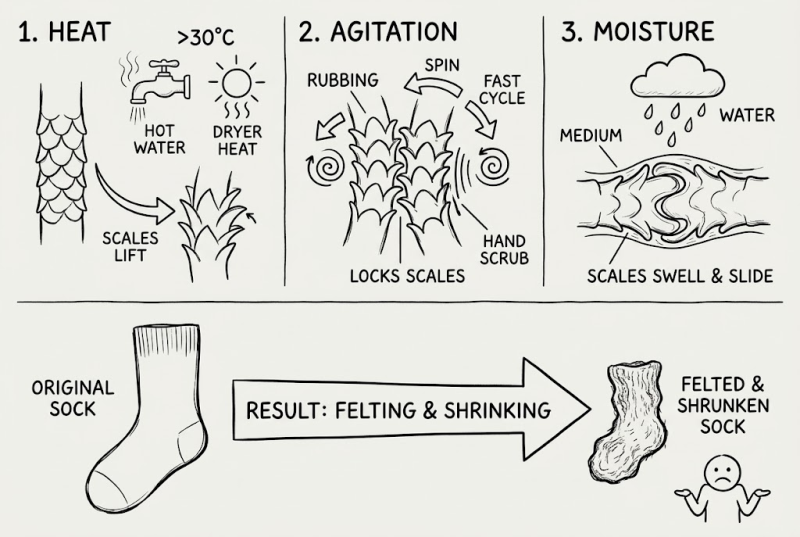
Every wool fiber is covered in microscopic overlapping scales. Heat and moisture make these scales open up, while movement pushes the fibers together until the scales catch onto each other. This process is called felting, and it can turn a soft, flexible sock into a smaller, thicker, and stiffer one.
Why Wool Shrinkage Is Usually Permanent
Interlocked scales don’t simply release when the sock dries. Once wool has felted, the fibers stay locked together, leaving the sock smaller, thicker, and less stretchy than before. You may be able to restore some of its original size, but badly felted wool rarely returns to its original shape.
Three Conditions That Make Wool Socks Shrink
Shrinkage usually happens when heat, moisture, and agitation work together. Take away any one of these factors, and the risk drops significantly. That’s why simple laundry habits can make such a big difference in keeping wool socks from shrinking.
Heat Opens the Fiber Scales
Hot water and dryer heat can both open up the wool fibers, making them more likely to catch and lock together. Water above roughly 30°C may increase the risk of shrinkage, while high dryer heat can speed up the felting process and cause significant size loss.
Agitation Locks Them Together
Rubbing creates the movement that pushes the lifted scales against each other. A fast spin cycle, an overcrowded washing machine, or vigorous hand-scrubbing can all create this kind of agitation. That’s why gentle wash cycles are recommended for wool socks.
Moisture Ties the Two Together
Water alone won’t felt wool. When combined with heat and friction, however, it helps the scales swell and move against each other, making it easier for the fibers to lock together. That’s why washing wool socks in hot water and then putting them in the dryer can cause so much shrinkage.
How Much Do Wool Socks Shrink by Material
Untreated Wool vs Superwash Merino
Raw, untreated wool still has its natural scales, so it can felt easily. Superwash merino is specially treated by removing or covering the edges of these scales, often with a fine polymer coating, so the fibers are less likely to lock together. That’s why most machine-washable wool socks use treated yarn.
Blends With Nylon and Spandex
Synthetic fibers do not felt, so blends can help limit wool shrinkage. A sock made with 50–70% merino and fibers such as nylon or spandex has more structure, which can reduce how much the wool fibers contract during washing. This makes blended socks a practical choice for everyday use compared with pure wool. Our guide to merino wool vs alpaca for custom socks also explains how these fibers behave after repeated washing.
| Material | Shrink Risk | Typical Size Loss | Machine Washable |
|---|---|---|---|
| Untreated 100% wool | High | Up to 20–30% | No |
| Superwash merino (100%) | Low | Minimal, under 5% | Yes, cold gentle |
| Merino blend (50–70% + nylon/spandex) | Low | Minimal | Yes, cold gentle |
| Alpaca blend | Low to moderate | Small, varies by blend | Gentle cycle only |
The figures above represent worst-case laundry conditions. With proper care, these materials can maintain their shape for years.
How to Prevent Wool Socks From Shrinking
Washing Rules That Actually Matter
Cold or lukewarm water, 30°C at most, keeps the scale layer flat. Choose a wool or delicate cycle with a low spin speed, use a wool detergent, and avoid fabric softener because it can coat the fibers. A mesh laundry bag also helps protect the socks from snags and excess rubbing in the drum. For a step-by-step routine, our guide on how to wash wool socks covers both hand and machine washing.
Drying Without Heat
Tumble drying is where most pairs die. Gently squeeze out excess water instead of wringing the socks, reshape them while they are still damp, and lay them flat on a towel in a well-ventilated spot away from radiators and direct sunlight. Thick pairs may take 12–24 hours to dry, while lighter socks usually dry faster when hung by the toe.
Washing Less Often
Wool naturally resists odors, so it doesn’t need to be washed after every wear. Simply air the socks overnight to freshen them up. Washing them less often also reduces the chance of felting and can help them last longer, as explained in our guide to how long socks last.

Fixing a Pair That Already Shrank
The Soak-and-Reshape Method
Fill a basin with lukewarm water and add a capful of hair conditioner or baby shampoo to help relax the fibers. Soak the socks for 15–30 minutes, then gently stretch them in all directions while they are wet, focusing on the most compressed areas. Lay them flat to dry and use a towel underneath to help hold their shape.
When Recovery Is No Longer Possible
Realistically, this method may restore only about 10–20% of the lost size. Once socks become heavily felted, stiff, and matted, the fibers have changed too much to fully recover. At that point, replacing them is usually more practical than trying to stretch them back repeatedly.
Why Some Wool Socks Resist Shrinking
Superwash Treatment and Yarn Selection
Yarn arrives at the factory either treated or untreated, and that choice affects how well the socks handle washing. Brands that want machine-washable socks should specify superwash-treated merino in the tech pack, along with enough nylon or spandex to help the socks hold their shape. Without these specs, socks may feel great at first but shrink after the first wash.
Boarding and Pre-Shrink Testing
After knitting, socks pass through steam-heated forms in a process called boarding, which sets their final shape and size. Reputable factories then wash-test samples to make sure the socks keep their size through multiple cycles. Our overview of how socks are manufactured explains where these steps fit into production, while brands can explore the custom wool socks collection or start a custom sock project to set shrink-resistant specs before sampling.
FAQ
Q1. Do merino wool socks shrink in the dryer?
Q2. How much do wool socks shrink?
Untreated wool can shrink 20–30% after hot washing and tumble drying, while treated and blended socks typically retain their size when washed cold and air dried.
Q3. Can shrunken wool socks be stretched back?
Partially. Soaking wool in lukewarm water with conditioner and reshaping it while wet can restore some size, but severely felted fibers rarely return to their original dimensions.
Q4. Are wool socks machine washable?
Yes! We offer custom logo, packaging and color options.
Q5. Are wool socks suitable for year-round sales?
Absolutely. Wool has natural temperature regulation and breathability, warm in winter and cool in summer.
Conclusion
So, do wool socks shrink? Yes — when heat, friction, and moisture work together. Remove any one of these factors, and the risk drops significantly. Cold washing, gentle cycles, and flat drying help protect most pairs, while treated yarn and blended construction add extra shrink resistance. For brands developing wool sock lines, using treated merino and verifying wash performance before production can help prevent shrinkage issues.