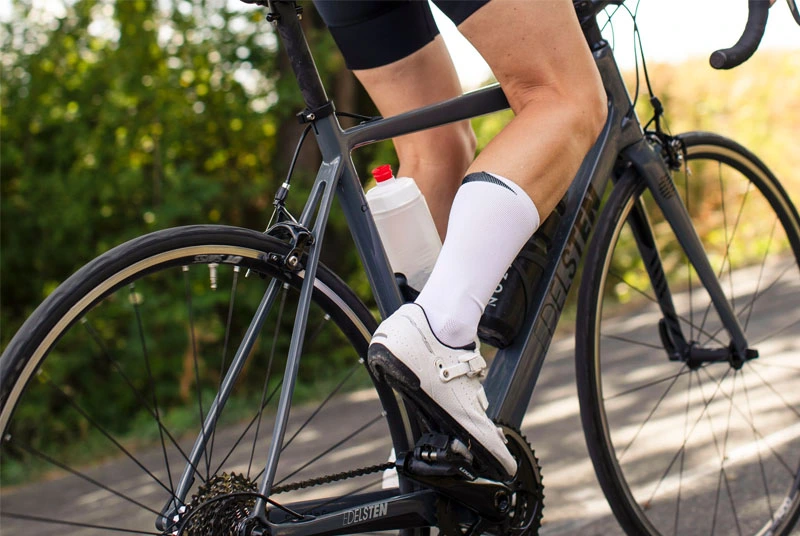
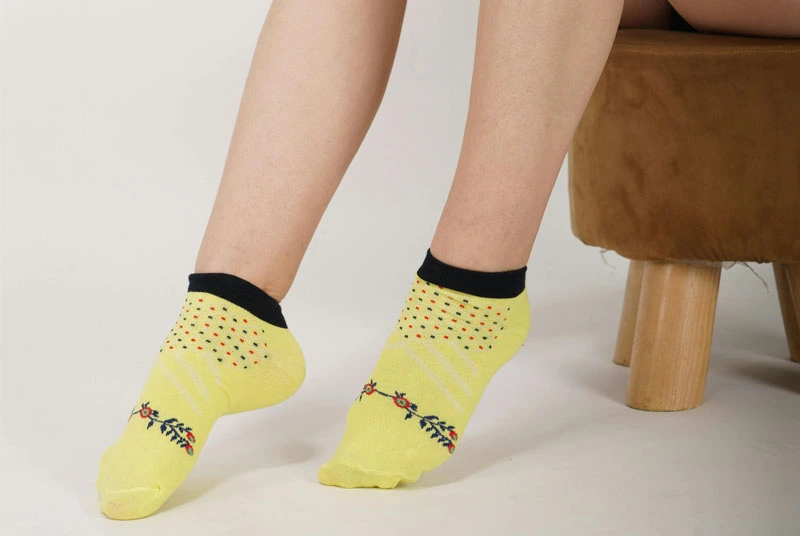
The fastest way to stop socks from slipping in sneakers is to wear socks with silicone heel grips and a deep heel pocket. According to the Appalachian Mountain Club, heel friction is the leading cause of blisters, and a sliding sock is usually what triggers it. Most wearers blame the shoe, but worn-out elastic, slippery materials, and a poor sock fit are the real culprits.
This guide covers why your socks keep sliding, four quick fixes you can use right now, and how to pick socks that stay put for good.

Why Do Your Socks Keep Sliding Down in Your Sneakers?
Socks sliding or falling down in sneakers comes down to five fixable causes.
Poor Sock Design
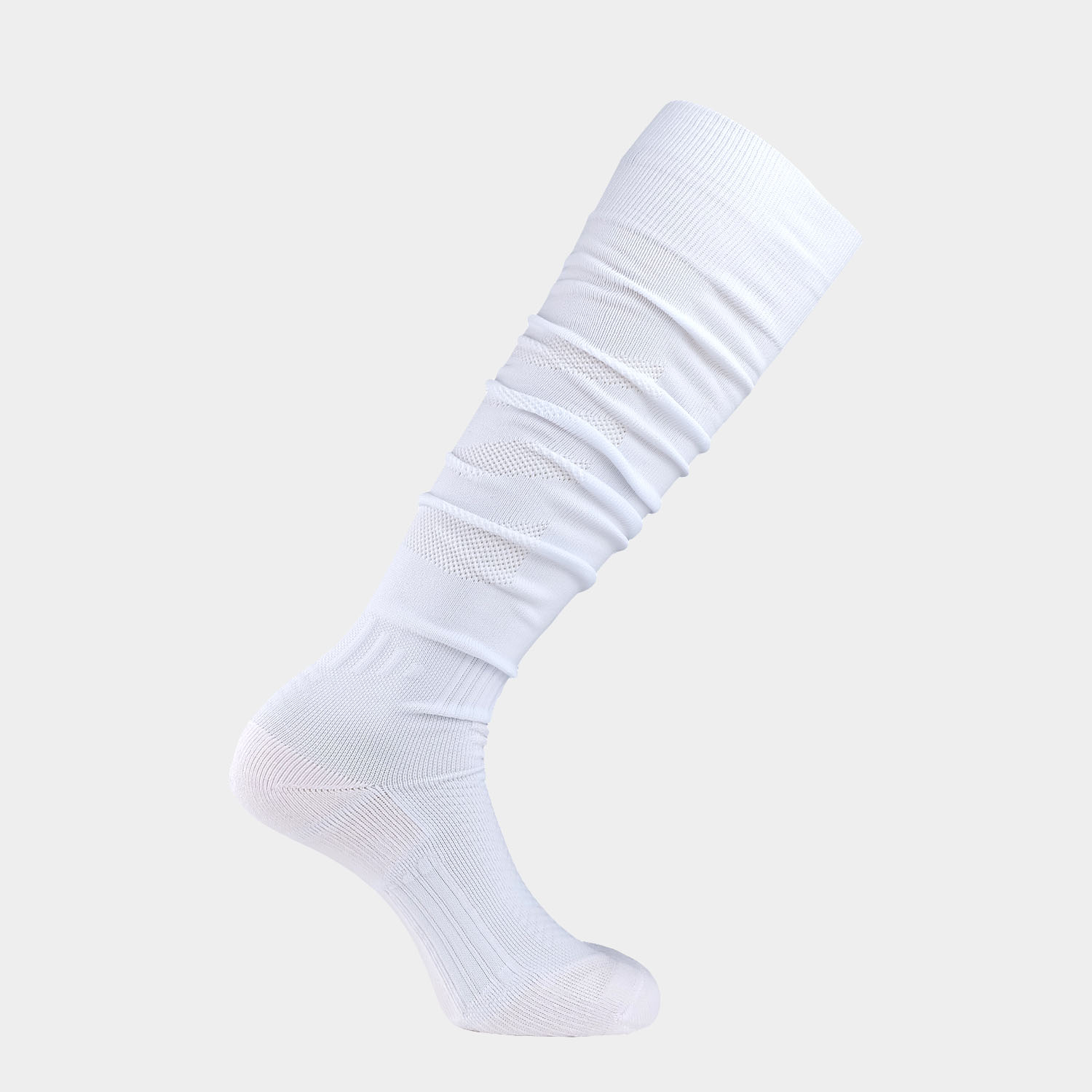
Socks without a built-in heel pocket can’t anchor against the heel bone, so the fabric shifts freely with every step. Most budget socks use a flat, uniform cut, and the heel slides down the moment your foot pushes forward.
Slippery Sock Materials
Smooth cotton and 100% polyester have very little grip against a sneaker’s lining, so the sock slides with each stride. Bamboo blends and silky synthetics make slipping worse, especially in sneakers with a smooth inner wall. For socks made with more sustainable fiber options, see Sockcn’s sustainability practices.
Incorrect Sock Sizing
A sock that’s too large bunches at the heel and loses grip quickly. One that’s too small gets stretched thin across the foot, leaving the cuff without enough tension to stay up.
Worn-Out Elasticity
A worn-out cuff elastic can’t hold the sock up, and it goes slack after repeated washing and wearing. Once the band goes slack, the sock drops within a few steps and won’t stay up through a full walk or run.
Improper Sneaker Fit
A sneaker that’s too wide or too long lets the foot shift inside the shoe, dragging the sock down with it. Loose laces or a thinner insole than the shoe was built for make the problem worse.

4 Ways to Stop Sneaker Socks from Slipping in Under a Minute
None of these require new socks or special equipment.
Use Sticky Tape
Double-sided tape holds the sock fabric against your skin and stops it from sliding down. Fashion tape and medical-grade skin tape both work. Press a strip horizontally across the heel lining before you put the sock on, and it holds through a full day of walking.
Tie a Heel Lock Lacing Knot
A heel lock lace uses the top eyelet of your sneaker to clamp the heel collar tight against your foot. Thread the lace through the top eyelet on the same side to form a small loop. Then cross each lace through the opposite loop and tie as normal. The locked collar stops your foot from sliding forward, so the sock has nothing dragging it down.
Stick on Silicone Heel Grips
Silicone heel grips stick inside the heel of your sneaker and keep your foot from shifting, so the sock stays in place too. Most pads last several weeks before the adhesive wears out.
Use the Quick Hairspray Trick
Hairspray spritzed on the inside of the sock cuff grips the skin and keeps the cuff from rolling down. Spray, let it dry for 10 seconds, then put the sock on. The hold fades after a few hours, so this works best as a short-term fix.
How to Select the Right Socks to Prevent Heel Slip
The right sock design stops slipping before it starts.
Look for Silicone Grips
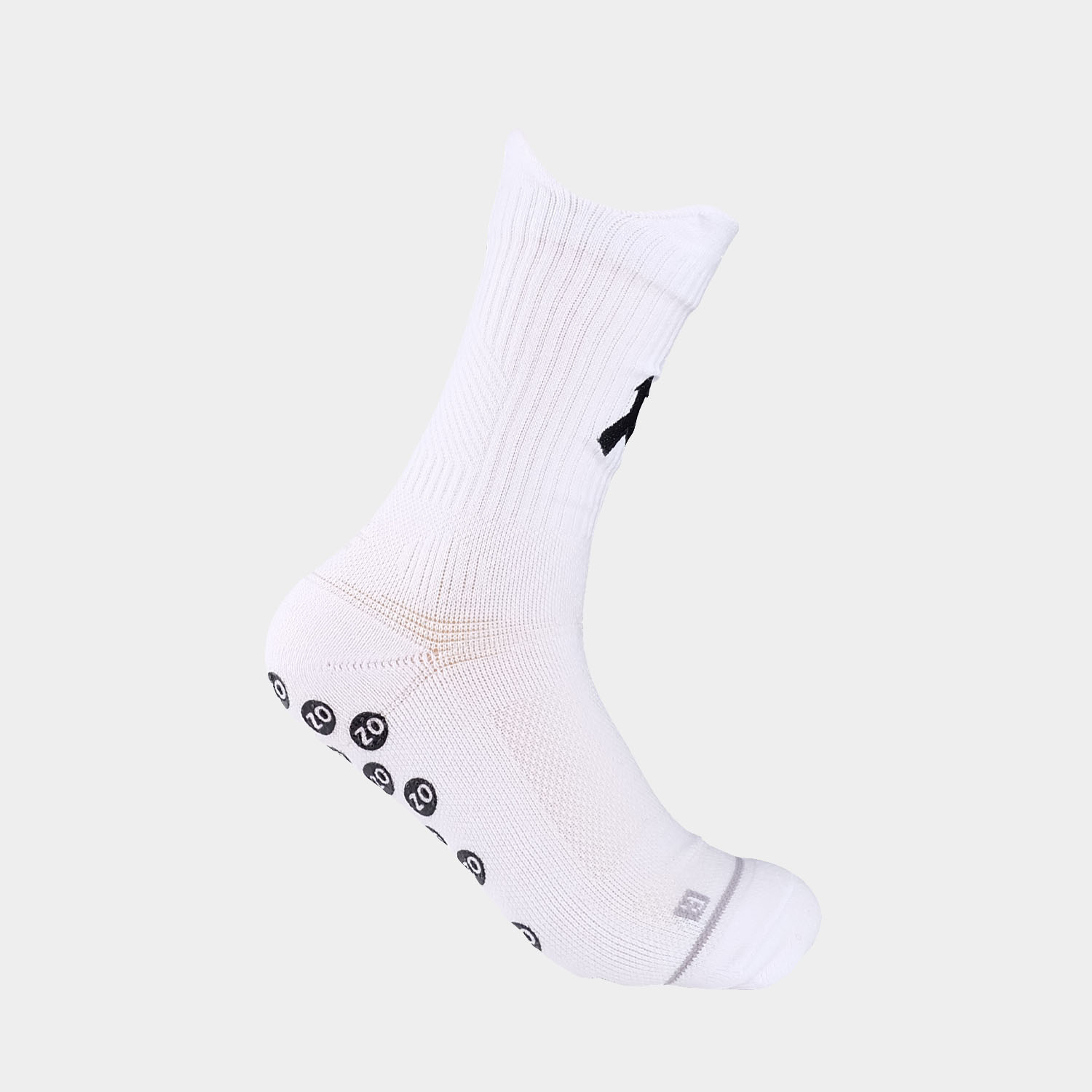
Socks with silicone grip strips along the heel and cuff hold the fabric against your skin. Look for raised silicone dots or a full-strip grip band on the inside of the cuff. A flat, smooth interior means no grip at all.
Check for a Deep Heel Pocket
A deep heel pocket wraps around the heel bone and locks the sock in place with every step. Without one, the heel seam sits flat against the foot and shifts forward under pressure. When shopping, turn the sock inside out. A properly shaped heel cup is easy to spot.
Avoid Generic Sizes
One-size-fits-most socks stretch unevenly across different foot shapes, leaving the heel area too loose to grip. Look for socks sized by shoe size rather than a broad range like S/M/L. A closer size match keeps cuff tension consistent and prevents sagging. For a full breakdown on finding the right fit, see how to find your exact sock size.
Pick Elastic Material Blends
Socks made from nylon or spandex blends snap back against the foot after each step, keeping the cuff tight throughout the day. Pure cotton stretches out and loses shape after a few hours of wear, letting the cuff drop. A blend with enough synthetic fiber holds its shape wash after wash.
FAQ
Q1. Can Sweaty Feet Make My Socks Slide Down?
Yes. Sweat reduces friction between the sock and your skin, so the fabric loses its grip and slides more easily with each step. Socks with moisture-wicking fibers like nylon or merino wool keep that grip intact by pulling sweat away from the skin. If sweaty feet are a recurring issue, the best socks for sweaty feet covers the full details.
Q2. How Should I Wash Socks so They Don't Lose Their Stretch?
Wash socks in cold water on a gentle cycle and air dry them. High heat breaks down elastic fibers faster than regular wear does.
Q3. Does Sock Slippage Cause Heel Blisters?
Yes. Every time the sock shifts, it drags skin against the shoe’s heel lining. That repeated rubbing in the same spot separates the upper layers of skin, and a blister forms to cushion the damage. A sock that stays in place prevents that friction from building up.
Q4. Do No-Show Socks Slip More Than Regular Socks?
Yes. No-show socks have a shorter cuff, so there’s less fabric gripping the heel and they slip more than crew or ankle-cut styles in high-movement activities.
Q5. Is It Normal for New Socks to Slip at First?
Sometimes. Most socks settle after two or three washes. If slipping continues past the first few wears, the heel pocket is likely too shallow for your foot shape.
Conclusion
Socks slip for five reasons: poor design, slippery materials, wrong sizing, worn-out elastic, and a loose sneaker fit. Quick fixes like double-sided tape, a heel lock lace, or silicone heel grips stop the problem immediately.
For a permanent fix, look for socks with a deep heel pocket, silicone grip strips, and a nylon or spandex blend sized to your shoe size.If retail options don’t check all those boxes, Sockcn manufactures socks built to those exact specs.