
Merino wool has become a popular choice for performance socks because of its softness, temperature regulation, moisture management, and natural odor resistance. However, when choosing merino wool socks, it is easy to assume that a higher wool content means a better product.
For sock design, this is not that simple. Merino wool provides important performance benefits, but other fibers also play a role in durability, stretch, fit, and moisture management. The right blend is not about maximizing the percentage of merino wool. It is about finding the right balance for the intended use.
Quick Overview
- 100% Merino Wool: What it offers and where pure merino wool socks make sense.
- Wool Percentage: Why a higher merino wool content does not always mean better performance.
- Fiber Blends: How nylon, elastane, and polyester affect durability, stretch, fit, and drying.
- Choosing the Right Blend: How different merino wool percentages suit different uses, from running to cold-weather outdoor activities.
Are 100% Wool Socks Good?
When high-quality merino wool is used, 100% merino wool socks can offer excellent performance. A high wool content allows the socks to make full use of merino wool’s natural properties, including temperature regulation, moisture absorption, odor resistance, and a soft feel. These qualities are especially useful in cold environments and for everyday wear where comfort is a priority.
However, 100% wool is not ideal for every application. Socks are exposed to repeated friction, stretching, and washing, with the heel, toe, and sole experiencing the most wear. Pure wool socks are generally less resistant to abrasion and have less stretch than socks reinforced with other fibers. For this reason, performance socks do not always aim for 100% wool.
Wool content is also not the only factor that affects sock quality. The fiber diameter, length, and quality of the merino wool can affect softness and durability, while yarn construction and knitting methods influence strength, thickness, and fit.
So, 100% merino wool can be an excellent sock construction, but “100%” is not a quality rating. What matters is the quality of the wool and whether the overall sock construction matches its intended use.
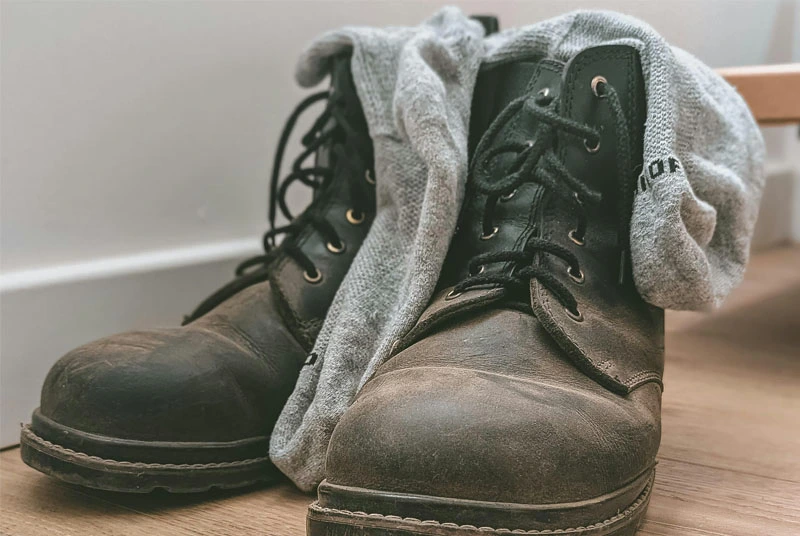
Is a Higher Merino Wool Percentage Always Better
Not necessarily. A higher merino wool content makes the wool properties more pronounced, but it also changes the balance of other performance characteristics. For socks, softness, warmth, and moisture management matter, but so do durability, stretch, fit, and structural stability.
For example, a pair of wool socks designed for everyday wear may place more emphasis on softness and comfort. Running and hiking socks need to withstand more friction and stay securely in place during movement. These different requirements can call for different wool percentages.
Why Are Merino Wool Socks Blended With Other Fibers
Blending is not simply about reducing the amount of wool. Different fibers are added to improve specific properties of the sock.
- Nylon is commonly used to improve abrasion resistance and yarn strength, especially in high-wear areas such as the heel, toe, and sole.
- Elastane, such as spandex, provides stretch and recovery, helping the socks stay in place and maintain their shape.
- Polyester can improve durability and drying performance and is often used in lightweight and performance-oriented socks.
This is why a higher merino wool content does not automatically mean a better sock. The right blend depends on the performance the product needs to deliver and the conditions in which it will be worn.
What Is the Best Merino Wool Percentage for Socks
There is no single “best” merino wool percentage for every sock. A higher wool content usually means more warmth, softness, and a stronger wool feel, but durability, stretch, and cost also need to be considered.
Different wool percentages can suit different needs:
Merino Wool Content | Key Characteristics | Best Suited For | Trade-offs |
20–40% | Lightweight and durable while retaining some of the benefits of wool | Running, warm weather, everyday wear | Less warmth and a less pronounced wool feel |
40–65% | A balanced combination of comfort, warmth, and durability | Hiking, outdoor activities, fall and winter everyday wear | Requires a balance between wool performance and durability |
65–85%+ | Stronger wool characteristics with greater softness and warmth | Cold weather, skiing, winter outdoor activities | Higher cost and greater demands on durability and sock construction |

FAQ
Is 100% Merino Wool Good for Socks?
Yes. 100% merino wool socks offer excellent softness, warmth, temperature regulation, and moisture management. However, for activities that involve high friction or require a secure fit, a merino wool blend may offer better durability and support.
What Is the Best Merino Wool Percentage for Socks?
There is no single best percentage for every sock. In outdoor and performance wool socks, blends with around 40%–70% merino wool are common because they balance warmth, comfort, moisture management, durability, stretch, and cost.
Are Merino Wool Blend Socks More Durable?
They can be, especially when nylon or other durable fibers are added. These fibers can improve abrasion resistance and help reinforce high-wear areas while retaining the main benefits of merino wool.
What Merino Wool Blend Should Brands Choose for Their Socks?
For brands, the right merino wool blend depends on the product’s target market, use case, performance requirements, and price point. A supplier can adjust the wool percentage and fiber combination to balance softness, warmth, durability, stretch, and cost for a specific product.