
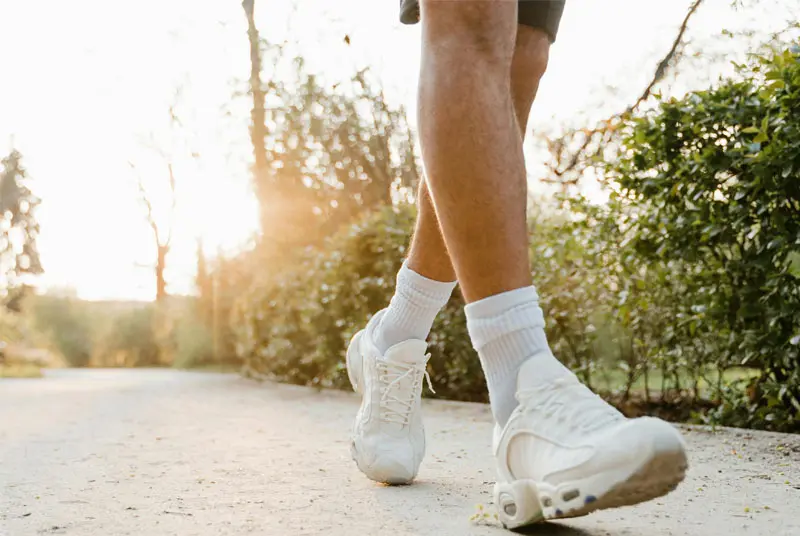
Hot weather makes socks uncomfortable fast. Once sweat and heat build up inside your shoe, the wrong material can feel damp, heavy, and annoying after just a short time. The best sock material for hot weather is not the thinnest or softest one. A good summer sock needs to let air through. It needs to get rid of moisture quickly. It should stay comfortable when you wear it for hours. Some materials handle heat better than others. The right sock construction helps a lot too. Why Hot Weather Makes Socks Uncomfortable Hot weather changes how socks feel inside your shoe. When the temperature goes up, sweat, friction, and trapped heat get harder to manage. You notice this more during long wear or when you move a lot. Sweat and Trapped Moisture Your feet give off heat and sweat all day. In hot weather, moisture builds up faster inside your shoes. Airflow is often limited there. When sweat gets trapped in the fabric, socks start to feel damp, heavy, and sticky. They do not feel dry or comfortable anymore. Sweating is not the real problem. The real problem happens when moisture stays trapped against your skin for too long. Heat Makes Small Problems Worse In cool weather, you might not notice small discomfort from your socks. But when temperatures rise, those small issues get much more noticeable. A sock can feel fine for a short time. But after hours of walking, training, or sitting in enclosed shoes, it can turn uncomfortable. Heat builds up. Moisture builds up. Friction builds up. All of this happens much faster in summer. The Biggest Mistakes People Make When Choosing Summer Socks Many summer sock problems come from simple misunderstandings about comfort. A material can feel soft or light at first. But that does not mean it will work well once heat and sweat build up inside your shoe. Assuming Cotton Is Always the Best for Hot Weather A lot of people pick cotton socks in summer without thinking. Cotton feels soft, light, and breathable at first. In dry conditions or for short wear, that works fine. The trouble starts after you sweat. Cotton takes in moisture easily but lets it go slowly. Once the fabric gets damp, it stays wet longer inside your shoe. That trapped moisture makes socks feel heavier, warmer, and less comfortable over time. This is why pure cotton socks often struggle in hot weather. The problem shows up during long walks, travel, exercise, or all day wear. Why Thin Socks Are Not Always Cooler Thin socks are often sold as the best choice for summer. Less fabric sounds cooler in theory. But thinner does not always mean more comfortable. Very thin socks can get soaked with sweat fast. Once they are wet, they may stick to your skin and create more friction inside your shoe. In some cases, a slightly thicker performance sock with better airflow and moisture release actually feels drier during long wear. The goal is not just less fabric. The goal is to manage heat and moisture well. Choosing Softness Instead of Moisture Management Softness is one of the first things people notice when they try on socks. But in hot weather, how soft a sock feels at first matters less than how it performs after hours of wear. Some fabrics feel smooth at first but trap moisture once you start sweating. Others may feel a bit more technical but stay drier and more stable all day. In summer, moisture management usually affects your comfort more than softness does. What Actually Makes a Sock Good for Hot Weather A good summer sock is not just about feeling light or thin. The real difference comes from how the sock handles heat, sweat, and airflow while you wear it. Fast Drying In hot weather, socks need to release moisture quickly after sweat builds up. Materials that stay wet too long feel heavier, warmer, and less comfortable over time. Fast drying keeps the inside of your shoe drier. It also reduces the damp feeling that often causes irritation during long wear. Breathability Breathability is about how easily heat and moisture escape from the sock. Better airflow stops heat from building up around your foot. This matters most in warm conditions or enclosed shoes. You notice it more during long walks, training, or outdoor wear. Lightweight but Stable Construction Summer socks should feel light. But they should not get loose or move around inside your shoe. A sock that shifts too much can create friction once moisture builds up. The best hot weather socks balance good airflow with enough structure to stay comfortable all day. Best Sock Materials for Hot Weather Different materials handle heat and moisture in very different ways. Some fibers stay dry and breathable during long wear. Others get damp and uncomfortable fast once sweat builds up. Lightweight Merino Wool People often connect merino wool with cold weather. But lightweight merino works well in summer too. The fiber helps control temperature and manages moisture better than many traditional materials. Unlike heavier wool fabrics, lightweight merino socks do not trap much heat. They also fight odor naturally during long wear. That is one reason you see them in hiking, travel, and premium performance socks. Most hot weather merino socks are blended with synthetic fibers. This makes them more durable and helps them dry faster. Polyester Performance Blends Polyester is a common material in hot weather performance socks. It dries fast. It releases moisture well. And it stays light even after you start sweating. That fast drying behavior helps a lot in warm conditions. Sweat builds up continuously inside your shoe. Polyester blends are widely used in running socks, training socks, and other high movement summer socks. They reduce the damp feeling that develops during long wear. On its own, polyester can feel less natural than softer fibers. That is why it is often blended with other materials for better comfort and fit. Bamboo Viscose Blends Bamboo viscose is popular for its soft
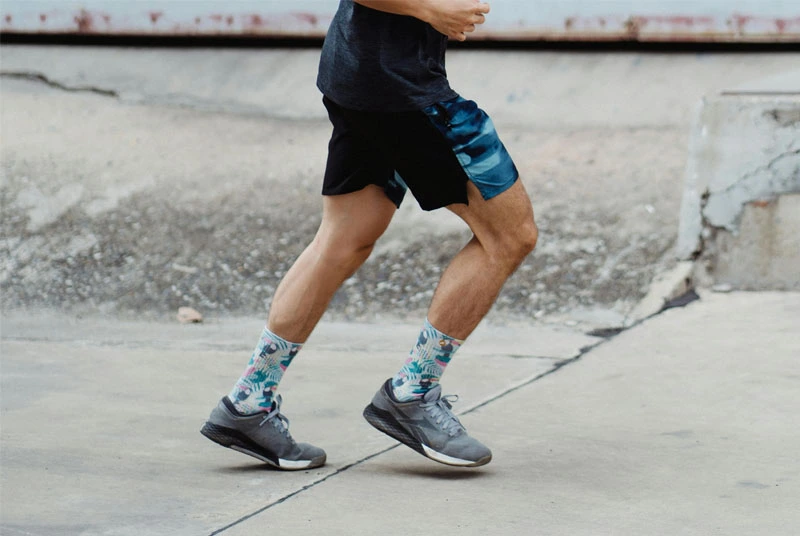
Best Material for Running Socks: What Actually Matters
The best material for running socks depends on how you run, how much you sweat, and the weather you train in. Most high-performance running socks are not made from a single fiber. They use engineered blends. These blends mix moisture management, durability, breathability, and stretch. Merino wool, polyester, nylon, and elastane each do different jobs. That is why the socks material blend matters more than the material alone. Quick Answer: What Is the Best Material for Running Socks? For most runners, the best choice is merino wool or polyester. Both are blended with nylon and elastane. Merino wool works well in cold weather and long runs. It controls temperature and resists odor on its own. Polyester is lighter and dries faster. It is a good fit for hot weather or sweaty feet. Nylon adds strength in high-friction areas. Elastane keeps the sock in place during movement. High-performance running socks do not rely on one fiber. They mix materials to balance comfort, moisture control, fit, and wear. Best Overall Material Blend A balanced merino wool or polyester blend is usually the best choice. Most performance socks use this combination: merino wool or polyester for moisture management nylon for durability elastane for stretch and fit This blend works in many conditions. It balances breathability, comfort, and durability. It does not focus on just one feature. Best for Sweaty Feet For sweaty feet and hot weather, polyester blends usually work best. They dry fast. They release moisture faster than natural fibers. Many lightweight running socks also have mesh zones for better airflow during hard runs. Some premium blends mix polyester with merino wool. That gives you odor control without losing drying speed. Cotton-heavy socks are not a good choice here. They hold moisture and stay wet longer. Materials to Avoid Pure cotton is one of the worst materials for running socks. It absorbs sweat easily but dries slowly. That raises friction and discomfort on longer runs. Poor stretch recovery is another problem. When a sock loses its shape, it moves inside the shoe. That can lead to blisters over time. Why Running Sock Material Matters Running socks look simple. But the material makes a big difference when sweat, heat, friction, and repeated movement come into play. The difference between a comfortable run and constant irritation often comes down to how the fibers handle moisture, airflow, stretch, and wear. Moisture Management and Blister Prevention Moisture is a major cause of discomfort during running. When sweat builds up inside the shoe, friction rises fast. This is especially true around the heel and forefoot. Materials that dry fast and move sweat away from the skin reduce friction before blisters form. That is why polyester and merino wool are used in performance running socks. High-cotton socks are usually avoided. For sweaty feet, moisture management matters more than extra cushioning. A lightweight sock that stays dry will often perform better than a thick sock that traps sweat on long runs or hot days. Breathability and Temperature Control Breathability affects how well heat and moisture escape during movement. In hot weather, poor airflow makes socks feel heavy and wet much faster. Lightweight polyester blends are common for warm conditions. They release heat quickly. They dry faster after sweating. Merino wool works differently. It does not cool aggressively. It regulates temperature more evenly as conditions change. That balance is why merino blends are also used in hiking socks and trail running socks. Runners in those sports deal with heat buildup and cooler outdoor conditions over long periods. Durability and Fit Stability Running creates constant friction inside the shoe. This is especially true at the heel and toe. Without strong reinforcement fibers, socks lose shape quickly and wear down faster. Nylon is added to improve abrasion resistance. Elastane helps the sock maintain stretch and recovery during repeated movement. Together, these materials keep the sock stable inside the shoe. They stop it from shifting around. Fit stability becomes more important on long runs or trails. Repeated movement can turn small pressure points into discomfort or blisters. That is one reason most high-performance running socks use engineered blends instead of single-fiber construction. Common Materials Used in Running Socks Merino Wool Merino wool is used in premium running socks for a few reasons. It controls temperature. It manages moisture. It resists odor naturally. It works especially well for cold weather running, trail running, and long-distance training. The main drawback is durability. That is why most merino running socks blend the wool with nylon and elastane. Polyester Polyester is one of the most common materials in running socks. It is lightweight. It dries fast. It wicks moisture well. You will find it in hot weather socks and socks for sweaty feet. One problem: polyester can hold odor more easily than natural fibers when used alone. Nylon Nylon is mainly used for durability. It strengthens high-friction areas like the heel and toe. It adds abrasion resistance without adding much weight. That makes it common in trail running socks and high-mileage training socks. On its own, nylon does not provide the softness or moisture control that comfort-focused socks need. Elastane Elastane provides stretch, compression, and fit stability. Even in small amounts, it stops the sock from slipping or bunching during movement. If there is too little elastane, the sock will lose shape over time. Cotton Cotton feels soft for everyday wear. But for running, it does not work well. The problem is moisture. Cotton absorbs it and holds on. It does not release it quickly. That is why high-cotton socks are usually avoided for long-distance running, hot weather training, and other conditions where moisture management matters. Material Role in Running Socks Typical Range in Performance Running Socks Merino Wool Temperature regulation, moisture management, and odor resistance 20–60% (higher in winter or trail running socks) Polyester Moisture-wicking and fast drying 30–70% (commonly used in lightweight performance socks) Nylon (Polyamide) Durability and structural reinforcement 15–35% (often added in heel and toe areas) Elastane (Spandex) Stretch, compression, and fit
Sock Material Guide: How to Choose the Best Material for Any Use
If you’re sourcing or designing socks, material choice isn’t just a detail — it’s the foundation of performance, comfort, and product positioning. Whether you're developing moisture-wicking socks for sweaty feet, premium wool socks for outdoor use, or cost-effective cotton blends, the material you choose directly impacts how your product performs — and how well it sells. This ultimate guide breaks down the most common sock materials, explains how they actually perform in real-world use, and helps you choose the right option based on function, cost, and target market — whether you’re building a product line or optimizing an existing one. How to Choose the Best Sock Material Choosing the right sock material doesn’t have to be complicated — it comes down to three key factors: how the socks will be used, what performance features are required, and how much you’re willing to spend. Instead of focusing on a single “best” material, most successful products are built by matching materials to specific use cases and balancing performance with cost. Based on Use Case Different applications require completely different material priorities. For example, socks designed for sports or outdoor activities typically need moisture control and durability, while everyday or casual socks may prioritize softness and cost efficiency. Sports & active use → moisture-wicking synthetics or merino wool blends Outdoor (hiking, trekking) → merino wool or wool blends for temperature regulation Daily wear → cotton or cotton blends for comfort and affordability Special functions (e.g. sweaty feet, compression) → engineered blends with targeted performance Based on Performance Needs Beyond use case, material selection should be driven by the specific performance features your product needs to deliver. Moisture management → polyester, nylon, or merino wool Breathability → wool, bamboo, lightweight synthetics Durability → nylon and synthetic blends Stretch & fit → elastane (spandex) blended with other fibers In most cases, no single material can deliver all these features — which is why blends are widely used in modern sock manufacturing. Based on Cost Material choice also directly impacts your product’s pricing and market positioning. Natural fibers like merino wool and alpaca offer premium performance but come at a higher cost, while cotton and polyester are more budget-friendly and scalable for mass production. Low-cost / mass market → cotton, polyester blends Mid-range → cotton + synthetic performance blends Premium → merino wool, alpaca, or advanced engineered blends For brands, the goal is not to choose the cheapest or most expensive material, but to find the right balance between cost, performance, and target market expectations. Factor What to Consider Recommended Materials Use Case Where and how the socks will be used Wool (outdoor), Polyester (sports), Cotton (daily) Performance Key features needed (moisture, durability, stretch) Polyester, Nylon, Merino Wool, Elastane blends Cost Target price range and market positioning Cotton & Polyester (budget), Wool & Alpaca (premium) Common Sock Materials Explained Understanding the strengths and limitations of each material is essential when developing or sourcing socks. No single fiber is perfect — each comes with trade-offs in moisture management, durability, comfort, and cost. Below is a breakdown of the most commonly used sock materials and how they perform in real-world applications. Merino Wool Merino wool is widely considered one of the best materials for high-performance socks, especially in outdoor and cold-weather applications. It offers natural moisture-wicking, temperature regulation, and odor resistance — keeping feet dry and comfortable in a wide range of conditions. Compared to traditional wool, merino fibers are finer and softer, making them suitable even for next-to-skin wear. Best for hiking, outdoor activities, cold weather, and premium socks, but it comes with a higher cost and offers lower abrasion resistance compared to synthetic materials. Alpaca Alpaca fiber is a premium natural material known for its exceptional softness and thermal insulation. It is warmer than wool in many cases and has natural moisture-wicking properties, making it ideal for cold environments. However, alpaca is less elastic than wool, which means it usually needs to be blended with other fibers to improve fit and durability. Best suited for cold weather, luxury socks, and niche premium products, though it tends to be more expensive, offers limited elasticity, and is less commonly available in the supply chain. Cotton Cotton is one of the most widely used sock materials due to its affordability and softness. It provides good comfort for everyday wear and is easy to scale in mass production. However, cotton absorbs moisture rather than wicking it away, which can lead to dampness and discomfort during prolonged wear or physical activity. Polyester Polyester is a key material in modern performance socks. It excels at moisture-wicking, dries quickly, and is highly durable, making it ideal for sports and activewear. It is often engineered to enhance breathability and combined with other fibers to balance comfort and performance. Best suited for sports, moisture-wicking socks, and high-performance use, though it has a less natural feel and may retain odor without proper treatment. Nylon Nylon is primarily used to improve durability and structural strength in socks. It has excellent abrasion resistance and helps extend product lifespan, especially in high-wear areas like the heel and toe. On its own, nylon is not typically used for comfort, but as part of a blend, it plays a critical supporting role. Bamboo Bamboo fibers (usually processed as viscose or rayon) are known for their softness and breathability. They are often marketed as eco-friendly and provide a smooth, comfortable feel. Bamboo socks can offer decent moisture absorption, but performance varies depending on processing and blending. Best suited for casual wear, soft comfort socks, and eco-focused products, though its performance can be inconsistent and it is generally less durable than synthetic materials. Material Moisture Breathability Durability Cost Level Merino Wool High High Medium High Alpaca High Medium Low High Cotton Low Medium Medium Low Polyester High Medium High Low Nylon Low Low Very High Low Bamboo Medium High Medium Medium What Really Matters in Sock Materials When evaluating sock materials, focusing on the fiber type alone is not enough. What truly determines
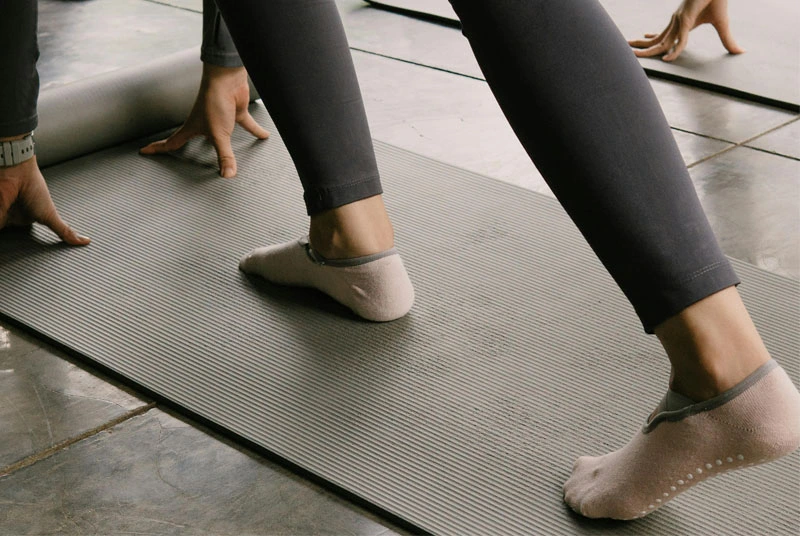
Custom Grip Socks Case Study: Fixing Poor Grip Quality
Client Background A U.S. client approached us after ending cooperation with their previous supplier due to inconsistent grip (silicone) quality. Their goal was to develop a new line of comfortable, high-quality yoga grip socks, with a strong focus on: Softness and wearing comfort Durable and elastic silicone grip High-standard embroidery logo Initial Requirements The client’s main requirement was clear: The socks must feel soft, comfortable, and suitable for long wear At the same time, they emphasized: Reliable grip performance (non-slip) Clean and precise logo execution Consistent product quality Key Challenges Comfort Structure Optimization The client wanted better comfort than their previous product, but without compromising structure. Previous Supplier Failure (Grip Quality) Their earlier supplier had issues with: Poor silicone elasticity Low durability Inconsistent application This made grip quality a critical trust factor High Logo Standards The client had strict expectations for embroidery: Precise shape Clean finish Brand consistency Our Solution Dual Sample Development (Comfort Testing) We developed two versions for comparison: Version A: Half terry cushioning Version B: Extended terry (including calf back area) After testing, the client selected Version B for improved comfort and structure. Improved Silicone Grip Quality Optimized silicone formulation and application Achieved better elasticity and durability The client confirmed that our grip quality was significantly better than their previous supplier. Multiple Logo Revisions (Free Support) Produced 2 embroidery logo versions Each revised 2–3 times based on feedback All adjustments were provided free of charge Ensured the final logo fully met brand expectations Full Inspection Before Shipment To ensure consistency: Conducted 100% inspection before shipment Focused on grip quality, stitching, and logo accuracy Result Initial plan: 200 pairs (1 style) Final order: 600 pairs (3 styles) The increase came after sample approval and confidence in product quality Production completed and shipped on time Client currently awaiting delivery What This Project Demonstrates This project highlights our ability to: Improve product comfort through structural adjustments Replace underperforming suppliers with better quality solutions Support detailed customization with flexible sampling Build trust through consistent communication and quality control Looking for a Reliable Grip Sock Manufacturer? If you're facing issues with: Poor grip durability Inconsistent quality Limited sampling support We can help you develop custom grip socks with reliable performance and scalable production.
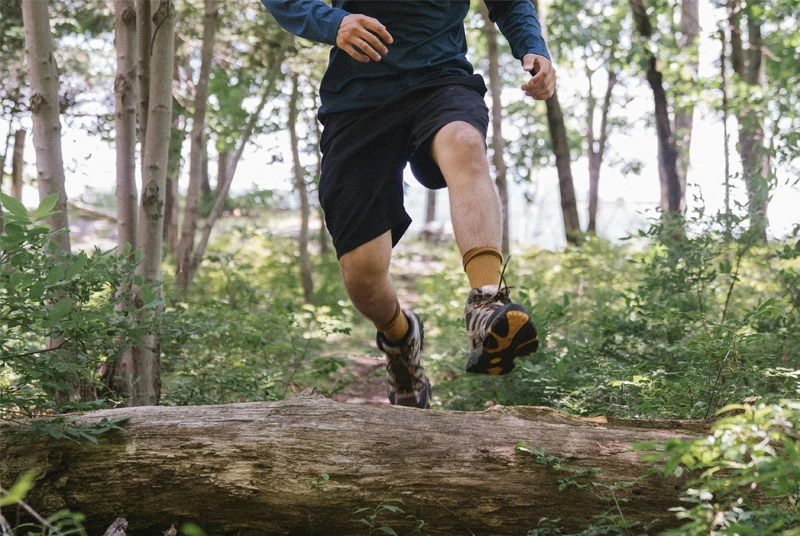
Best Socks for Sweaty Feet Running
The best socks for sweaty feet running are moisture-wicking, snug-fitting socks made from merino wool or synthetic blends like Coolmax. These socks help keep your feet dry, reduce friction, and prevent blisters during runs. If you're a runner with sweaty feet, you know the struggle—socks soaked through, feet slipping inside your shoes, and blisters forming before you even hit mile three. Choosing the right running socks isn't just about comfort; it directly impacts your performance. For brands and retailers, offering socks that effectively solve sweaty feet issues can improve customer satisfaction and reduce returns. This guide focuses on performance-driven socks designed for sweaty feet, helping you prevent blisters and slipping. Quick Answer: Best Running Socks for Sweaty Feet Best types of running socks for sweaty feet: For long-distance running: Merino wool socks– excellent moisture control and odor resistance For hot weather or intense runs: Synthetic socks (Coolmax/polyester) – fast drying and lightweight For blister prevention: Toe socks – reduce skin-on-skin friction between toes These categories cover most performance needs for runners dealing with sweaty feet. If you're looking for friction protection, quick-drying performance, and a secure fit, here are the top-rated socks for sweaty-foot runners: Balega Hidden Comfort – Excellent moisture-wicking, reinforced cushioning in heel and toe areas to reduce friction. Feetures Elite Light Cushion – Patented fit technology provides a precise, blister-free fit with superior breathability and fast drying. Smartwool Run Targeted Cushion – Merino wool blend offers natural odor control and temperature regulation, ideal for long runs. Injinji Trail Midweight – Toe sock design eliminates skin-on-skin friction between toes, perfect for runners prone to blisters. What these socks have in common: moisture-wicking materials, a snug fit, and strategic cushioning—all essential for managing sweat and preventing slippage. Why Running Makes Sweat Problems Worse Running is a high-intensity, repetitive activity. Your feet bear constant impact while trapped in a closed environment with limited airflow. As your body heats up, sweat glands in your feet go into overdrive to regulate temperature—but running shoes don't offer much ventilation. When feet stay damp for extended periods, several problems arise: Increased friction: Moist skin creates more friction against socks and shoe linings, significantly raising the risk of blisters. Bacterial growth: Warm, humid environments are ideal for bacteria and fungi, leading to odor and even athlete's foot. Reduced stability: Wet, slippery feet shift inside shoes, compromising stride stability and increasing injury risk. For runners with sweaty feet, socks are not just an accessory—they're a critical piece of performance gear. Key Features to Look For (Moisture-Wicking, Fit, Cushioning) When choosing socks for sweaty feet, prioritize these three core performance features Moisture-Wicking Socks must actively pull sweat away from the skin and transfer it to the outer layer for evaporation—not absorb and hold moisture. High-performance running socks often use engineered mesh zones and dual-layer construction to accelerate drying. You can also explore how moisture-wicking socks for sweaty feet work to better understand performance differences. Fit A sock should fit snugly without excess fabric that can bunch up and create friction. Look for: Seamless toe closures to minimize irritation Arch compression bands for a secure, locked-in feel Cushioning More cushioning isn't always better for sweaty feet. Choose based on your running style: Light cushion: Best for road running, short distances, and runners who prioritize quick drying and ground feel Targeted cushion: Adds protection in high-impact areas like the forefoot and heel while maintaining breathability elsewhere Best Materials for Running with Sweaty Feet Material choice determines how well a sock wicks moisture, resists odor, and holds up over time. Here are the best options for sweaty-foot runners: Merino Wool Naturally regulates temperature and remains comfortable even when damp. It also has natural antimicrobial properties, making it ideal for long runs or trail running. If you're comparing materials in more detail, see our guide on are wool socks good for sweaty feet. Nylon / Polyester Blends Fast-drying, durable, and structurally stable. Most performance running socks use these synthetic fibers as the base, often blended with spandex for a secure fit. As a professional sock manufacturer, we source GRS-certified recycled polyester to ensure our clients' products meet international standards. Copper-infused Fiber Found in some high-end running socks, copper fibers offer antimicrobial benefits that help reduce odor—a useful feature for those prone to smelly feet. Avoid Cotton Cotton absorbs moisture but does not wick it away. It stays wet, loses its structure, and dramatically increases friction and blister risk. Cotton socks should never be used for running. Common Mistakes Runners Make with Socks Even experienced runners often make these sock-related mistakes: Wearing cotton socks for running The most common error. Cotton becomes heavy, stiff, and abrasive when wet, creating ideal conditions for blisters. Choosing the wrong size Socks that are too large will bunch up inside your shoes, creating localized friction. Socks that are too small restrict circulation and reduce comfort. Ignoring sock lifespan Running socks lose elasticity and moisture-wicking performance after repeated washing and drying. Replace them every 300–500 miles or when you notice visible wear or loss of fit. Focusing only on thickness Thicker doesn't always mean better protection. Fit and material matter more than thickness alone. A poorly fitted thick sock can actually increase slippage and friction. How to Prevent Blisters and Odor While Running In addition to choosing the right socks, these practices will help you minimize blisters and keep odor under control: Keep Feet Dry Before You Start Make sure your feet are completely dry before putting on socks. Apply sports foot powder or anti-chafe balm to high-friction areas like the heels and sides of toes for an extra layer of protection. Pair with Breathable Running Shoes A sock's moisture-wicking ability works best when paired with breathable footwear. Choose running shoes with mesh uppers and good airflow to help moisture escape. Wash and Rotate Properly Running socks should be washed after every run to prevent bacterial buildup. Use mild detergent and air dry or tumble dry on low—high heat degrades performance fibers over time. Consider a Backup Pair For long-distance runs or trail races, carry a spare pair of socks. Changing into dry socks mid-run—especially after stream crossings or

Custom Merino Hiking Socks: Premium Quality Case Study
Client Background A U.S.-based menswear brand specializing in innerwear and essentials approached us to develop a line of premium merino hiking socks. Their goal was clear: Match the quality and performance of Darn Tough Customize branding elements including color and logo Adjust sock height (+1 inch) to fit their product line positioning Project Requirements The client provided highly specific requirements: Material: High-performance merino wool blend Benchmark: Same durability, comfort, and fit as Darn Tough Design changes: Custom color palette Silicone logo placement on the outer side of each sock Increased sock height by 1 inch This was not a standard OEM order, but a precision replication + customization project Key Challenges During development, several technical challenges emerged: Logo Color Mismatch Silicone logo color showed visible differences from the sock base color. The client required a highly consistent visual identity Logo Thickness Limitation Transparent logo options could not meet the required 15mm thickness. This created a trade-off between appearance vs durability Structural Adjustment Increasing sock height affected: Fit Elastic balance Visual proportions Our Solution To meet the client’s expectations, we made targeted technical adjustments: Yarn Color Optimization Adjusted yarn dyeing to enhance color depth and contrast. Improved the visual consistency between sock body and logo Heel Structure Redesign Refined heel knitting structure. Increased loop density to create a more defined and durable transition Logo Solution Alignment After multiple sampling rounds, aligned with the client on: Silicone logo as the final solution Balanced: Visibility Thickness requirement Production feasibility Final Result Final logo solution: Silicone application. Bulk production delivered on time Initial Order: 550 pairs (Black) → 165 S/M, 385 L/XL 550 pairs (White) → 165 S/M, 385 L/XL Reorder: 500 pairs (Black, L/XL) The successful reorder confirmed both product performance and market acceptance What This Project Demonstrates This project highlights our ability to: Match premium benchmark products Execute precise customization requirements Solve material and design conflicts during development Deliver consistent quality at scale Looking to Develop Your Own Custom Hiking Socks? If you're building a premium sock line and need: Reliable material sourcing Technical design support Consistent bulk production We’re ready to support your project from sampling to scale.
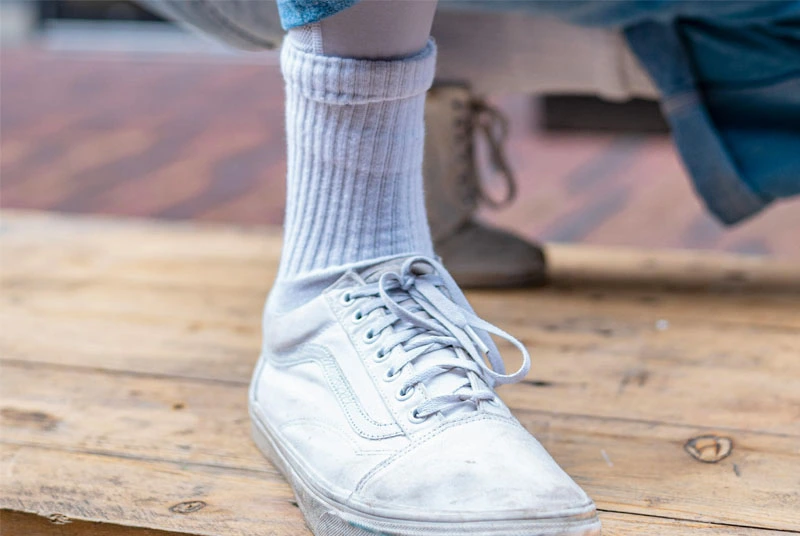
Best Moisture-Wicking Socks for Sweaty Feet: What Actually Works
“Moisture-wicking” socks are everywhere. But halfway through the day, your feet are still wet. That’s because most socks don’t actually wick moisture — they just absorb it.Real moisture-wicking comes down to fiber science: how sweat is moved, managed, and released. Once you understand that, it’s easy to tell which socks actually work — and which ones don’t. For brands and product developers, applying this knowledge often leads to solutions like custom wool socks that balance moisture control, comfort, and durability in real-world use. What Are Moisture-Wicking Socks? You see "moisture-wicking" everywhere, but not many people actually understand what it means. Here's the simple definition: Moisture-wicking socks don't absorb sweat and hold it against your skin — they move sweat from your skin to the outer layer of the sock, where it can evaporate. Regular cotton socks act like sponges — they soak up moisture, hold onto it, and keep your skin wet. If you're wondering why cotton performs so poorly, see are cotton socks good for sweaty feet. The test: A true moisture-wicking sock reveals itself when you sweat the most. When you take your shoes off, the outside of the sock may be wet, but your skin is dry. That's wicking in action. How Moisture-Wicking Technology Works Moisture-wicking sounds high-tech, but the science behind it is straightforward. It's the result of three mechanisms working together: Capillary Action This is the core mechanism. Synthetic fibers (polyester, nylon, polypropylene) and wool have microscopic grooves and channels on their surface. These channels use capillary action — the same physics that makes the edge of a paper towel pull in water — to draw liquid sweat from your skin into the spaces between fibers. Hydrophobic vs Hydrophilic Different fibers treat water differently: Hydrophobic fibers (polyester, nylon, polypropylene): Water-hating. They don't absorb moisture — they push it away from the fiber surfac Hydrophilic fibers (cotton): Water-loving. They pull moisture into the fiber and lock it there. The wicking strategy is: use hydrophobic fibers to push sweat away from your skin, while using small amounts of hydrophilic fibers (or special fiber structures) to guide moisture to the outside of the sock. Surface Area Evaporation Once moisture reaches the outside of the sock, the final step is evaporation. The more surface area the outer fibers have, the faster evaporation happens. This is why many wicking socks have thin mesh panels on the top of the foot — to increase surface area exposed to air and speed up drying. Simple summary: Capillary action pulls, hydrophobic fibers push, and large surface area dries. When all three work together, sweat has a clear path from skin to air. Understanding this system is key when choosing the best socks for sweaty feet in real-world conditions. In practice, materials like wool are widely used because they combine moisture absorption and evaporation, making wool socks a reliable option across different working environments. Best Materials for Moisture-Wicking Socks Not every sock labeled "moisture-wicking" actually performs. Here are the materials that work, ranked by recommendation: Merino Wool: The All-Around Champion Merino wool is unique in how effectively it combines both hydrophilic and hydrophobic behavior — something few natural fibers achieve as well. If you want a deeper breakdown of wool performance, see are wool socks good for sweaty feet. Inside the fiber: Absorbs moisture (locks sweat into the core) Surface of the fiber: Stays dry (the side touching your skin feels dry) Naturally antimicrobial — resists odor Best for: All-day wear, moderate sweaters, anyone who needs odor control Downsides: More expensive than synthetics, slower drying than polypropylene Polypropylene: The Speed Champion Polypropylene is completely hydrophobic — it doesn't absorb water at all. Sweat primarily moves through the spaces between fibers, rather than being absorbed into the fibers themselves. Fastest drying of all materials Very lightweight Extremely efficient moisture transport Best for: Heavy sweaters, hot environments, anyone who needs maximum drying speed Downsides: No natural odor control (needs to be blended); 100% polypropylene lacks durability Polyester (including Coolmax): The Value Pick Polyester is the most common wicking material on the market, especially specially engineered versions like Coolmax (which uses modified fiber shapes to create more surface channels). Fast drying Durable Reasonable price Best for: Budget-conscious buyers, high-durability needs, moderate sweaters Downsides: Holds onto odor — one day of wear and the smell is noticeable Nylon: The Structural Backbone Nylon is rarely used alone as a wicking layer, but it's a critical component of quality blended socks. High strength, abrasion-resistant Fast enough drying Adds structure and fit stability Best for: As a blend component (with wool or polyester) Material Comparison Table Material Wicking Speed Odor Control Durability Best For Merino Wool Moderate Excellent Fair All-day wear, odor control Polypropylene Very Fast Poor Fair Heavy sweat, hot environments Polyester/Coolmax Fast Poor Excellent Budget, athletic use Nylon Moderate Poor Excellent As a blend for durability Cotton Not effective Poor Fair Not for wicking needs Gold blend recommendation: 50-70% Merino wool + 30-50% nylon/polyester/polypropylene How to Tell If Socks Are Truly Moisture-Wicking Just because the label says "moisture-wicking" doesn't mean it's true. Here are four ways to check: Method 1: Read the Material Label Flip to the composition tag. If cotton is in the top spot, skip it. A real moisture-wicking sock should have merino wool, polypropylene, polyester, or nylon as the primary material. Red flags: Cotton listed first or second Acrylic as the main material — poor wicking performance Bamboo-based fabrics are heavily marketed, but their moisture-wicking performance is generally limited compared to technical fibers. Method 2: The Water Drop Test You can do this at home: Lay the sock flat Drop one drop of water on the outside of the sock Watch what happens:Bead sits without moving → Not wicking, Drop spreads quickly or soaks through to the inside → Wicking (but direction matters) Flip and test the inside: A true wicking sock will pull moisture from the inside to the outside quickly Method 3: The Wear Test This is the most honest test. Wear the sock for an hour of normal activity, then check: True wicking: When you
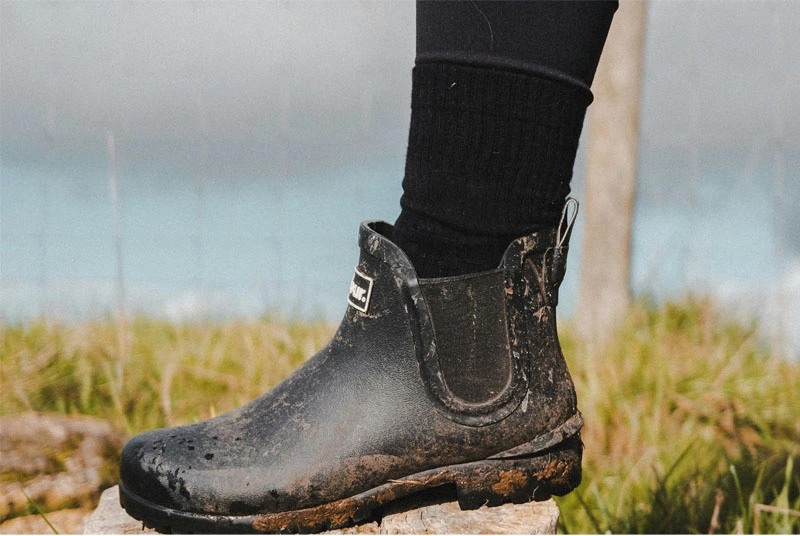
Best Work Socks for Sweaty Feet: What Actually Works
If your feet tend to sweat during long workdays, you’ve probably realized the problem isn’t just wetness — it’s the buildup of heat, odor, and discomfort over time. In demanding work environments, when wearing work boots or standing for long hours, the wrong socks can make your whole day uncomfortable. Many workers use moisture-control options like custom wool socks to improve comfort and reduce sweat during long shifts This guide breaks down the best work socks for sweaty feet, including what materials work best, what features actually matter for all-day wear, and how to keep your feet dry during long shifts.For a broader comparison across different materials and use cases, see our guide on best socks for sweaty feet. Best Socks for Long Workdays If you're working a 10- or 12-hour shift and dealing with sweaty, smelly feet, here's what you need to know upfront. In these conditions, choosing moisture-wicking socks for sweaty feet is one of the most effective ways to keep your feet dry during long shifts. Best overall: Merino wool blend socks (50-70% wool with nylon/spandex) — especially moisture-wicking wool socks designed for long workdays What to avoid: 100% cotton – it absorbs sweat but won't release it, leaving your feet wet and prone to blisters Key features to look for: Terry loop cushioning (looks like a towel on the inside) Mesh venting panels on the top of the foot Seamless toe to prevent friction blisters Reinforced heel and toe for durability Spend a little more on quality work socks. Your feet will stay drier, smell better, and you'll avoid the discomfort of soaking wet socks halfway through your shift. Why Work Environments Make Sweaty Feet Worse Your feet are naturally designed to sweat. Each foot has around 250,000 sweat glands—more than most other parts of the body. On a physically demanding workday, your feet can produce up to a pint (about 473 ml) of sweat. But sweat itself isn’t the problem. The problem is the environment your feet are in. Safety shoes and work boots are usually made of leather, often with steel toes or composite protection layers, and they typically have little to no ventilation. This means the heat and moisture generated by your feet have nowhere to escape. In these conditions, materials like wool perform better because they help regulate moisture instead of trapping it inside the boot environment. A typical office worker might wear shoes for 8 hours a day, often sitting for long periods. But in many industries—manufacturing, logistics, construction, healthcare, food service—workers often stand or walk continuously for 10 hours, sometimes even 12–14 hours. Sweat keeps being produced, but has no chance to evaporate, leaving your feet constantly soaked in a damp environment. When this environment meets the wrong socks, problems begin. Cotton socks act like a sponge. If you're still considering cotton, here's a detailed explanation of are cotton socks good for sweaty feet. They absorb water but lock it inside the fibers, keeping it pressed against your skin. This leads to maceration—the same wrinkled, pale skin you get after soaking in water. Softened skin is much more prone to tearing under friction, which is how blisters form. In many cases, blisters aren’t caused by poorly fitting boots, but by the wrong socks soaking your skin. What Features Matter for All-Day Wear Material only solves half the problem. The other half lies in the construction of the sock. For all-day wear, the following three features are essential: Terry cushioning structure Not all “thick socks” are the same. Dense, flat thick socks can actually trap more heat. What you need is a terry loop structure—turn the sock inside out, and it should look like a towel with small loops. These loops act like tiny springs, lifting the fabric away from your skin and creating a thin air layer that allows moisture to evaporate instead of soaking your feet. Zoned knitting / mesh ventilation Hold the sock up to the light. You should see semi-transparent mesh zones—usually around the instep and arch. Hot air rises. These mesh zones act like chimneys, allowing heat and moisture to escape upward toward the opening of the boot. This targeted ventilation is far more effective than traditional socks with uniform thickness. Seamless toe and reinforced areas Seamless toe: Traditional socks often have a raised seam at the toe. Over long hours of friction, this seam repeatedly rubs against your toes, becoming a major cause of blisters. Choose seamless or flat-seam designs. Reinforced heel and toe: Work boots are tough on socks. The heel and toe experience the most wear. Socks reinforced with high-density nylon or extra terry cushioning in these areas can last several months longer. Best Materials for Work Socks Here's how the main materials compare for sweaty feet: Material Moisture Management Drying Speed Odor Control Verdict Cotton Poor – absorbs but holds moisture Slow Poor Avoid for work Synthetics (polyester, nylon) Good – wicks moisture away Fast Fair – traps bacteria Good for durability, but can get smelly Merino wool Excellent – absorbs 30% of its weight while feeling dry Moderate Excellent – natural antimicrobial Best choice for most Merino Wool: The Gold Standard Modern merino wool is nothing like the scratchy wool sweaters you remember. It's fine enough to wear comfortably against skin. The real advantage is how it handles moisture. Merino wool socks can absorb up to 30% of their own weight in moisture inside the fiber structure – while the surface next to your skin stays dry. It acts as a buffer, managing humidity before sweat becomes a problem. If you're wondering why wool performs so well for moisture and odor control, you can read more in our guide on are wool socks good for sweaty feet. Synthetics: Fast-Drying Workhorses Synthetic fibers like polyester and nylon are hydrophobic – they repel water. Instead of absorbing moisture, they move it through capillary action from your skin to the outer layer of the sock where it evaporates. Pros: Very fast drying, highly durableCons: Can feel clammy when
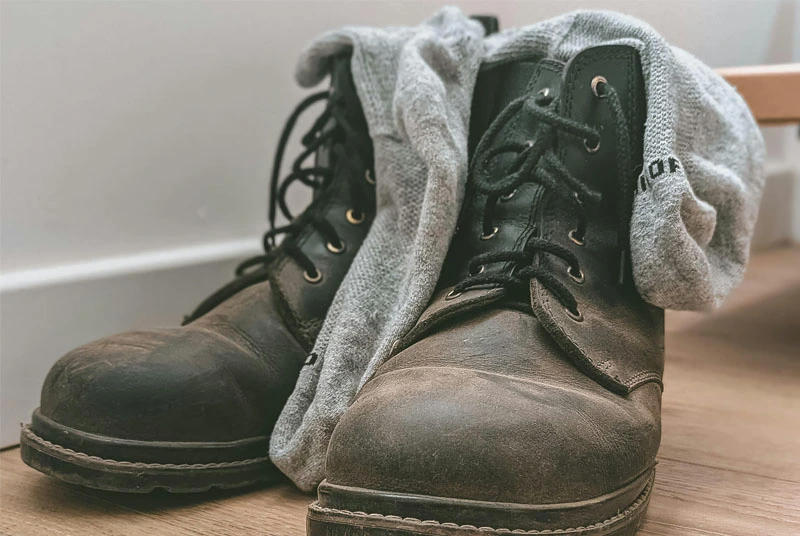
Are Wool Socks Good for Sweaty Feet?
When many people hear “wool socks,” their first reaction is: will they be hotter? more stuffy? But in reality, for people with sweaty feet, wool—especially merino wool—is often drier and more comfortable than cotton. If your feet tend to sweat, the problem is usually not that your socks don’t absorb sweat, but whether moisture can be effectively managed and regulated. Many people only realize this after switching materials—especially when trying custom wool socks, where the difference in dryness and comfort becomes much more noticeable over time. In this article, we’ll explain why wool socks don’t make your feet feel stuffy and can actually keep them dry, as well as the key differences between wool, cotton, and synthetic socks. Quick Answer: Are Wool Socks Good for Sweaty Feet? Yes, merino wool socks are one of the best choices for people with sweaty feet. Unlike cotton, which traps moisture against the skin, merino wool actively moves moisture away. It absorbs vapor into the fiber core (keeping your skin feeling dry), then releases it outward, and dries relatively quickly. In addition, wool is naturally antibacterial, so it is less likely to develop odor even after long periods of wear. What people with sweaty feet want most: Move moisture away from the skin Natural odor resistance Temperature regulation (cool in summer, warm in winter) Soft and non-itchy (merino wool) If you’re struggling with sweaty or smelly feet, switching to merino wool socks is one of the best upgrades you can make. In many cases, moisture-wicking socks are also recommended as they are specifically designed to manage sweat and keep feet dry more efficiently. Why Wool Doesn’t Feel Wet (Even When It Absorbs Sweat) This is exactly where wool breaks common assumptions. Most people think that if a material absorbs moisture, it will feel wet, cold, and sticky—like cotton. But wool works differently. Absorption vs Moisture-Wicking Cotton is hydrophilic: it absorbs moisture into the spaces between fibers. Once saturated, it stays wet, feels heavy, and dries slowly. Your skin remains in constant contact with moisture, leading to that “swampy feet” feeling. Wool has a hydrophobic exterior and hydrophilic interior: wool fibers can absorb up to 30% of their weight in moisture without feeling wet. The moisture is pulled into the fiber core, away from your skin. The outer surface remains relatively dry while moisture is gradually released into the air. This unique property means that even when your feet sweat, wool socks can still keep your skin dry and comfortable. In real use, this is often where wool socks stand out the most, especially when compared to cotton socks that quickly become damp and uncomfortable. Why This Matters for Sweaty Feet When your feet sweat, the goal is not to stop sweating—but to manage it. Wool absorbs moisture, isolates it from your skin, and allows it to evaporate over time. This reduces friction (fewer blisters), prevents skin maceration (wrinkling), and limits bacterial growth. Temperature Regulation: Cool in Summer, Warm in Winter Another common misconception is that wool is only suitable for cold weather. In reality, wool is one of the few materials that can actively regulate temperature in both directions. How Wool Regulates Temperature Wool fibers naturally have a crimped structure, creating millions of tiny air pockets. These pockets trap air and provide insulation. But unlike synthetic insulation, wool is breathable—it allows heat and moisture to escape. In cold weather: the air pockets retain body heat and keep you warm. Even when wet from sweat, wool still insulates (unlike cotton, which loses insulation when wet). In hot weather: wool’s breathability allows excess heat to escape. Its moisture-wicking properties keep the skin dry, which actually makes you feel cooler than wearing sweat-soaked cotton socks. Real-World Example Imagine wearing thick cotton socks while hiking in summer. Your feet sweat, the cotton becomes saturated, and you end up with heavy, damp, uncomfortable socks that feel hot and sticky. Now imagine wearing lightweight merino wool socks. Your feet still sweat, but the wool moves moisture away, keeps your skin dry, and remains comfortable even after absorbing moisture. Many hikers and runners specifically choose merino wool socks for hot-weather activities. Merino Wool vs Regular Wool: What’s the Difference? Not all wool is created equal. If you’ve tried wool socks in the past and found them itchy or uncomfortable, you were likely wearing regular wool (often from coarser sheep breeds). Merino wool is a different story. Feature Merino Wool Regular Wool Fiber Diameter Ultra-fine (under 18.5 microns) Coarse (over 24 microns) Feel Soft, non-itchy, comfortable against skin Can be scratchy and irritating Moisture Wicking Excellent Good Odor Resistance Excellent (natural lanolin content) Good Breathability Excellent Moderate Price Higher Lower Why Merino Wool Is the Gold Standard Merino wool comes from Merino sheep, bred for their exceptionally fine, soft wool. The fibers are so fine that they bend easily, which eliminates the prickly sensation associated with coarser wools. For sweaty feet, Merino wool is the clear winner. It offers all the moisture-wicking and temperature-regulating benefits of wool, but with a softness that makes it comfortable for all-day wear—even for people with sensitive skin. Wool vs Cotton vs Synthetic: Which Is Better? Here’s how Merino wool stacks up against cotton and synthetic materials (like polyester or Coolmax) specifically for sweaty feet. Feature Merino Wool Cotton (100%) Synthetic (Polyester/Coolmax) Moisture Wicking Excellent (absorbs into fiber, skin stays dry) Poor (absorbs between fibers, skin stays wet) Excellent (quickly moves moisture to surface) Drying Speed Moderate to Fast Slow Very Fast Odor Control Excellent (natural antibacterial) Poor (traps bacteria) Poor to Moderate (requires treatment) Temperature Regulation Excellent (cool in heat, warm in cold) Poor (cold when wet, hot when thick) Moderate (breathable but lacks insulation) Comfort Soft, non-itchy (Merino) Soft initially, but heavy when wet Varies; can feel synthetic Durability Moderate (best when blended with nylon) Moderate High Best Use Case All-day wear, hiking, travel, work, sports Low-activity, dry conditions High-intensity sports, quick-dry needs When to Choose Each Choose Merino wool if you want all-day comfort, odor control, and temperature regulation.
Are Cotton Socks Good for Sweaty Feet?
If you are currently wearing cotton socks and struggling with sweaty feet, you might be wondering: should you switch? The answer is: most likely, yes. Cotton socks are a common everyday choice for many people—soft, skin-friendly, and affordable. But for sweaty feet, cotton may actually be one of the worst options. In this article, we’ll explain why cotton “absorbs sweat but doesn’t release it,” why it can make your feet smell worse and more prone to blisters, and in what situations you can still wear cotton socks. Quick Answer: Are Cotton Socks a Good Choice? For sweaty feet, cotton socks are usually not a good choice. Cotton does absorb moisture well—but that is exactly the problem. It acts like a sponge, soaking up sweat but unable to release it quickly. Once wet, cotton socks stay damp for a long time, leaving your feet constantly surrounded by moisture. Key problems: Absorbs moisture but does not wick it away Dries slowly and stays damp for long periods Easily breeds bacteria, leading to odor Increased friction when wet, causing blisters If you have sweaty feet, switching to merino wool, bamboo, or performance synthetic socks will significantly improve dryness and comfort. Why Cotton Feels Absorbent but Traps Moisture Many people assume "cotton absorbs sweat" is a good thing. But from a scientific perspective, absorbency doesn't equal moisture-wicking ability. These two concepts need to be distinguished. The Structure of Cotton Fibers Cotton is a natural plant fiber. Its structure resembles a hollow tube with tiny grooves on the surface. This structure allows cotton fibers to quickly absorb moisture—which is why cotton towels and cotton underwear are so absorbent. But here's the problem: once cotton fibers absorb moisture, that water gets trapped between and inside the fibers, and releases very slowly. Absorption: Cotton quickly pulls sweat away from the skin's surface Trapping: Moisture gets locked into the fiber structure and can't evaporate quickly Comparison with Wool Feature Cotton Merino Wool Moisture Absorption Water enters between fibers, fibers swell Water enters the fiber core, surface stays dry Drying Speed Slow Moderate to Fast Feel When Wet Wet, heavy, clammy Relatively dry, lightweight Effect on Skin Prolonged contact with moisture Moisture is isolated, skin stays dry Simply put: cotton "absorbs but traps" moisture, while wool "absorbs but releases" it. For sweaty feet, the latter is clearly better. For a deeper look at wool, bamboo, and synthetic options, read our What Are the Best Socks for Sweaty Feet: 2026 Guide. The Real Problem: Sweat Retention & Odor Build-Up The biggest problem cotton socks cause for sweaty feet is not that they “fail to absorb sweat”—on the contrary, they absorb it well—but that they cannot dry quickly after absorbing it. In contrast, moisture-wicking socks for sweaty feet are designed to move moisture away from the skin and dry much faster. The chain reaction caused by retained moisture Skin stays soaked for long periodsWhen cotton socks become saturated with sweat, they remain damp for a long time. Your feet are essentially soaked in wet fabric, causing the skin to become soft and wrinkled (commonly known as “waterlogged”). Medically, this is referred to as maceration. Rapid bacterial growthSweat itself has no odor. The smell comes from bacteria breaking down sweat and dead skin cells. A warm, moist environment is ideal for bacterial growth. Cotton socks that stay wet for long periods allow bacteria to multiply rapidly, which is why sweaty feet in cotton socks tend to smell worse. Increased risk of fungal infectionsThe same moist environment is also ideal for fungi. Athlete’s foot (tinea pedis) is closely linked to prolonged moisture exposure. Increased friction and blistersWet cotton socks increase friction against the skin. Combined with softened skin due to maceration, this makes blisters more likely during walking or physical activity. Why don’t synthetic or wool socks cause the same problem? Materials like merino wool or Coolmax either quickly move moisture away (synthetics) or absorb moisture into the fiber core while keeping the surface dry (wool). They prevent your feet from staying soaked, effectively breaking the cycle of odor and fungal growth. When Cotton Socks Might Still Work Although cotton socks are not ideal for sweaty feet, they are not completely unusable. In the following situations, cotton socks can still be acceptable: Low-intensity, short-duration activities If you are resting at home, going out briefly, or sitting in an office (and your feet do not sweat heavily), cotton socks can be sufficient.Judgment tip: At the end of the day, do your feet feel damp when you take your socks off? If yes, it’s time to switch materials. Dry, cool environments In dry seasons like fall or winter, lower humidity reduces the moisture retention problem. Cotton socks may dry faster in naturally dry environments. Blended fabrics Not all “cotton socks” are 100% cotton. Many athletic socks are blends of cotton with polyester or nylon. Cotton content 50–70%: Moisture performance improves if enough synthetic fiber is blended Cotton content above 80%: Still behaves like pure cotton and is not suitable for sweaty feet Recommendation: If you prefer cotton, choose blends with no more than 60% cotton and pair them with breathable shoes. Paired with breathable shoes If you wear cotton socks together with mesh sneakers or breathable leather shoes—and keep your shoes dry (rotate them, use shoe trees)—you can reduce moisture problems. Better Alternatives to Cotton for Sweaty Feet If you decide to move away from cotton, here are better options: Merino Wool Socks (Best All-Around) Benefits: Moisture-wicking, odor-resistant, temperature-regulating, softBest for: All-day wear, work, hiking, daily useNote: Higher price point; choose blends with nylon for durability Bamboo Socks (Soft & Eco-Friendly) Benefits: Breathable, naturally antibacterial, soft and gentle on skinBest for: Casual wear, lounging, sensitive skinNote: Durability is slightly lower; choose blends with nylon Coolmax or Performance Synthetic Socks (Sport Performance) Benefits: Fast-drying, durable, affordableBest for: Running, gym workouts, high-intensity sportsNote: Synthetics can trap odor; look for anti-microbial treatments Quick Material Comparison Feature Cotton Merino Wool Bamboo Coolmax/Synthetic Moisture Wicking Poor Excellent Good Excellent Drying