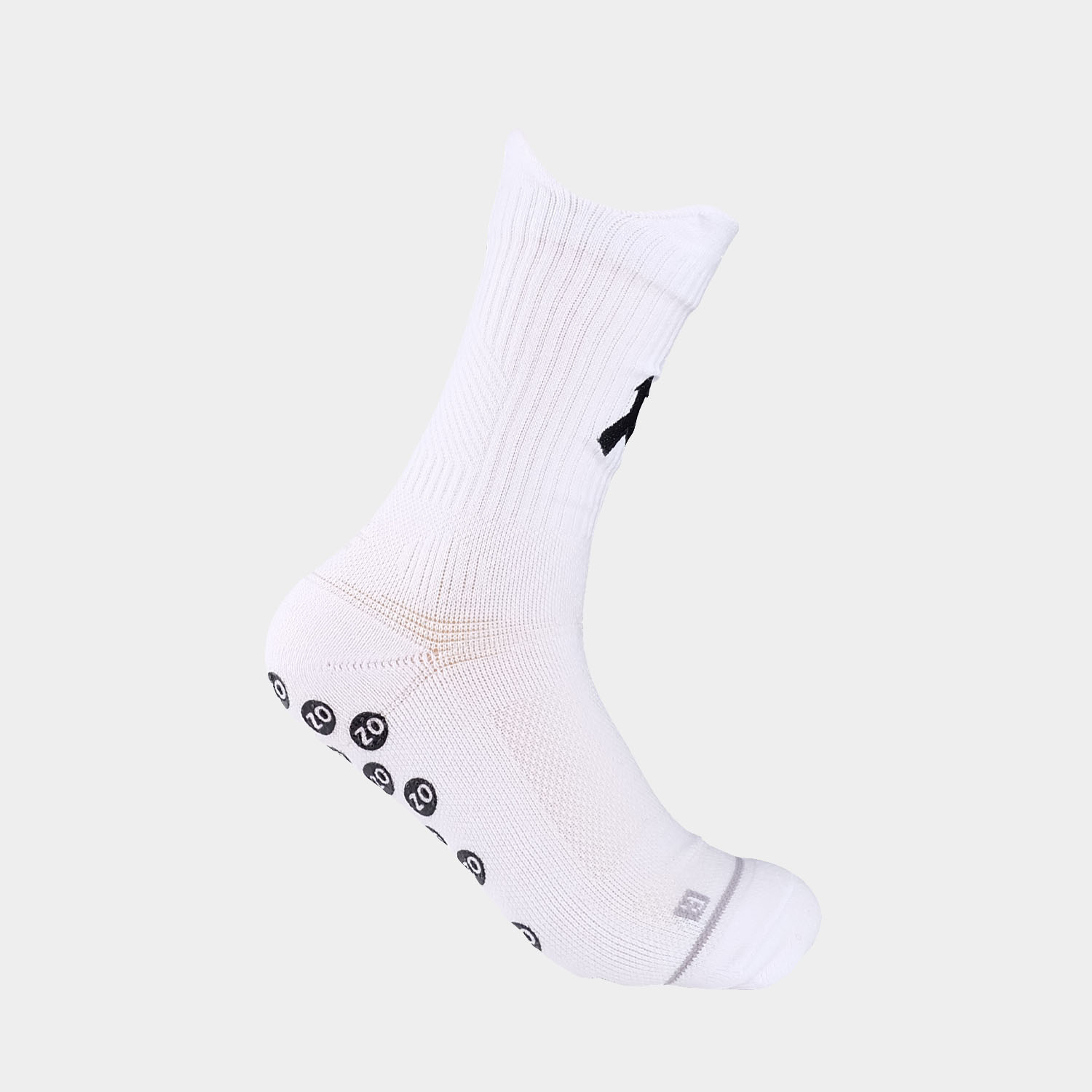
If you’re sourcing or designing socks, material choice isn’t just a detail — it’s the foundation of performance, comfort, and product positioning. Whether you’re developing moisture-wicking socks for sweaty feet, premium wool socks for outdoor use, or cost-effective cotton blends, the material you choose directly impacts how your product performs — and how well it sells.
This ultimate guide breaks down the most common sock materials, explains how they actually perform in real-world use, and helps you choose the right option based on function, cost, and target market — whether you’re building a product line or optimizing an existing one.
How to Choose the Best Sock Material
Choosing the right sock material doesn’t have to be complicated — it comes down to three key factors: how the socks will be used, what performance features are required, and how much you’re willing to spend. Instead of focusing on a single “best” material, most successful products are built by matching materials to specific use cases and balancing performance with cost.
Based on Use Case
Different applications require completely different material priorities. For example, socks designed for sports or outdoor activities typically need moisture control and durability, while everyday or casual socks may prioritize softness and cost efficiency.
- Sports & active use → moisture-wicking synthetics or merino wool blends
- Outdoor (hiking, trekking) → merino wool or wool blends for temperature regulation
- Daily wear → cotton or cotton blends for comfort and affordability
- Special functions (e.g. sweaty feet, compression) → engineered blends with targeted performance
Based on Performance Needs
Beyond use case, material selection should be driven by the specific performance features your product needs to deliver.
- Moisture management → polyester, nylon, or merino wool
- Breathability → wool, bamboo, lightweight synthetics
- Durability → nylon and synthetic blends
- Stretch & fit → elastane (spandex) blended with other fibers
In most cases, no single material can deliver all these features — which is why blends are widely used in modern sock manufacturing.
Based on Cost
Material choice also directly impacts your product’s pricing and market positioning. Natural fibers like merino wool and alpaca offer premium performance but come at a higher cost, while cotton and polyester are more budget-friendly and scalable for mass production.
- Low-cost / mass market → cotton, polyester blends
- Mid-range → cotton + synthetic performance blends
- Premium → merino wool, alpaca, or advanced engineered blends
For brands, the goal is not to choose the cheapest or most expensive material, but to find the right balance between cost, performance, and target market expectations.
Factor | What to Consider | Recommended Materials |
Use Case | Where and how the socks will be used | Wool (outdoor), Polyester (sports), Cotton (daily) |
Performance | Key features needed (moisture, durability, stretch) | Polyester, Nylon, Merino Wool, Elastane blends |
Cost | Target price range and market positioning | Cotton & Polyester (budget), Wool & Alpaca (premium) |
Common Sock Materials Explained
Understanding the strengths and limitations of each material is essential when developing or sourcing socks. No single fiber is perfect — each comes with trade-offs in moisture management, durability, comfort, and cost.
Below is a breakdown of the most commonly used sock materials and how they perform in real-world applications.

Merino Wool
Merino wool is widely considered one of the best materials for high-performance socks, especially in outdoor and cold-weather applications. It offers natural moisture-wicking, temperature regulation, and odor resistance — keeping feet dry and comfortable in a wide range of conditions.
Compared to traditional wool, merino fibers are finer and softer, making them suitable even for next-to-skin wear.
Best for hiking, outdoor activities, cold weather, and premium socks, but it comes with a higher cost and offers lower abrasion resistance compared to synthetic materials.
Alpaca
Alpaca fiber is a premium natural material known for its exceptional softness and thermal insulation. It is warmer than wool in many cases and has natural moisture-wicking properties, making it ideal for cold environments.
However, alpaca is less elastic than wool, which means it usually needs to be blended with other fibers to improve fit and durability.
Best suited for cold weather, luxury socks, and niche premium products, though it tends to be more expensive, offers limited elasticity, and is less commonly available in the supply chain.
Cotton
Cotton is one of the most widely used sock materials due to its affordability and softness. It provides good comfort for everyday wear and is easy to scale in mass production.
However, cotton absorbs moisture rather than wicking it away, which can lead to dampness and discomfort during prolonged wear or physical activity.
Polyester
Polyester is a key material in modern performance socks. It excels at moisture-wicking, dries quickly, and is highly durable, making it ideal for sports and activewear.
It is often engineered to enhance breathability and combined with other fibers to balance comfort and performance.
Best suited for sports, moisture-wicking socks, and high-performance use, though it has a less natural feel and may retain odor without proper treatment.
Nylon
Nylon is primarily used to improve durability and structural strength in socks. It has excellent abrasion resistance and helps extend product lifespan, especially in high-wear areas like the heel and toe.
On its own, nylon is not typically used for comfort, but as part of a blend, it plays a critical supporting role.
Bamboo
Bamboo fibers (usually processed as viscose or rayon) are known for their softness and breathability. They are often marketed as eco-friendly and provide a smooth, comfortable feel.
Bamboo socks can offer decent moisture absorption, but performance varies depending on processing and blending.
Best suited for casual wear, soft comfort socks, and eco-focused products, though its performance can be inconsistent and it is generally less durable than synthetic materials.
Material | Moisture | Breathability | Durability | Cost Level |
Merino Wool | High | High | Medium | High |
Alpaca | High | Medium | Low | High |
Cotton | Low | Medium | Medium | Low |
Polyester | High | Medium | High | Low |
Nylon | Low | Low | Very High | Low |
Bamboo | Medium | High | Medium | Medium |
What Really Matters in Sock Materials
When evaluating sock materials, focusing on the fiber type alone is not enough. What truly determines performance is how the material behaves in real use — especially in terms of moisture, airflow, durability, and fit.
Moisture Management
Moisture management is one of the most critical factors in sock performance, especially for sports and all-day wear. Materials that can move sweat away from the skin help keep feet dry, reduce discomfort, and minimize odor buildup.
Synthetic fibers like polyester are highly effective at moisture-wicking, while merino wool offers a natural balance of moisture control and comfort. In contrast, cotton tends to absorb moisture and retain it, which can lead to damp conditions.
Best materials: polyester, merino wool, performance blends
Avoid for high-sweat use: 100% cotton
Breathability
Breathability refers to how well a material allows air to circulate, helping regulate temperature and reduce heat buildup. This is especially important for warm climates or high-intensity activities.
Natural fibers like wool and bamboo generally offer good breathability, while engineered synthetic fabrics can enhance airflow through structure and knitting techniques.
It’s important to note that breathability is not just about the material itself — construction (such as mesh zones) also plays a key role.
Best materials: merino wool, bamboo, lightweight synthetics
Key insight: structure + material together determine airflow
Durability
Durability determines how well a sock maintains its shape and performance over time, especially under repeated wear and washing. For products targeting sports or heavy use, this is a critical factor.
Nylon is commonly used to reinforce high-wear areas like the heel and toe, significantly improving lifespan. Polyester also contributes to durability, while natural fibers like wool and cotton tend to wear out faster if used alone.
Best materials: nylon, polyester, reinforced blends
Key insight: durability usually comes from blends, not single fibers
Stretch & Fit
A good sock must not only feel comfortable but also maintain its shape and stay in place during use. Stretch and fit are typically achieved through elastane (spandex), which provides flexibility and recovery.
Without proper stretch, socks may slip, bunch up, or lose shape over time — affecting both comfort and performance.
Most high-quality socks rely on a small percentage of elastane combined with other fibers to ensure a secure and adaptive fit.
Best materials: elastane (spandex) blends with cotton, wool, or synthetics
Key insight: even small percentages of elastane make a big difference
Why Sock Materials Are Usually Blended

In real-world sock production, 100% single-fiber socks are rarely used for performance products. Instead, most high-quality socks are made from carefully engineered blends that combine the strengths of multiple materials.
Blending is not just a cost decision — it’s a performance strategy. By combining fibers, manufacturers can optimize moisture control, durability, comfort, and fit in ways that no single material can achieve on its own.
Why 100% Materials Don’t Work
Each material has its own strengths, but also clear limitations when used alone.
- 100% cotton is soft but traps moisture
- 100% wool offers comfort but lacks durability in high-wear areas
- 100% polyester wicks moisture well but may feel less comfortable against the skin
- 100% bamboo is soft but not durable enough for long-term use
Because socks need to perform across multiple conditions — movement, friction, moisture, and repeated washing — relying on a single fiber usually leads to performance gaps.
Key insight: single materials solve one problem, but socks need to solve several at the same time.
How Blends Improve Performance
Blends allow each fiber to play a specific role within the sock, creating a more balanced and functional product.
For example:
- Polyester + cotton → balances moisture control and everyday comfort
- Merino wool + nylon → combines temperature regulation with durability
- Nylon + elastane → improves strength and stretch for better fit and longevity
By adjusting the ratio of each material, manufacturers can fine-tune the product for different use cases — from lightweight summer socks to heavy-duty outdoor designs.
Key insight: performance comes from how materials work together, not from a single “best” fiber.
Common Blend Examples
Below are some of the most commonly used sock material blends and how they are typically applied:
Blend Type | Typical Composition | Key Benefits | Common Use |
Cotton + Polyester | 70–80% cotton + 20–30% polyester | Comfort + improved moisture control | Daily wear |
Merino Wool + Nylon | 60–80% wool + 20–40% nylon | Warmth + durability | Hiking / outdoor |
Polyester + Nylon + Elastane | Polyester base + nylon + 2–5% elastane | Moisture-wicking + stretch + durability | Sports / running |
Bamboo + Polyester | Bamboo base + polyester | Softness + better performance | Casual / lifestyle |
These blends are not fixed formulas — they are adjusted based on product positioning, target market, and price level.
Best Materials for Different Uses
Different users require different types of socks — from specific activities like running or hiking to common problems like sweaty feet or circulation support. Choosing the right material depends on the conditions the socks need to perform in.
Below is a practical guide to selecting sock materials based on real-world use cases and performance needs.
Hiking Socks
Hiking socks need to handle long wear, friction, and changing temperatures. Materials must provide moisture control, cushioning, and durability to prevent discomfort and blisters over extended use.
Merino wool is one of the best choices for hiking due to its natural temperature regulation and moisture-wicking properties. It helps keep feet warm in cold conditions and cool in warmer environments. To improve durability, it is often blended with nylon.
Best choice: merino wool + nylon blends
For outdoor-focused products, wool-based materials are typically the most reliable option.
Running Socks
Running puts constant stress on the feet, making moisture management and fit critical. Socks must keep feet dry, reduce friction, and maintain shape during movement.
Synthetic materials like polyester are widely used in running socks because they wick moisture efficiently and dry quickly. Nylon is often added for durability, while elastane ensures a secure fit.
Best choice: polyester + nylon + elastane blends
For high-performance designs, moisture-wicking materials are essential.

Sweaty Feet Socks
For users with sweaty feet, the main challenge is excess moisture. Poor material choice can lead to dampness, odor, and discomfort throughout the day.
Socks designed for this use case should prioritize moisture-wicking over softness. Polyester-based blends are highly effective at keeping feet dry, while merino wool offers a more natural alternative with added odor resistance.
Cotton should generally be avoided, as it absorbs moisture and stays wet.
Best choice: moisture-wicking synthetics or merino wool blends
If this is a key concern, choosing socks specifically designed for moisture control can make a significant difference.
Hot Weather Socks
In hot conditions, the goal is to keep feet cool, dry, and comfortable. Lightweight materials with good breathability are essential to reduce heat buildup.
Thin merino wool, bamboo, and lightweight synthetic fabrics all perform well in warm weather. Breathability can also be enhanced through construction techniques such as mesh zones.
Heavy or thick materials should be avoided, as they trap heat and reduce comfort.
Best choice: lightweight wool, bamboo, or breathable synthetics
Material weight and structure matter just as much as fiber choice in hot environments.
Compression Socks
Compression socks are designed to improve circulation and provide support during long periods of standing, travel, or athletic recovery. Material choice must ensure elasticity, durability, and consistent pressure.
These socks rely heavily on synthetic blends, particularly nylon and elastane, to deliver the required stretch and recovery. Comfort layers (such as cotton or polyester) are often added to improve wearability.
Best choice: nylon + elastane performance blends
For functional socks like compression, material selection is driven more by performance requirements than by comfort alone.
How to Choose the Right Material for Your Product
Once you understand the key factors behind sock materials, the next step is turning that knowledge into a clear product decision. Instead of evaluating materials separately, a more effective approach is to follow a simple decision process.
Step 1: Start from the End Use
Before selecting any material, define exactly how the product will be used. This determines which performance factors matter most.
For example, a running sock requires moisture management and fit, while a hiking sock must handle durability and temperature changes. If the product targets a specific issue like sweaty feet, moisture control becomes the priority.
The clearer the use case, the easier it is to narrow down material options.
Step 2: Lock in Your Price Position
After defining the use case, set a realistic price target. This step prevents over-engineering or under-delivering.
For instance, using premium fibers like merino wool in a low-cost product can quickly break margins, while relying only on basic cotton may limit performance in higher-end products.
Material selection should support your pricing strategy, not work against it.
Step 3: Build the Right Material Blend
With the use case and price defined, the final step is combining materials to meet both requirements.
Instead of choosing a single fiber, most successful products are built using blends:
- Base material → defines comfort and core performance
- Reinforcement fibers → improve durability (e.g. nylon)
- Elastic fibers → ensure fit and shape retention (e.g. elastane)
The goal is not to find the “best” material, but to design a combination that fits your product.
Sustainable & Recycled Materials
Sustainability has become an increasingly important factor in sock development, especially for brands targeting environmentally conscious markets. In general, sustainable materials fall into two categories: engineered recycled fibers and naturally renewable fibers.
Recycled materials such as polyester are widely used because they offer a clear environmental benefit while maintaining strong performance in durability and moisture management. They are often the most practical option for brands looking to balance sustainability with scalability.
Natural fibers like merino wool and alpaca are also considered sustainable in many cases, as they are renewable and biodegradable. However, their environmental impact depends heavily on sourcing practices, animal welfare standards, and supply chain transparency.
For most products, sustainable materials are used as part of a blend rather than a complete replacement for conventional fibers, allowing brands to balance performance, cost, and environmental positioning.
FAQ
What is the best sock material for sweaty feet?
For sweaty feet, moisture-wicking materials are essential. Polyester-based blends are highly effective at moving sweat away from the skin, while merino wool offers a natural alternative with good moisture control and odor resistance. Cotton is generally not recommended, as it absorbs and retains moisture.
What material is best for keeping feet warm in winter?
Merino wool and alpaca are among the best materials for cold weather. They provide excellent insulation while still allowing moisture to escape, helping keep feet warm and dry. Blends with nylon are often used to improve durability.
Can merino wool socks be worn in summer?
Yes. Merino wool is naturally breathable and can regulate temperature, making it suitable even in warm conditions. Lightweight merino blends are commonly used in socks designed for year-round use.
Are bamboo socks better than cotton socks?
Bamboo socks are generally softer and more breathable than cotton, and they can offer better moisture absorption. However, performance depends on the blend, and bamboo is often combined with other fibers to improve durability.
What materials are best for moisture-wicking socks?
Synthetic fibers such as polyester and nylon are widely used for moisture-wicking performance. They move sweat away from the skin and dry quickly, making them ideal for sports and active use.
Conclusion
Choosing the right sock material is not about finding a single “best” option, but about matching materials to specific product goals. From performance requirements to cost and market positioning, every decision should support how the product is meant to be used and sold.
In most cases, the best results come from combining materials — not relying on just one. A well-designed blend can deliver the right balance of comfort, durability, and performance for your target market.
Related Resources
→ Best Material for Running Socks: What Actually Matters
→ Best Material for Hiking Socks: What Actually Works on the Trail
→ Best Sock Material for Sweaty Feet: What Actually Works?
→ Recycled Material Socks: Materials, Performance, and Manufacturing
→ Why Nylon Is Essential For Durable Socks
Explore more guides on sock materials, performance requirements, and manufacturing considerations.